






Aug 25, 2026
Disclaimer: This page has been medically reviewed by Dr. Ash Bhatt, our Chief Medical Officer and a quintuple–board-certified addiction specialist. It is for educational purposes only; please consult your physician for personalized medical advice.
Alcohol consumption often begins as a way to relax, socialize, or cope with stress but can gradually become something that feels necessary rather than optional.
The good news is that alcohol addiction is highly treatable. With the right combination of medical care, therapy, and ongoing support, lasting recovery is possible, even after years of heavy drinking or previous attempts to quit.
At Legacy Healing Center Los Angeles, we provide personalized treatment that addresses the underlying causes of alcohol dependence—not just the drinking itself. Whether you’re seeking help for yourself or a loved one, this guide explains how alcohol treatment works, when professional care may be needed, and what to expect throughout the recovery process.

One of the biggest misconceptions about alcohol treatment is that it’s simply about helping someone stop drinking.
In reality, effective alcohol treatment is a comprehensive medical and psychological process designed to help people safely stop drinking, understand why alcohol became necessary in their lives, develop healthier coping strategies, and build the skills needed to maintain long-term recovery.
Every person’s experience with alcohol is different. Someone who drinks heavily every day for years may require medically supervised detox followed by residential treatment, while another person experiencing early alcohol dependence may benefit from an intensive outpatient program combined with therapy and medication.
Rather than applying the same treatment to everyone, experienced addiction professionals first determine the appropriate level of care based on several factors, including:
This individualized approach is one of the reasons professional treatment consistently produces better outcomes than attempting recovery alone.
At Legacy Healing Center Los Angeles, alcohol treatment may include several components working together rather than relying on a single intervention.
These often include:
Recovery isn’t built around simply removing alcohol from someone’s life. It’s about helping them build a healthier life that no longer depends on alcohol to function.

Alcohol Use Disorder (AUD) is a chronic but treatable medical condition characterized by an impaired ability to control alcohol use despite experiencing negative consequences.
Many people still imagine alcoholism as someone who has lost everything or drinks continuously throughout the day. Modern medicine recognizes that alcohol addiction exists on a spectrum, and many people with moderate or even severe AUD continue working, raising families, and appearing outwardly successful.
This is one reason alcohol addiction often goes unrecognized for years.
AUD develops because repeated alcohol use gradually changes how the brain regulates reward, stress, motivation, and self-control. Over time, drinking becomes less about seeking pleasure and more about avoiding discomfort, anxiety, cravings, or withdrawal symptoms.
As alcohol dependence progresses, many people notice changes such as:
These changes aren’t signs of weak willpower—they reflect measurable changes in brain function that respond best to comprehensive medical treatment rather than self-discipline alone.

Many people wonder why they can no longer control alcohol the way they once could. The answer lies in how alcohol interacts with several important brain systems simultaneously.
Initially, alcohol increases dopamine release within the brain’s reward pathways. Dopamine reinforces behaviors the brain interprets as beneficial, making drinking feel pleasurable and worth repeating.
Alcohol also increases activity of gamma-aminobutyric acid (GABA), a neurotransmitter that slows brain activity and produces feelings of relaxation, while suppressing glutamate, which normally promotes alertness and memory formation. Together, these changes explain why alcohol initially reduces anxiety, lowers inhibitions, and creates a temporary sense of calm.
With repeated exposure, however, the brain begins adapting to alcohol’s constant presence. Instead of functioning normally, it starts relying on alcohol to maintain chemical balance.
As these adaptations occur:
Eventually, many people find themselves drinking not because they want to—but because they feel physically or emotionally uncomfortable without it. This shift marks one of the defining characteristics of alcohol dependence and explains why quitting often requires much more than motivation alone.
But alcohol addiction isn’t defined by a single event or stereotype. It’s defined by the impact alcohol is having on your health, behavior, relationships, and ability to control your drinking.
Professional treatment may be appropriate if you’ve noticed any of the following:
You intended to have one or two drinks, but regularly continue drinking far longer than expected.
Many people promise themselves they’ll only drink on weekends, avoid liquor, or take a break altogether, only to find themselves returning to previous habits.
Alcohol may begin serving as the primary way to cope with stress, anxiety, loneliness, burnout, grief, or insomnia.
Often, loved ones recognize unhealthy patterns before the individual does.

Heavy alcohol use may contribute to:
Withdrawal symptoms are among the clearest signs that professional evaluation is warranted.
Symptoms may include:

This is one area where many alcohol treatment resources oversimplify recovery.
Two people may drink nearly the same amount of alcohol every week but require entirely different treatment plans.
For example:
One person may drink heavily every evening but have strong family support, no history of withdrawal, and no underlying mental health condition. They may recover successfully through outpatient treatment combined with therapy and medication.
Another person may consume a similar amount of alcohol but have experienced withdrawal seizures, untreated PTSD, chronic depression, and multiple previous relapses. That individual may require medically supervised detox followed by residential treatment and ongoing psychiatric care.
The difference isn’t simply how much alcohol someone drinks.
Clinicians also evaluate:
This is why reputable treatment centers begin with a comprehensive clinical assessment rather than placing everyone into the same program.
The goal isn’t to provide the most intensive treatment possible.
It’s to provide the right treatment, because matching someone to the appropriate level of care significantly improves both treatment completion and long-term recovery outcomes.

Some people with mild alcohol problems are able to reduce or stop drinking independently. However, once alcohol dependence develops, recovery becomes considerably more complicated.
Many individuals can stop drinking for several days or even weeks. The greater challenge is maintaining recovery after stress returns, cravings reappear, or everyday life becomes overwhelming again.
Professional treatment addresses far more than alcohol itself. It helps people understand why they drink, identify triggers before they become relapse situations, strengthen emotional resilience, improve communication, rebuild relationships, and develop practical strategies for navigating life without alcohol.
Perhaps most importantly, treatment helps determine whether stopping alcohol without medical supervision could be dangerous.
If you’ve developed physical dependence, attempting to quit abruptly at home can lead to severe withdrawal complications that require emergency medical care.
Seeking professional help isn’t a sign that you’ve failed.
For many people, it’s the safest and most effective way to begin recovery while dramatically improving the likelihood of long-term success.
One of the first questions people ask after deciding to get help is: “What kind of alcohol treatment do I actually need?”
The answer is different for everyone.
Contrary to popular belief, treatment isn’t simply choosing between “rehab” or “not rehab.” Modern addiction medicine offers multiple levels of care designed to match the severity of someone’s alcohol use disorder, medical needs, mental health, and home environment.
Choosing the right level of care is one of the most important decisions in recovery. A program that is too intensive may disrupt life unnecessarily, while a program that isn’t intensive enough can increase the likelihood of relapse.
At Legacy Healing Center Los Angeles, every client begins with a comprehensive clinical assessment before treatment recommendations are made. Rather than fitting people into predetermined programs, our clinicians determine which level of care offers the greatest chance for long-term success.

Several factors influence the final recommendation, including:
This individualized approach ensures treatment is based on clinical need rather than assumptions.
Many people worry they’ll be admitted immediately or judged during their first conversation with a treatment center. In reality, the initial assessment is simply a way for clinicians to understand your situation and recommend the safest, most appropriate treatment plan. These factors help determine whether someone can safely recover at home or would benefit from a structured residential environment.
A comprehensive evaluation typically includes:
Your care team will ask about:
Alcohol addiction and mental health frequently influence one another.
Clinicians will evaluate for conditions such as:
Treating these conditions alongside alcohol addiction often improves long-term recovery outcomes.
One of the most important parts of the evaluation is determining whether alcohol withdrawal could become medically dangerous.
People with severe physical dependence may require medically supervised detox before beginning therapy.
Treatment doesn’t end when someone leaves the facility.
Clinicians also consider:
These factors help determine whether someone can safely recover at home or would benefit from a structured residential environment.
Many people use the terms detox and rehab interchangeably, but they serve very different purposes. Understanding the difference helps explain why detox alone rarely leads to lasting recovery.
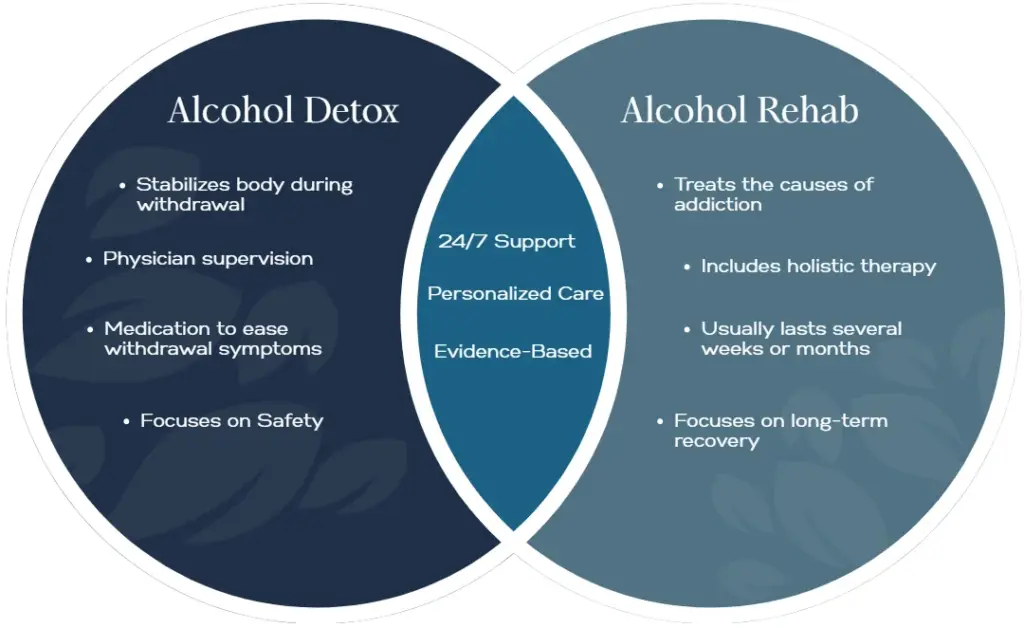
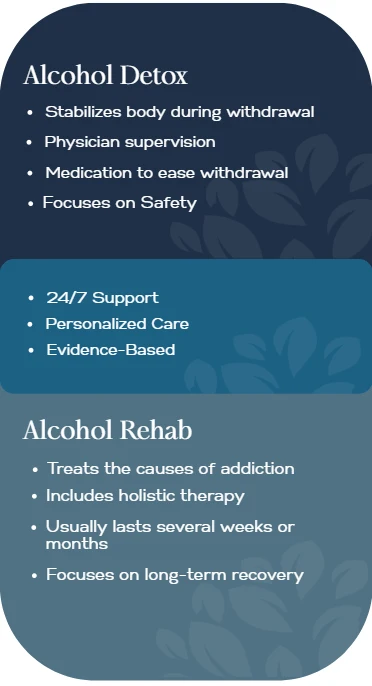
Think of detox as the beginning of treatment—not the treatment itself. Detox helps the body safely adjust to life without alcohol. Rehab helps people learn how to stay sober after detox is complete. Skipping rehabilitation after detox often leaves the psychological aspects of addiction untreated, significantly increasing relapse risk.

Alcohol is one of the few substances whose withdrawal symptoms can become life-threatening. For individuals who have developed physical dependence, suddenly stopping alcohol may lead to complications that include seizures, hallucinations, dangerously elevated blood pressure, cardiac complications, or delirium tremens (DTs). Medical detox provides continuous monitoring while physicians and nurses help manage withdrawal symptoms safely.
During detox, the treatment team may:
Many people fear detox because they’ve heard frightening stories about withdrawal. The reality is that medically supervised detox is designed specifically to make withdrawal safer, more comfortable, and significantly less overwhelming than attempting to quit alone.
For many individuals, detox lasts between three and seven days, although the exact timeline varies depending on drinking history, overall health, and individual response to treatment.
Once detox is complete—or immediately for individuals who do not require detox—many people transition into residential treatment.
Residential treatment provides a structured, supportive environment where recovery becomes the primary focus.
Rather than navigating work, social obligations, and everyday stressors while trying to stop drinking, clients have the opportunity to step away from the situations that may have contributed to alcohol use.

A typical day may include:
This level of care allows people to establish new routines while addressing the underlying emotional and behavioral patterns that fuel addiction.
For many individuals with moderate to severe alcohol use disorder, residential treatment provides the strongest foundation for lasting recovery.
Not everyone requires 24-hour residential treatment.
A Partial Hospitalization Program (PHP) provides intensive clinical care during the day while allowing clients to return to supportive housing or approved accommodations in the evening.
PHP often serves individuals who:
Treatment typically includes several hours of therapy each day, psychiatric services, medication management, recovery education, and ongoing clinical support.
PHP bridges the gap between inpatient care and outpatient treatment while maintaining a high level of accountability.
Some individuals have responsibilities that make residential treatment impractical. Others have progressed through higher levels of care and are ready for increased independence. An Intensive Outpatient Program (IOP) allows clients to receive comprehensive addiction treatment while continuing to work, attend school, or care for family members. Unlike traditional outpatient counseling, IOP provides a much higher level of structure.
Programs commonly include:
For individuals with stable home environments and strong motivation, IOP can provide excellent long-term outcomes while allowing life to continue moving forward.

Recovery doesn’t end when someone leaves residential treatment. In many ways, this is when recovery truly begins. Outpatient care helps people continue strengthening the skills they’ve developed while navigating real-world situations.
Depending on individual needs, outpatient treatment may include:
Research consistently shows that individuals who remain engaged in treatment for longer periods tend to experience better long-term recovery outcomes than those who discontinue care shortly after detox or rehabilitation.
Recovery is best viewed as a process rather than a single event.
One of the biggest misconceptions about alcohol treatment is that recovery follows a fixed timeline. There is no universal “30-day cure” for alcohol addiction. Instead, effective treatment progresses through stages that gradually become less intensive as stability improves.
Although every recovery journey is different, many people move through treatment in a pattern similar to this:
Fear of the unknown keeps many people from asking for help. In reality, the first week of treatment is often much different than people expect. Rather than immediately participating in intensive therapy, the first several days focus primarily on helping clients feel physically and emotionally stable.
During the first week, individuals typically experience:
The treatment team completes medical evaluations, reviews health history, develops an individualized care plan, and begins addressing immediate withdrawal concerns.
Medical staff closely monitor withdrawal symptoms while physicians adjust medications as needed. As clients begin feeling better physically, they gradually participate in educational groups and supportive counseling.
As withdrawal symptoms improve, attention shifts toward understanding addiction, identifying triggers, meeting with therapists, establishing recovery goals, and preparing for the next phase of treatment.
For many people, the greatest surprise is how quickly they begin feeling physically better once alcohol is removed and proper medical care begins. Many clients report sleeping normally for the first time in years, thinking more clearly, and experiencing a sense of hope they hadn’t felt in a long time.
One of the biggest misconceptions about alcohol treatment is that recovery is simply a matter of “talking to a therapist” or attending group meetings. In reality, effective alcohol treatment combines several evidence-based approaches that address the physical, psychological, behavioral, and neurological aspects of addiction simultaneously.
There is no single therapy that works for everyone because alcohol addiction develops for different reasons. For some people, drinking began as a way to manage anxiety. For others, it became part of their career, social life, or response to trauma. Some developed dependence after years of heavy drinking, while others progressed much more quickly due to genetics or mental health conditions.
This is why modern alcohol treatment focuses on understanding why someone drinks—not simply helping them stop. At Legacy Healing Center Los Angeles, treatment plans are individualized and evolve throughout recovery. As clients make progress, therapies are adjusted to address changing needs, new challenges, and long-term recovery goals.
Rather than relying on one approach, treatment typically combines several complementary therapies.

Research consistently shows that people experience the best outcomes when multiple evidence-based therapies are used together. Each therapy addresses a different aspect of recovery.
One of the most hopeful aspects of recovery is knowing that addiction does not permanently damage the brain. With time, therapy, and sustained sobriety, the brain can gradually rebuild healthier pathways, making cravings less intense and everyday decisions easier to manage.
– Dr. Ash Bhatt, MD, HASA<, MRO
Cognitive Behavioral Therapy (CBT) helps people recognize the patterns that connect their thoughts, emotions, and behaviors before drinking occurs. Rather than simply encouraging someone not to drink, CBT teaches practical, evidence-based skills for responding differently when triggers arise.
During therapy, clients learn to identify situations that increase their risk of relapse, recognize thought patterns that justify drinking, challenge negative self-beliefs, develop healthier coping strategies, build confidence in high-risk situations, and respond to cravings before they become overwhelming. Because these skills can be practiced and strengthened long after formal treatment ends, CBT remains one of the most effective and widely recommended therapies for Alcohol Use Disorder.
Motivational Interviewing (MI) recognizes that many people begin treatment feeling conflicted, part of them wants recovery, while another part isn’t sure they’re ready to let go of alcohol. Rather than using confrontation or persuasion, MI helps clients explore their own reasons for change in a supportive, collaborative environment.
Therapists ask open-ended questions that encourage reflection, such as what life might look like without alcohol controlling important decisions, helping individuals discover motivations that are personally meaningful. By strengthening internal motivation instead of relying on external pressure, Motivational Interviewing often improves treatment engagement, builds confidence, and supports lasting recovery.
Alcohol addiction rarely affects only one person.
Partners, parents, children, siblings, and close friends often experience confusion, fear, frustration, or resentment long before treatment begins.
Family therapy helps rebuild communication while educating loved ones about addiction as a medical condition rather than a moral failing.
Sessions may focus on:
Strong family involvement has been associated with improved treatment retention and better long-term recovery outcomes for many individuals.
Many people are surprised to learn that medications are available to help treat Alcohol Use Disorder. Unlike medications used during detox, these treatments are designed to support long-term recovery by reducing cravings or making alcohol less rewarding.
Medication is never a substitute for therapy, but when combined with counseling and behavioral treatment, it can significantly improve outcomes for some individuals. The decision to use medication depends on medical history, drinking patterns, overall health, and individual treatment goals.
Three medications are commonly prescribed.
Naltrexone works by blocking opioid receptors involved in alcohol’s rewarding effects. It doesn’t make someone sick if they drink. Instead, it helps reduce the reinforcing effects that keep alcohol addiction active.
People who take naltrexone often report:
Many people continue experiencing anxiety, irritability, sleep problems, or emotional discomfort for weeks after they stop drinking. It is generally started after someone has already stopped drinking. Acamprosate helps stabilize brain activity during this recovery period.
It may help:
Instead of reducing cravings, Disulfiram creates an unpleasant physical reaction if alcohol is consumed. Because of these effects, disulfiram is most appropriate for carefully selected individuals who are highly motivated and able to take the medication consistently.
Even small amounts of alcohol may trigger:
No. Medication is only one tool among many. Some individuals recover successfully through therapy, behavioral treatment, family support, and continuing care alone. Others experience significantly better outcomes when medication is added to their treatment plan. The most effective programs avoid a one-size-fits-all philosophy and instead develop recommendations based on each client’s unique clinical needs.
One of the biggest reasons people relapse has nothing to do with alcohol itself. It’s because the underlying reason they drank was never fully addressed.
Alcohol is often used to temporarily relieve symptoms of:
When alcohol is removed without treating these conditions, the emotional pain often returns.
Without healthier coping strategies, many people find themselves drinking again—not because treatment failed, but because the underlying illness remains untreated.
This is why quality alcohol treatment includes comprehensive mental health care alongside addiction treatment.
At Legacy Healing Center Los Angeles, clinicians evaluate every client for co-occurring disorders so both conditions can be treated simultaneously rather than separately. This integrated approach—often called dual diagnosis treatment—is associated with improved treatment engagement, fewer relapses, and better long-term recovery outcomes.
One of the most damaging myths about addiction is the belief that relapse means someone simply didn’t want recovery badly enough. The reality is much more complicated.
Alcohol addiction changes brain circuits involved in learning, stress, habit formation, and reward. Although these systems begin healing after drinking stops, recovery continues for months—and often years. During that time, unexpected situations can reactivate cravings.

Common relapse triggers include:
The highest-quality treatment programs don’t simply teach people how to stop drinking. They prepare clients for these moments before they happen.
Effective relapse prevention includes:
Many people imagine recovery as simply resisting alcohol forever. In reality, successful recovery is usually much more positive than that. As treatment progresses, many clients begin noticing changes that extend far beyond drinking itself.
They often report:
Perhaps the most meaningful change is that alcohol gradually stops occupying so much mental space. Instead of constantly thinking about drinking, or trying not to drink, people begin focusing on careers, relationships, health, and experiences that addiction once pushed aside. Recovery isn’t simply about removing alcohol from life. It’s about creating a life that no longer requires alcohol to feel manageable or fulfilling.

Seeking treatment for alcohol addiction is an intensely personal decision. For many people, concerns about privacy, work responsibilities, family obligations, or public visibility become barriers that delay getting help.
This is especially true in Los Angeles, where many residents work in industries that place a premium on image, performance, and confidentiality. Executives, entrepreneurs, physicians, attorneys, first responders, athletes, entertainers, and other professionals often worry about stepping away from work, protecting their reputation, or maintaining their privacy while receiving care.
These concerns are understandable—but they shouldn’t prevent someone from receiving life-saving treatment.
Private alcohol treatment is designed to remove many of these barriers by combining evidence-based addiction medicine with individualized care, enhanced privacy, and a comfortable environment that allows clients to focus fully on recovery.
At Legacy Healing Center Los Angeles, luxury isn’t defined by upscale amenities alone. It means providing an exceptional level of clinical attention, personalized treatment planning, and discretion so clients can recover with dignity and confidence.
The term “luxury rehab” is often misunderstood. Some people assume it simply means nicer accommodations.
While comfortable surroundings certainly contribute to healing, they are not what makes treatment effective. The real difference lies in the experience of care. Rather than feeling like one person moving through a large system, clients receive treatment that evolves alongside their recovery. This level of personalization is particularly valuable because no two experiences with alcohol addiction are exactly alike. Someone recovering from years of chronic drinking may have very different medical and psychological needs than someone whose alcohol use escalated following burnout, grief, or untreated anxiety.
High-quality luxury treatment typically emphasizes:
One of the biggest misconceptions about alcohol addiction is that it primarily affects people whose lives have completely fallen apart. In reality, many individuals entering treatment continue to lead highly successful personal and professional lives.
They may be:
Because their responsibilities remain intact, they often convince themselves they don’t need treatment. Unfortunately, alcohol addiction frequently progresses beneath the surface long before obvious consequences appear. Many professionals become experts at hiding their drinking. Some schedule alcohol around meetings. Others avoid drinking until the evening. Some quietly increase consumption over months or years without family members recognizing how much has changed.

One of the biggest misconceptions about alcohol addiction is that it primarily affects people whose lives have completely fallen apart.
In reality, many individuals entering treatment continue to lead highly successful personal and professional lives.
They may be:
Because their responsibilities remain intact, they often convince themselves they don’t need treatment. Unfortunately, alcohol addiction frequently progresses beneath the surface long before obvious consequences appear. Many professionals become experts at hiding their drinking. Some schedule alcohol around meetings. Others avoid drinking until the evening. Some quietly increase consumption over months or years without family members recognizing how much has changed.
By the time they seek help, they may already be experiencing:
One advantage of individualized treatment is that clinicians understand these unique pressures and develop recovery plans that address both addiction and the stressors contributing to it.
Rather than focusing solely on drinking, treatment often explores perfectionism, chronic stress, leadership fatigue, work-life imbalance, and unrealistic expectations that frequently accompany high-performance careers.
Alcohol addiction affects far more than the person who drinks. Partners, parents, children, siblings, and close friends often endure years of broken trust, emotional exhaustion, uncertainty, and fear before treatment ever begins.
Many loved ones unintentionally adapt to addiction by covering for missed responsibilities, avoiding difficult conversations, changing family routines, or feeling responsible for preventing relapse.
Family therapy helps break these patterns by educating loved ones about Alcohol Use Disorder while rebuilding healthier communication, establishing appropriate boundaries, and preparing everyone for life after treatment. When families heal together, they become a stronger source of support, making long-term recovery more sustainable for everyone involved.

For many families, one of the first questions is also one of the most practical, “can I actually afford treatment?” The encouraging news is that many health insurance plans provide benefits for alcohol addiction treatment.
Coverage varies depending on factors such as:
Because every policy is different, the easiest way to understand your benefits is through a confidential insurance verification. At Legacy Healing Center Los Angeles, our admissions team works directly with insurance providers to explain your available coverage, answer questions about costs, and help you understand your treatment options before admission.

One of the most heartbreaking realities of alcohol addiction is that many people wait months—or even years—before reaching out for treatment. Rarely is it because they don’t recognize something is wrong. More often, it’s because they believe they should be able to solve the problem on their own.
Unfortunately, alcohol addiction rarely improves simply through willpower. Over time, the condition often becomes progressively more difficult to manage as tolerance, dependence, and health complications increase. Seeking treatment early doesn’t mean someone has failed.
In many cases, it prevents years of unnecessary suffering while preserving careers, relationships, finances, and physical health. The earlier treatment begins, the more opportunities people have to recover before alcohol causes irreversible consequences.

Choosing an alcohol treatment center isn’t simply about finding a program. It’s about finding a team you trust during one of the most important decisions of your life. At Legacy Healing Center Los Angeles, every aspect of care is designed around the belief that lasting recovery requires more than helping someone stop drinking. Our goal is to help each client rebuild physical health, emotional well-being, relationships, confidence, and purpose through individualized, evidence-based treatment.
Clients choose Legacy because we provide:
Recovery begins with one conversation. Our admissions specialists are available 24 hours a day to answer questions, explain treatment options, verify insurance benefits, and help individuals take the first step toward lasting recovery.
Whether you’re ready to begin treatment today or simply looking for information, several public organizations throughout Los Angeles County provide alcohol-related education, screenings, referrals, crisis support, and treatment navigation.
These organizations are not treatment center competitors and can be valuable resources for individuals and families seeking guidance.
SAPC oversees the county’s publicly funded addiction treatment system and can connect residents with assessments, referrals, detox programs, outpatient services, residential treatment, recovery support, and prevention resources.
Best for:
The SASH Helpline provides confidential assistance for individuals and families seeking help with alcohol or drug use.
Specialists can explain available treatment options, provide referrals, and connect callers with appropriate county-funded services.
Best for:
Many individuals living with Alcohol Use Disorder also experience depression, anxiety, trauma, or other mental health conditions.
The Los Angeles County Department of Mental Health offers crisis services, behavioral health resources, and referrals that may complement addiction treatment.
Best for:
Although available nationwide rather than locally, the Substance Abuse and Mental Health Services Administration (SAMHSA) operates a free, confidential helpline available 24 hours a day.
The service connects individuals and families with treatment resources, educational information, and local referrals.
Best for:
Treatment length varies based on individual needs. Some people benefit from several weeks of structured care followed by outpatient therapy, while others continue participating in counseling, recovery coaching, or alumni programs for many months. Research consistently shows that remaining engaged in treatment longer is associated with better long-term outcomes.
In many cases, yes. Individuals participating in Intensive Outpatient Programs (IOP) or other outpatient services are often able to continue working while attending treatment. Those requiring medical detox or residential care may temporarily step away from work to focus on stabilization before returning as recovery progresses.
Not always—but it can be. Mild withdrawal symptoms may include anxiety, insomnia, nausea, or tremors. Severe withdrawal can involve seizures or delirium tremens (DTs), which are medical emergencies. Anyone who drinks heavily on a regular basis should speak with a medical professional before attempting to stop alcohol abruptly.
Previous treatment does not mean future recovery is impossible. In fact, many people achieve lasting sobriety after returning to treatment with a more individualized plan that addresses underlying mental health conditions, relapse triggers, and continuing care needs that may not have been fully addressed previously.
Yes. Alcohol Use Disorder is a chronic but highly treatable medical condition. While recovery requires ongoing commitment, millions of people achieve long-term sobriety through evidence-based treatment, continued support, healthy lifestyle changes, and ongoing engagement in recovery.
Whether you’re concerned about your own drinking or searching for help for someone you love, you don’t have to navigate this process alone.
Alcohol addiction can feel overwhelming, but with the right treatment, recovery is possible. Every day, people reclaim their health, rebuild relationships, restore careers, and rediscover a life that no longer revolves around alcohol.
If you’re ready to learn more about your treatment options, our admissions team is available 24/7 to answer your questions, verify your insurance benefits, and help you determine the level of care that’s right for you.

in less than 2 minutes.
Our experts will review your coverage and help you explore treatment options.
All calls are 100% confidential.