



-
 Written By:
Alex Herrera
Written By:
Alex Herrera
-
Edited By:
Phyllis Rodriguez, PMHNP-BC
-
Clinically Reviewed By:
Dr. Ash Bhatt, MD, MRO
 Written By:
 Edited By:
 Clinically Reviewed By:
Stopping alcohol use can feel overwhelming, especially for people who have relied on drinking for months or years just to feel normal. However, many people have thought about withdrawal, assuming it will simply involve cravings or discomfort, only to realize later that alcohol withdrawal symptoms can become medically dangerous without warning.
What makes alcohol withdrawal difficult is that the severity of this symptom is different for everyone. Where some people experience mild anxiety and insomnia, others may show rapid heart rate changes, or delirium tremens, like dangerous symptoms that can become life-threatening if left untreated.
Key Takeaways
|
In this article, we’ll discuss seven critical signs of alcohol withdrawal that show you may need medical detox and professional support for alcohol addiction.
Why Alcohol Withdrawal Can Become Dangerous
Alcohol changes how the nervous system functions over time, where the brain gradually adapts to alcohol’s sedating effects, and the body begins relying on alcohol to maintain balance.
Now, when someone tries alcohol withdrawal and stops suddenly, the nervous system can become overstimulated and the body reacts intensely because it has become dependent on alcohol’s presence.
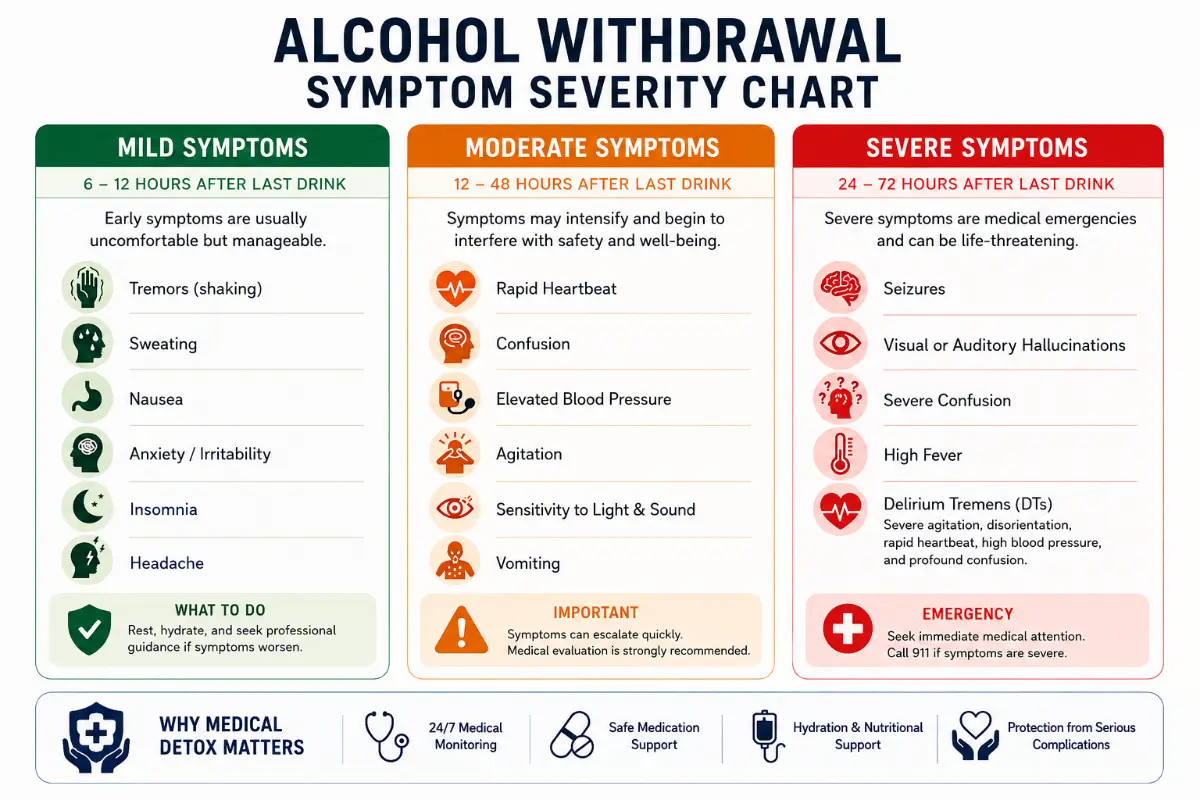
This is why alcohol withdrawal symptoms can escalate quickly. On one hand, mild symptoms may begin with sweating, shaking, anxiety, nausea, and insomnia, but severe alcohol withdrawal can involve dangerous complications such as:
- Rapid blood pressure fluctuations
- Severe dehydration
- Hallucinations
- Seizures
- Delirium tremens (DTs)
- Confusion and agitation
The Cleveland Clinic states that delirium tremens (DTs) can become life-threatening without immediate treatment.
One of the biggest concerns is unpredictability. A person may believe they are experiencing “mild withdrawal” before symptoms suddenly intensify within hours.
Clinical Perspective From Dr. Ash Bhatt“During my clinical practice, I have met individuals who believe they could safely detox at home because their previous withdrawal attempts were manageable. But here’s the thing, alcohol withdrawal severity can escalate quickly, and especially after years of chronic drinking, it is always like a new road you are taking to get sober by yourself. But when you reach out to medical treatment, you are under supervision, and your whole health is taken care of, because we understand this is a vulnerable period. So please do not wait for the emergency period.” |
7 Signs You May Need Medical Detox for Alcohol Addiction
Alcohol dependence does not always look extreme from the outside. In many cases, the warning signs become noticeable only when someone tries to cut back, stop drinking, or realizes alcohol has started controlling how they feel physically and emotionally.
These signs can help identify when alcohol use may require professional medical support rather than attempting withdrawal alone.
1. You Experience Withdrawal Symptoms When You Stop Drinking
One of the clearest signs a person may need medical detox for alcohol addiction is experiencing withdrawal symptoms whenever they are trying to reduce alcohol use or stop.
These alcohol detox symptoms often begin within several hours after the last drink and may include:
- Shaking or tremors
- Sweating
- Nausea
- Anxiety
- Irritability
- Insomnia
- Headaches
Many people initially dismiss these symptoms as stress or exhaustion. However, when the body reacts this strongly to stopping alcohol, it often indicates physical dependence.
The more intense the withdrawal symptoms become, the higher the likelihood that medically supervised detox may be necessary.
2. You Drink Daily or Need Alcohol to Function Normally
Alcohol dependence symptoms often become visible long before someone recognizes them as addiction.
Some individuals begin drinking in the morning to steady their nerves, while for other drinking may make them feel emotionally unable to function socially, professionally, or mentally without alcohol.
These are patterns that are closely related to chronic heavy drinking, and other patterns may include:
- Drinking every day without breaks
- Feeling anxious without alcohol available
- Using alcohol to regulate emotions
- Needing larger amounts to feel the same effect
- Planning daily activities around drinking
Over time, the body adapts to constant alcohol exposure, which increases withdrawal risks if drinking suddenly stops.
3. You’ve Tried to Quit Before but Couldn’t Stay Sober
Many people attempt to stop drinking several times independently before seeking professional help.
What often happens is a cycle of temporary sobriety followed by relapse because alcohol cravings, emotional distress, and withdrawal symptoms become overwhelming.
Some individuals restart drinking not to feel intoxicated, but simply to stop shaking, panic, or discomfort.
However, repeated failed detox attempts can create emotional exhaustion and hopelessness, especially when someone genuinely wants to quit but feels physically unable to tolerate withdrawal alone.
This is one reason detoxing from alcohol safely often requires medical support, where a whole team is present rather than willpower alone.
4. Your Symptoms Become Severe Within Hours of Your Last Drink
Your day was going usually when you tried stopping alcohol, but suddenly, withdrawal hits hard, and it hits fast, increasing heartbeat, producing severe tremors, panic that feels uncontrollable, or confusion. This is what’s called accelerated withdrawal, and a medical red flag.
Shaking after stopping alcohol can indicate the nervous system is struggling to regulate itself safely.
If symptoms intensify within hours of the last drink, immediate medical evaluation is necessary because severe withdrawal complications can escalate quickly.
5. You’ve Experienced Hallucinations or Seizures Before
A history of alcohol withdrawal seizures or hallucinations significantly increases medical risk during future detox attempts.
Previous withdrawal complications suggest the nervous system has already demonstrated dangerous instability during alcohol cessation.
People experiencing delirium tremens may see or hear things that are not present, become severely confused, or develop dangerous cardiovascular symptoms.
The Cleveland Clinic alcohol withdrawal guide explains that previous episodes of alcohol withdrawal can increase the risk of more severe withdrawal symptoms in the future.
Because of this, detox should never happen alone when there is a history of severe withdrawal symptoms.
6. Alcohol Is Affecting Your Mental or Physical Health
Alcohol damages more than just your liver. Long-term heavy drinking contributes to anxiety, depression, sleep disruption, elevated blood pressure, and social isolation, all of which make recovery harder.
In many cases, alcohol becomes both a temporary coping mechanism and the source of worsening emotional distress.
Withdrawal complications can also become more medically dangerous when someone already has cardiovascular issues, poor nutrition, dehydration, or underlying mental health conditions.
Professional alcohol addiction treatment helps address both the physical withdrawal process and the emotional impact alcohol dependence creates over time.
Clinical Perspective From Dr. Ash Bhatt“One of the biggest misconceptions in people I have seen is that they take alcohol dependence seriously only when they have gone through external loses. But they did not notice that this crisis has been happening long before in their physical health declining, worsening of anxiety, disrupted sleep, and emotional isolation. These were early warning signs that matters because they often indicate the nervous system is already under significant strain.” |
7. You’re Afraid to Stop Drinking Without Help
Fear itself is a legitimate reason to seek medical support. If you’re anxious about what withdrawal might feel like, haunted by previous failed attempts, or uncertain whether you can manage the process, that fear is telling you something important: you need professional support and that is self-awareness.
Alcohol withdrawal can be unpredictable, and many people feel safer knowing medical professionals are available if symptoms worsen.
Seeking medically supervised support is not an overreaction. It is often the safest way to begin recovery with stability and reassurance.
Can You Detox From Alcohol at Home?
This is one of the most common questions, and the honest answer is: it depends, but the risks are significant.
People with short-term or light alcohol use might experience mild symptoms that they can manage at home with medical guidance. However, if you’ve been drinking daily or heavily for months or years, home detox is extremely risky.
Withdrawal is unpredictable; someone might experience mild symptoms initially, then severe symptoms emerge suddenly. Medical professionals can’t anticipate exactly when this will happen or how severely it will progress without real-time monitoring.
People with long-term or heavy alcohol use face higher risks of seizures, delirium tremens, dangerous heart rhythm changes, and dangerous swings in blood pressure, all of which require immediate medical intervention. These complications can occur without warning and are life-threatening without proper treatment. Before attempting home detox, a medical evaluation is essential where a doctor can assess your individual risk and recommend whether medically supervised detox is necessary.
What Happens During Medical Detox?
Medical detox is structured around three core goals: safety, comfort, and transition into ongoing recovery.
When you arrive, you’ll undergo a comprehensive medical assessment that evaluates
- your overall health,
- the severity of your alcohol dependence,
- any underlying medical or mental health conditions,
- and your specific risks during withdrawal.
This assessment determines your level of care, whether outpatient monitoring, intensive outpatient programs, or inpatient hospitalization is appropriate.
Throughout detox, medical staff monitors your vital signs continuously, so that any dangerous changes are caught immediately. You’ll receive medications to manage symptoms safely, whether that’s benzodiazepines to calm anxiety or any other medications to stabilize heart rate and blood pressure. You’ll be supported with IV fluids and nutritional support to address the dehydration and nutritional deficiencies that come with heavy drinking.
Beyond the medical side, you’ll receive emotional and psychological support. Counselors and therapists help you understand addiction, process emotions without alcohol, and begin planning your recovery pathway.
The environment is structured yet supportive, designed to be a bridge between addiction and stable recovery.
Recovery Begins with Safe, Professional Support
Detoxification is an essential beginning of the recovery journey, but it is not the entire recovery process.
Once withdrawal symptoms stabilize, ongoing alcohol rehab and professional addiction treatment help individuals address the emotional, behavioral, and psychological factors connected to alcohol dependence.
Recovery becomes more sustainable when people receive continued support instead of attempting to manage everything alone.
In fact, getting help should not be interpreted as a weakness. It is a sign that one is self-aware, brave, and willing to protect their health before alcohol destroys their whole life.
If you see any of these signs in yourself or a loved one, take the step and contact the professional help that can provide the medical detox treatment for a safe recovery foundation.
Call Legacy Healing LA Today! : 8008084570