




-
 Written By:
Alex Herrera
Written By:
Alex Herrera
-
 Edited By:
Phyllis Rodriguez, PMHNP-BC
Edited By:
Phyllis Rodriguez, PMHNP-BC
-
 Clinically Reviewed By:
Dr. Ash Bhatt, MD, MRO
Clinically Reviewed By:
Dr. Ash Bhatt, MD, MRO
Key Takeaways
- Tramadol is an opioid drug and classified as a Schedule IV controlled substance. Even when used as per the doctor’s prescription, and in the correct way, this may becoming addicted.
- Physiological dependence and addiction are two different things. Dependence results from the body’s adjustment; addiction means losing the ability to control usage despite harmful consequences.
- Tramadol also affects serotonin and norepinephrine, unlike most opioids. That means withdrawal can include atypical symptoms like severe anxiety, confusion, or hallucinations on top of standard opioid withdrawal.
Yes. Tramadol is an opioid, and like other opioids, it carries a real risk of misuse, physical dependence, and addiction, even when it’s taken exactly as prescribed for legitimate pain. It is for this reason that the FDA has classified tramadol as a Schedule IV controlled substance.
Tramadol might have been given to you due to a significant injury or long-term pain, and at the beginning, it in fact served its purpose well. Suddenly, stopping the medication became more difficult than expected, or the drug gradually turned into the thing you couldn’t imagine functioning without, instead of being just a source of pain relief. If that sounds familiar, this article explains the real situation and shows that the boundary between normal physical dependence and addiction is actually very closely related.
Is Tramadol Addictive?
Yes, tramadol is an opioid medication used to relieve pain. Being an opioid drug, it comes with the risk of misuse, physical dependence, and addiction. For this reason, the FDA lists tramadol as Schedule IV under the Controlled Substances Act, signifying that there is evidence of abuse and dependence potential.
It does not imply still that all individuals taking tramadol will get addicted. Most of the people use tramadol to manage pain after an injury or a health condition and stop it without any problems. The risks will increase with higher dose, longer time, and personal ones like a history of substance misuse. Possessing a prescription is not what makes the risk.
Tramadol Tolerance, Dependence, and Addiction: What’s the Difference?
These three terms get used interchangeably, and that’s where a lot of confusion starts.
| Term | What It Means |
| Tolerance | The body adjusts to tramadol over time, so the same dose produces less pain relief than it used to. |
| Physical dependence | The body adapts to regular use. Stopping or sharply reducing the dose triggers withdrawal symptoms. |
| Addiction | Use becomes difficult to control, and continues despite harm to health, relationships, work, or daily functioning. |
Physical dependence does not necessarily mean addiction. A person using tramadol strictly as the doctor has instructed for managing chronic pain may develop a physical dependence; this means their body has become used to the drug, and if the medication is suddenly stopped, there would be a reaction, but still it does not meet the criteria for addiction. Dependence is merely a foreseeable biological reaction. It is not a character flaw, nor is it an indication that something has gone seriously wrong.
How Can Tramadol Use Shift From Pain Relief to Dependence?
The path usually isn’t dramatic. It is a gradual change that goes unnoticed while it’s happening.
It typically looks like this: pain gets treated, relief works, and use continues because the underlying pain hasn’t fully resolved. Within weeks or months, the body will physically become used to the presence of tramadol. At some point, reducing or stopping the dose brings on withdrawal symptoms, which can make continued use feel necessary even after the original pain has improved.
None of that proves addiction on its own. Needing ongoing pain treatment isn’t addiction. Developing physical dependence isn’t addiction. What matters is what happens next: whether the person can still make decisions about their use, or whether the medication starts making the decisions for them.
If you’re considering a dose change because you’re worried about dependence, that’s a conversation for your prescriber, not something to adjust yourself. Abrupt changes carry their own risks, covered further down.
What Are the Signs That Tramadol Use Is Becoming a Problem?
This isn’t a simple checklist. It’s about what’s actually changing: how the medication is used, how much space it takes up mentally, and whether someone can still walk away from it.
Changes in How Tramadol Is Used
- Taking it in higher doses than prescribed
- Taking it more frequently than directed
- Using leftover tramadol for something other than its original purpose, like anxiety or low mood
- Running out of a prescription early and needing to refill sooner than scheduled
Increasing Focus on the Medication
- Thinking about the next dose well before it’s due
- Feeling anxious at the idea of running out
- Keeping a private stash “just in case,” beyond what’s prescribed
- Spending noticeably more time or mental energy on obtaining or planning around tramadol than before
Continuing Despite Problems
- Ongoing use even as it affects work performance, relationships, or responsibilities
- Continuing despite side effects like persistent drowsiness, mood changes, or digestive issues
- Using tramadol in situations where it’s clearly unsafe, like before driving
Difficulty Cutting Down or Stopping
- Attempting to reduce the dose and finding it harder than expected
- Physical or emotional discomfort strong enough to abandon a planned reduction
- A pattern of “I’ll cut back next week” that keeps getting pushed back
One isolated instance in any of these categories isn’t a diagnosis. A pattern across several of them, sustained over time, is what actually signals a shift from dependence into something that needs professional attention.
What Happens When Tramadol Is Stopped After Regular Use?
Physical dependence means the body has adapted to tramadol being present. Stopping abruptly, or cutting the dose sharply, can trigger withdrawal.
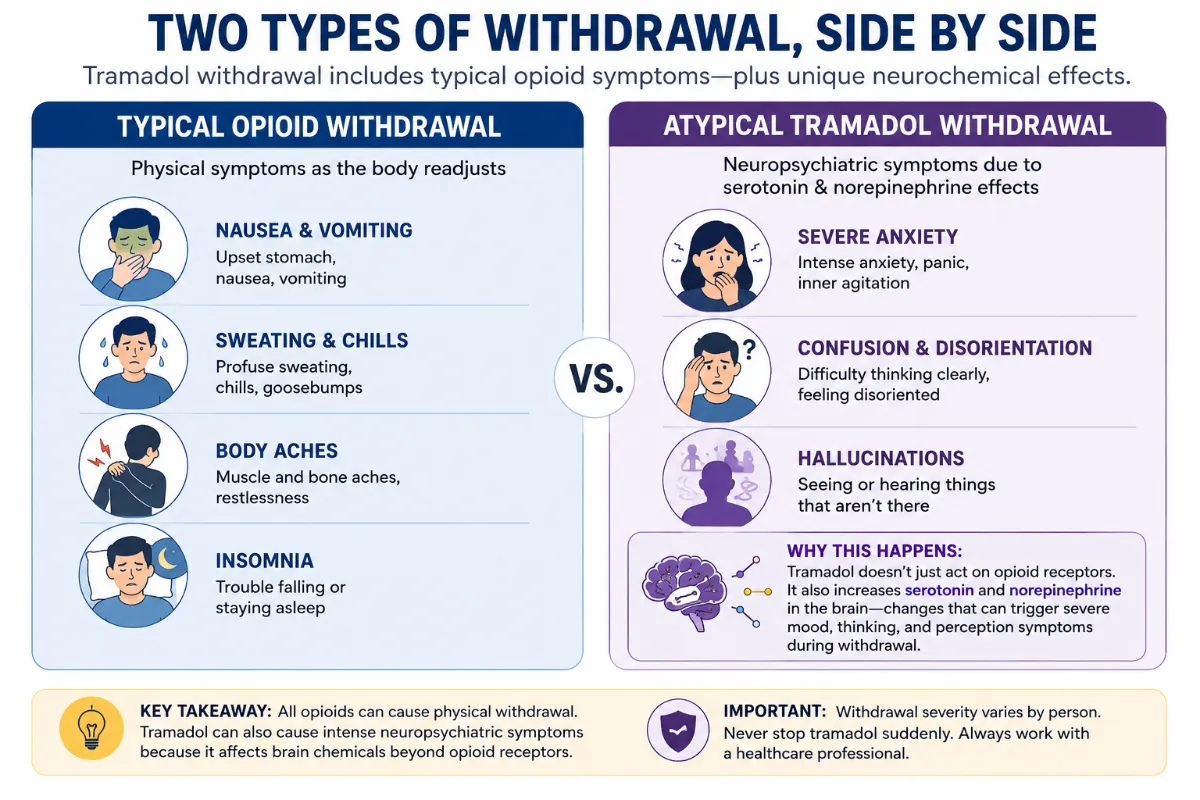
MedlinePlus lists the withdrawal symptoms tramadol can cause directly: nervousness, panic, sweating, trouble sleeping, a runny nose, sneezing or coughing, body pain, goosebumps, chills, nausea, uncontrollable shaking, diarrhea, and, less commonly, hallucinations.
That last symptom points to something specific about tramadol. Unlike most opioids, it also acts as a serotonin-norepinephrine reuptake inhibitor, similar in mechanism to certain antidepressants. That dual action means withdrawal can include a second layer of symptoms beyond typical opioid withdrawal: severe anxiety, confusion, unusual sensory experiences. Clinical case reports have documented this atypical withdrawal pattern in patients who’d taken tramadol steadily for years, which cuts against the common assumption that tramadol is a “gentler” opioid to come off.
This is also why FDA labeling specifically warns against abruptly discontinuing tramadol in anyone who’s physically dependent. A doctor typically tapers the dose down gradually rather than stopping it outright, precisely to avoid triggering this response.
From Dr. Ash Bhatt’s Perspective: Patients are often more prepared for the physical withdrawal than the emotional side. The panic and confusion tramadol withdrawal can cause catches people off guard because they weren’t expecting an opioid to affect them that way. That’s the serotonin piece at work, not a separate problem.
When Does Physical Dependence Become an Addiction Concern?
Withdrawal does not automatically mean a person was addicted. A person can be physically dependent, experience withdrawal if they stop, and still not meet the clinical picture of addiction. What changes the situation is losing control, compulsive use, repeatedly doing something in harm despite recognizing it and prioritizing the drug use over work, family and personal health and safety.
There is no need for you to wait until your situation is totally hopeless before talking to a professional about this. If you see that some of the signs and symptoms listed above are present and withdrawal symptoms become so intense that you can’t even imagine stopping even though that is what you want, it’s already a good time to get an assessment.
One more risk about tramadol that is quite specific is: if it is used together with SSRIs SNRIs MAOIs, St. John’s wort, or other serotonergic drugs this will increase the probability of serotonin syndrome, a very rare but very dangerous possible side effect. If any person is using tramadol together with an antidepressant, this must be under doctor’s control. Do not attempt a self- managed withdrawal.
When Should Professional Help Be Considered?
Consider reaching out to a professional if you notice:
- Difficulty reducing or stopping tramadol despite wanting to
- Using it in a way different from how it was prescribed
- Withdrawal symptoms that feel unmanageable or frightening
- Increasing time spent thinking about, obtaining, or using tramadol
- Continued use despite clear consequences to your health, relationships, or responsibilities
Don’t stop tramadol suddenly just because you’re worried about dependence. That instinct is understandable, but abrupt discontinuation carries its own risks, including the withdrawal symptoms and rare complications described above. A medical evaluation is the safer starting point, whether the goal is a supervised taper, addiction treatment, or a second opinion on your current pain management plan.
What Does Tramadol and Opioid Addiction Treatment Actually Involve?
Treatment isn’t one-size-fits-all, and it isn’t just detox followed by a goodbye. Here’s what the process typically includes, depending on what someone actually needs.
Clinical Assessment
A good treatment plan begins with a genuine assessment not a checklist. The clinician considers duration of use, current dose and pattern of use, severity of physical dependence, risk of withdrawal, and whether or not a co-morbid illnesses like anxieties or depression are involved.
Medically Supervised Detox
Detox is best achieved under medical supervision since the withdrawal from tramadol can mimic that from a traditional opiate as well as presenting unusual aspects like severe anxiety and hallucinations. If detox is to occur, it should be done slowly under medical supervision rather than carrying it out at home.
Medication-Assisted Treatment (MAT)
Three medications buprenorphine, methadone, and naltrexone, have been approved by the FDA to decrease symptoms of cravings and withdrawal symptoms in patients suffering from opioid use disorder. Based on SAMHSA clinical guidance, prescribed medications for this disorder are most effective when used and counseling intervention.
Residential or Inpatient Treatment
In more intensive cases, i.e., severe dependence, co-occurring mental health problems or a home environment that impedes progress, 24-hour residential treatment offers the benefit of a stable context away from the temptation of old cues, whilst creating ‘space’ for change to occur through individual and group-focused therapeutic work.
Outpatient Treatment (PHP and IOP)
For those not requiring 24 hour care, or returning to the community from a residential treatment program, partial hospitalization (PHP) and intensive outpatient (IOP) programs offer structured therapy sessions several days per week for someone to remain employed or go to school or home with family.
Addressing Co-Occurring Mental Health Conditions
Opioid misuse and conditions like depression, anxiety, or trauma-related disorders frequently show up together. Treating the substance use without addressing what’s underneath it tends not to hold. In this case, an integrated dual diagnosis treatment takes care of both by the at the same time.
Aftercare and Relapse Prevention
Recovery is not over when a program stops. Ongoing outpatient therapy, support groups like Narcotics Anonymous, and a relapse prevention plan are what SAMHSA identifies as core to sustaining recovery long-term, and they’re often the difference between a program that works and one that doesn’t stick.
Conclusion
Tramadol’s reputation as a “milder” opioid makes it easy to underestimate, and that’s precisely what makes it dangerous. Physical dependence can develop from legitimate, doctor-directed use. Addiction develops from something else entirely: a loss of control over that use, regardless of how it started.
Neither of those things is a reason for shame, and neither has to be managed alone. If tramadol has become harder to stop than it should be, or if withdrawal feels like more than you can safely handle on your own, that’s a signal to talk to a professional, not a personal failing to hide.
Learn More: Can You Overdose on Trazodone? Symptoms and Risks
Getting Treatment for Tramadol Addiction at Legacy Healing Center LA
Legacy Healing Center LA builds tramadol and opioid treatment plans around the individual assessment described above, not a fixed program everyone moves through the same way. Our prescription medication treatment programs are designed specifically around medications like tramadol, and our opioid addiction treatment track addresses the specific withdrawal and craving patterns opioids create. When withdrawal risk is a concern, our medically supervised detox provides the safety net to get through that stage without unnecessary risk.
If you’re ready to talk through what treatment could look like for you or someone you love, reaching out for an assessment is the first step, not a commitment to anything beyond that conversation.