


-
 Written By:
Alex Herrera
Written By:
Alex Herrera
-
 Edited By:
Phyllis Rodriguez, PMHNP-BC
Edited By:
Phyllis Rodriguez, PMHNP-BC
-
 Clinically Reviewed By:
Dr. Ash Bhatt, MD, MRO
Clinically Reviewed By:
Dr. Ash Bhatt, MD, MRO
Most people do not expect cannabis to become part of an addiction cycle. In modern culture, cannabis is often viewed as natural, safer than other substances, or simply part of a wellness-oriented lifestyle.
For some people, occasional cannabis use never becomes a problem. But for others, it can slowly turn into emotional dependence or lead to the use of polysubstance abuse to cope with stress, anxiety, or everyday pressure.
This is where conversations around cannabis use disorder and cross addiction become important.
Key Takeaways
|
Research from the Centers for Disease Control and Prevention (CDC) estimates that approximately 3 in 10 individuals who use cannabis may develop cannabis use disorder.
Now, let’s explore the warning signs, underlying causes, and long-term mental health impact associated with chronic cannabis use.
What Is Cross-Addiction?
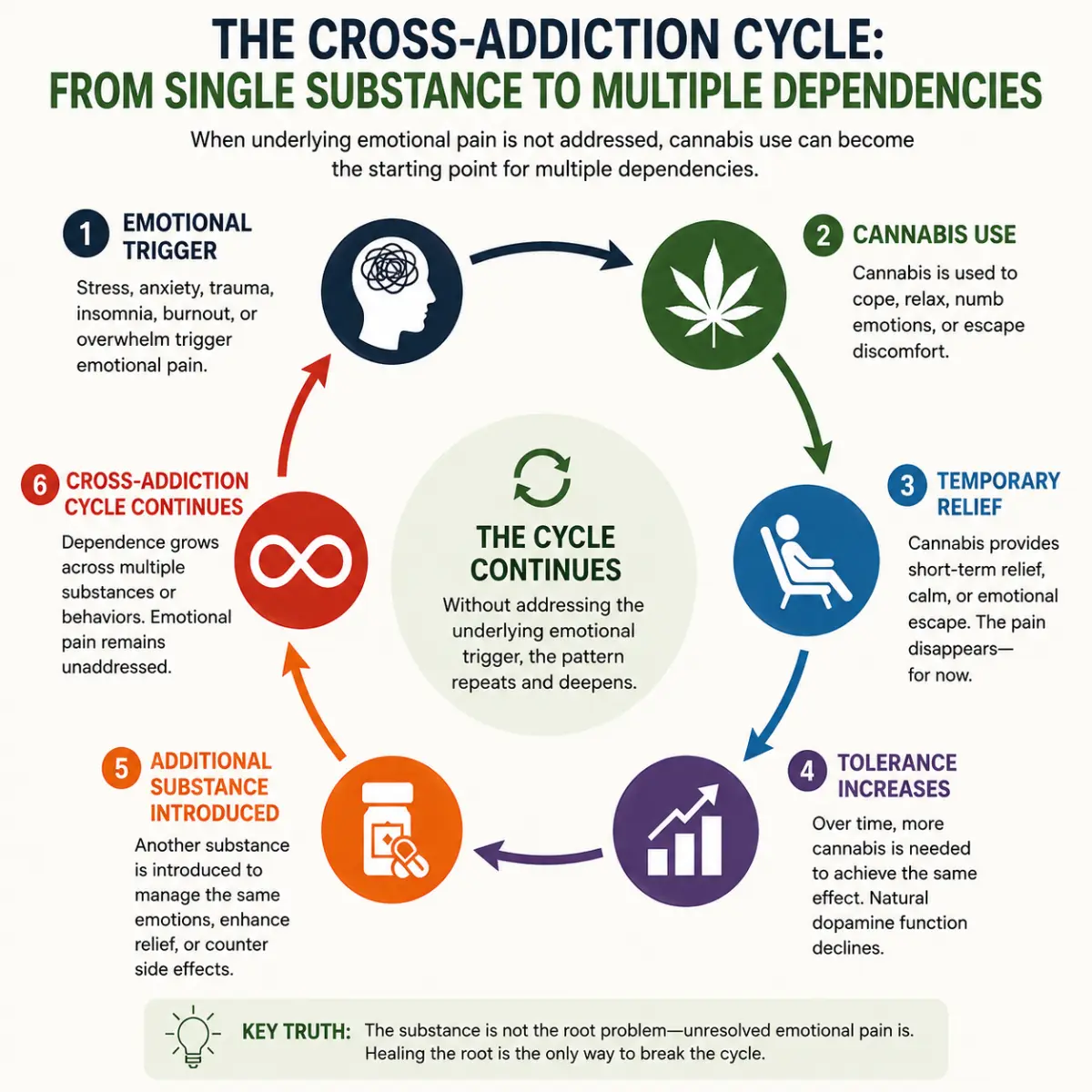
Cross-addiction occurs when dependence on one substance or behavior shifts toward another addictive pattern. Instead of addressing the emotional discomfort underneath the addiction, the brain begins searching for alternative ways to regulate stress, anxiety, numbness, or emotional overwhelm.
This form of addiction transfer can involve substances, behaviors, or both, where someone may stop relying heavily on one substance while unconsciously increasing dependence on another.
You may see this commonly in:
- Cannabis progressing into alcohol misuse
- Cannabis combined with stimulants for productivity or energy
- Cannabis alongside prescription medication misuse
- Cannabis dependency paired with gambling, gaming, shopping, or compulsive behaviors
- Using multiple substances to manage mood changes throughout the day
In many cases, polysubstance abuse develops gradually rather than intentionally, where a person may begin using cannabis to relax at night and stimulants to maintain productivity during the day. After some days, these habits can become connected emotionally and psychologically.
Why Cannabis Can Become Part of the Addiction Cycle
Cannabis affects the dopamine reward system, the part of the brain linked to pleasure, motivation, and reward. Now, when someone uses cannabis, particularly high-potency products, dopamine floods the brain, creating a powerful association, implying “This feeling is what I need.”
But, here’s the problem
The short-term relief vs. long-term reliance cycle:
- Day 1: Cannabis reduces anxiety, the person feels genuinely better
- Week 2: They use it again, same relief
- Week 4: They notice they need more to get the same effect (tolerance)
- Month 3: They’re using daily; their baseline anxiety is actually worse than before
- Month 6: Without cannabis, they feel unbearably anxious
What’s happening is Over time, the brain can become dependent on cannabis to feel calm or emotionally balanced. The brain stops making dopamine on its own because it’s getting artificial surges from cannabis. Eventually, the person may feel more anxious, emotionally drained, or uncomfortable without cannabis.
Self-Medication and Emotional Coping
Many individuals engage in self-medication behaviors without realizing it, where people think cannabis would help them with:
- Anxiety
- Burnout
- Trauma-related distress
- Chronic stress
- Insomnia
- Emotional numbness
What starts as occasional relief can slowly become daily reliance.
Dr. Ash Bhatt on Why this setup creates cross-addiction risk:Someone with untreated anxiety + cannabis dependency eventually tries to quit. Their anxiety spikes immediately. A doctor prescribes a benzodiazepine for “short-term relief.” Without treating the original anxiety disorder, that person now has two dependencies instead of one. This is the cross-addiction trap: the root emotional problem was never addressed, so quitting one substance just creates the space for another. |
Signs Cannabis Use May Be Turning Into Cross-Addiction
Cross-addiction can be difficult to notice, especially in people who seem successful or stable on the outside.
Signs of Addictive Behavior May Include:
- Needing multiple substances to achieve relaxation or emotional relief
- Increasing tolerance to cannabis, requiring larger amounts or more frequent use
- Emotional reliance on cannabis, feeling unable to handle stress or difficult emotions without it
- Using cannabis after other substances to enhance or extend the effect
- Hiding or minimizing cannabis use to friends, family, or healthcare providers
- Declining motivation or productivity, despite external success
- Escalating usage patterns, gradually increasing from occasional to daily use
The “High-Functioning” Reality Most People Miss
One of the most dangerous aspects of cannabis-related cross-addiction is that it can exist completely invisible to the outside world. Many people continue managing careers, relationships, and responsibilities while privately struggling with substance dependence, and the signs you will see in high-functioning individuals can be visible as:
- Using cannabis nightly to “decompress”
- Relying on stimulants for daytime productivity
- Worsening of anxiety without substances
- Emotionally detached or exhausted
The dangerous part? Without visible consequences, there’s no external motivation to change, and this is why the person lacks the “rock bottom” moment that can provoke them to seek help.
The Role of High-Potency THC in Modern Dependency
Modern cannabis products are significantly more potent than they were even two decades ago.
The THC (delta-9-tetrahydrocannabinol), a primary psychoactive compound found in the cannabis plant)Strength evolution:
| Time Period | THC Content | Delivery | Effect Profile |
| 1990s | 4-6% | Smoking flower | Mild, gradual onset |
| 2010 | 8-12% | Smoking/edibles | Moderate, variable |
| 2020 | 20-25% | Vaping, concentrates | Intense, rapid |
| 2024 | 25-35%+ | Distillates, concentrates | Extreme, near-instantaneous |
What high potency THC does to the brain:
- Creates more intense dopamine surges (stronger reward associations)
- Triggers more significant THC dependency patterns
- Makes dependency develop faster over time
- Makes the brain rely on cannabis more quickly
Research published in CDC shows a clear correlation: as THC potency increased in cannabis products, cannabis use disorder diagnoses increased proportionally. Modern cannabis products affect the brain much more intensely than older versions.
Additionally, vaping and concentrates create rapid absorption, and the high hits very instantly. This mirrors addiction escalation seen with other drugs: the faster and more intense the reward, the more addictive the substance becomes.
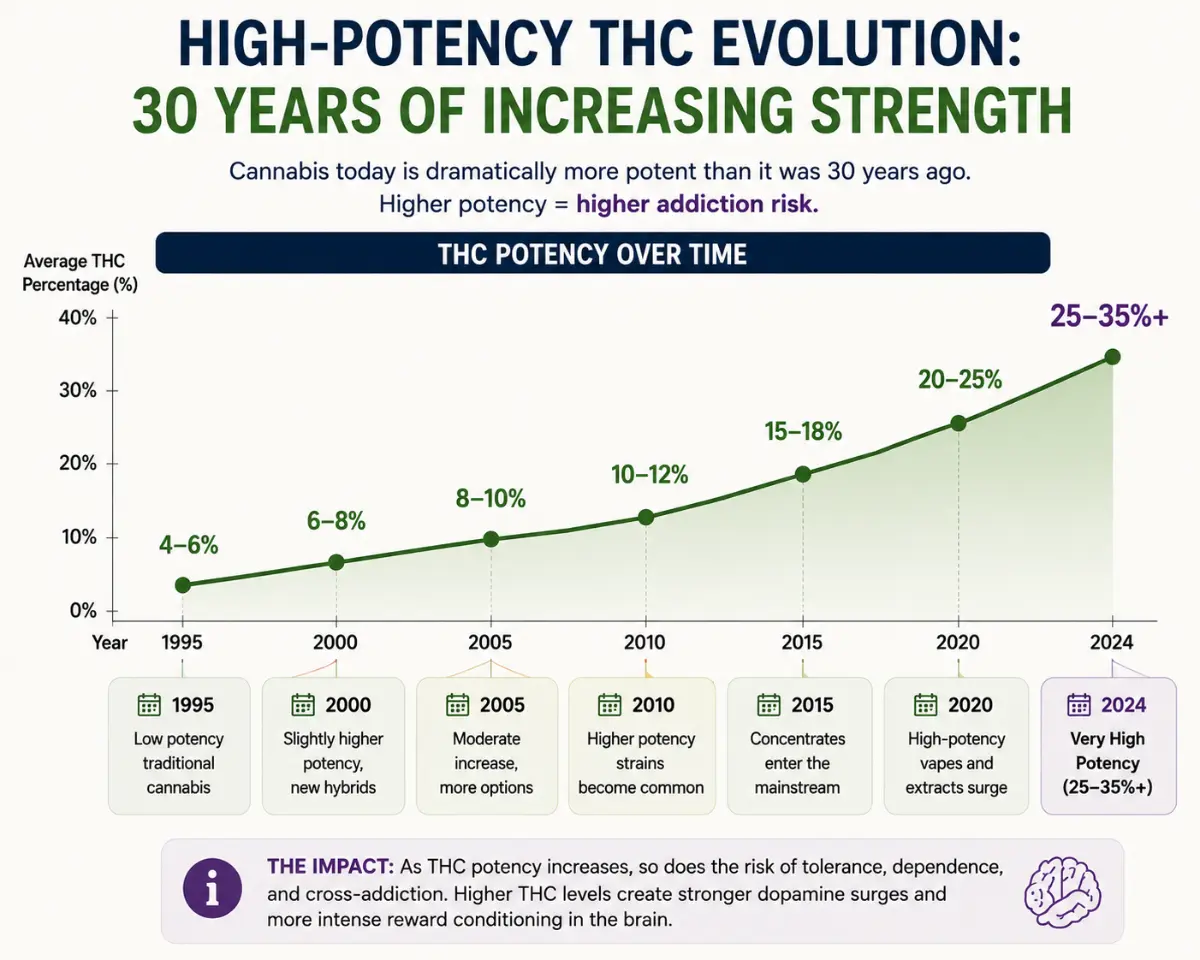
Today’s cannabis addiction risk is far higher than many people realize.
The Mental Health Connection With Cross-Addiction
Cannabis and mental health conditions exist in a complex, bidirectional relationship. While cannabis may provide temporary relief, long-term use can worsen anxiety, depression, panic symptoms, and emotional instability in some individuals.
However, prolonged reliance may worsen underlying symptoms over time.
Cross-addiction frequently overlaps with:
- Anxiety disorders
- Depression
- Panic symptoms
- Trauma-related distress
- Emotional numbness
- Sleep disruption
- Mood instability
This is particularly important in individuals with co-occurring disorders, where substance use and mental health challenges reinforce one another.
Clinical Perspective From Dr. Ash Bhatt“One of the biggest misconceptions I see is people believing cannabis is automatically helping their mental health long-term. In reality, chronic dependency can sometimes intensify emotional avoidance, worsen anxiety patterns, and delay meaningful healing. When emotional pain remains untreated, individuals continue cycling between substances in search of temporary relief. The pattern becomes self-perpetuating.” |
Why Cross-Addiction Often Goes Unnoticed
Cannabis dependency is often minimized because of changing public perceptions and legalization trends.
Several misconceptions contribute to delayed recognition:
- “Natural means safe”
- Comparing cannabis only to harder substances
- Believing dependency cannot occur without severe consequences
- Assuming successful individuals cannot struggle with addiction
- Viewing emotional reliance as harmless stress management
Because cannabis is socially accepted in many settings, emotional dependency can remain hidden for years.
Some individuals do not realize a problem exists until they notice:
- worsening anxiety
- increased tolerance
- multiple substance reliance
- declining motivation
- emotional disconnection
- difficulty functioning without cannabis
Because these changes happen slowly, many people do not realize there is a problem until the dependency becomes difficult to manage.
Recovery Is About More Than Quitting One Substance
Recovery from cross addiction involves much more than stopping cannabis or another substance. Sustainable healing requires understanding why the dependency developed in the first place.
Effective recovery often focuses on:
- Emotional healing
- Trauma-informed care
- Nervous system regulation
- Stress management
- Healthier coping mechanisms
- Relationship repair
- Behavioral pattern awareness
- Long-term wellness planning
Comprehensive cannabis addiction treatment may include therapy, psychiatric support, behavioral interventions, relapse prevention strategies, and dual diagnosis care.
This is why cannabis addiction treatment and behavioral health support at Legacy Healing emphasize comprehensive treatment that focuses on long-term healing, not just stopping substance use.
Find Support for Cross-Addiction at Legacy Healing Center, Los Angeles
Cannabis dependency can develop slowly, making it difficult to recognize when occasional use has become something more serious. Over time, some individuals begin relying on multiple substances or unhealthy coping habits just to get through daily life.
At Legacy Healing Center Los Angeles, we provide personalized treatment for cannabis addiction, cross-addiction, and co-occurring mental health conditions. Our team helps clients rebuild healthy routines, improve emotional well-being, and develop long-term recovery strategies in a safe and supportive environment.
Whether you are concerned about your own substance use or worried about someone close to you, professional support can help you take the next step toward recovery.