

Addiction does not develop in a vacuum. It develops in a person, with a specific history, specific pressures, and specific reasons why substance use became a way of managing something that felt unmanageable. Understanding those reasons is not a preliminary step to treatment. It is the treatment.
“Our clinical model begins with a commitment most programmes never make: to understand you completely before recommending anything.”
We also understand something the standard model rarely acknowledges, that the person sitting across from our clinical team has a life of real substance and real stakes outside this room. A career. A family. A reputation. Our approach does not ask you to check that life at the door. It is built to work alongside it.

Before assumptions, before recommendations, before anything, we listen. Your medical history, your substance use history, your mental health profile, your family dynamics, your previous experiences with treatment, and what brought you to this moment. This is not a form to complete. It is a conversation, unhurried, confidential, and without judgment, that establishes the trust and clinical clarity everything else is built on.
What this covers:
Our clinical team analyses not just what is happening, but why. The emotional patterns that developed long before anyone identified a problem. The co-occurring conditions, anxiety, depression, trauma, burnout, that made substance use feel necessary. The neurological factors. The life pressures specific to living and working in Los Angeles. Because treating a symptom without understanding its origin is not treatment. It is delay.
Using everything the assessment reveals, our team designs a treatment plan built specifically around your clinical profile, your life, and your goals. Every element has a clinical purpose. Nothing is included by default. Your plan is reviewed and personally approved by Dr. Ash Bhatt before treatment begins, and you will understand exactly what is in it and why.
Recovery is not linear. A plan set at intake and never revisited is a plan that stops working the moment your reality diverges from its assumptions, which it will. Throughout your treatment, your clinical team meets regularly to review your progress, address what is working, adjust what isn’t, and ensure your plan continues to reflect where you actually are. You are never following a protocol. You are in a living clinical relationship.
Aftercare planning begins on day one, not the week before discharge. Before you leave Legacy, you will have a complete, detailed strategy for life after treatment. Relapse prevention calibrated to your specific triggers. Continued care that connects to your real life. The practical tools to sustain your recovery in the world you are returning to. Independence, not dependence on treatment, is always the goal.
For most of our clients, substance use is one part of a more complex clinical picture. Depression, anxiety, unresolved trauma, the chronic stress of high-pressure professional environments, these are not background details. They are clinical realities that must be addressed with the same depth and attention as the addiction itself. Our integrated model treats all of it, simultaneously, from day one.


Medically supervised, evidence-based treatment for alcohol, opiates, prescription medications, and other substances, handled with clinical precision and genuine dignity from the first day of detox through residential care and into long-term recovery.


Depression, anxiety, PTSD, and other co-occurring conditions are not treated as secondary concerns at Legacy, they are addressed with the same clinical attention as the addiction itself, by the same team, from the beginning. Because one cannot be resolved while the other is left untreated.

Many of our clients carry experiences that predate and underlie their substance use, losses, pressures, and unresolved pain that never received adequate clinical attention. Trauma-informed care is not an optional module at Legacy Healing LA. It is woven through every aspect of the clinical model.

The sophistication of a treatment plan is measured by how precisely the right therapies are selected and combined for the specific person receiving them. Our clinical team draws from a comprehensive range of evidence-based modalities, choosing and integrating them based entirely on your individual clinical profile, not a default programme structure.
Identifies and restructures the thought patterns and behavioural cycles that sustain substance use, giving you concrete, practical tools to recognise and interrupt them before they escalate. One of the most extensively researched modalities in addiction treatment.
Builds emotional regulation, distress tolerance, and interpersonal effectiveness. Particularly effective for clients managing intense or overwhelming emotional states alongside addiction, and for those whose relationships have been significantly affected by their substance use.
A clinically validated approach for processing traumatic memories and reducing their ongoing emotional and physiological impact. Reaches the nervous system at a level that talk therapy alone cannot always access, and is particularly valuable for clients with complex trauma histories.
Not a separate module, a clinical lens applied throughout your entire programme. Every interaction at Legacy is shaped by an understanding of how trauma influences behaviour, emotional response, and the way people relate to care. You will not be asked to revisit difficult experiences before you are ready or without appropriate clinical support.
A collaborative, client-centred approach that builds your own internal motivation for change rather than imposing it from outside. Particularly effective early in treatment, during periods of ambivalence, and for clients who have tried treatment before without sustained results.
Where clinically appropriate, medication plays a critical role in stabilising brain chemistry, reducing cravings, and creating the neurological conditions that make therapy most effective. MAT at Legacy is always evaluated individually, closely monitored, and integrated with the full treatment plan, never used as a standalone intervention.
Individual sessions form the backbone of your clinical work, one-on-one, unhurried, and focused entirely on you. Group sessions, conducted in Legacy’s deliberately small and private residential setting, provide connection, peer accountability, and the experience of being genuinely understood by people who share your situation.
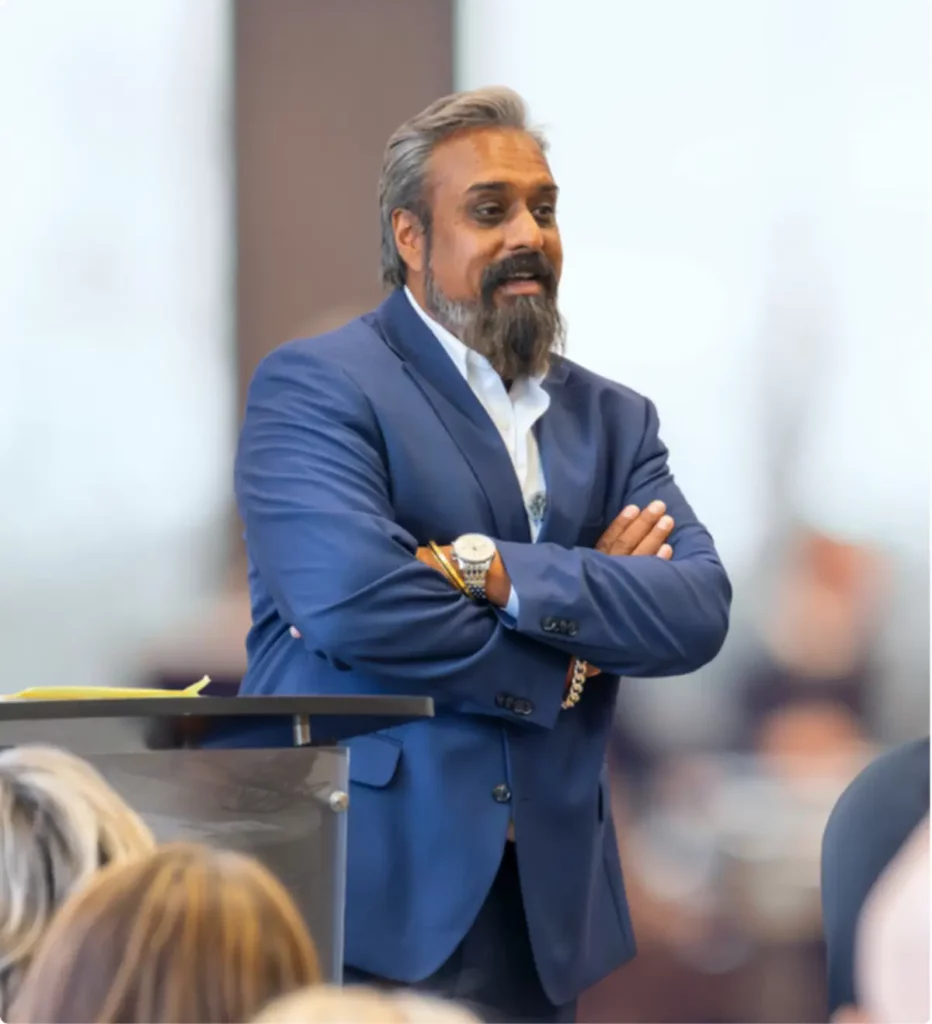
At Legacy Healing Los Angeles, care is guided by professionals who understand both the science of addiction and the human side of recovery.
Medical Director | Addiction & Mental Health Specialist
Dr. Ash Bhatt is a quintuple board-certified physician with extensive experience in addiction medicine and mental health care. His work focuses on treating substance use disorders alongside the emotional and psychological conditions that often drive them, not as separate issues, but as deeply connected ones.
Dr. Bhatt’s clinical approach is rooted in safety, precision, and individualized care. Rather than relying on rigid treatment models, he emphasizes thoughtful assessment, ongoing evaluation, and treatment plans that evolve as patients stabilize and grow.
He is especially known for:
Under Dr. Bhatt’s guidance, treatment at Legacy Healing LA is not rushed, generalized, or disconnected from real life. Every plan is reviewed with medical intention, and every patient is treated with respect, dignity, and care.
Recovery is a journey with distinct phases, each requiring a different kind of clinical attention and a different level of structure. Our continuum of care is designed to support you through every one of them, with the same depth of personalisation and the same standard of clinical oversight from the first day to the last session of aftercare.

The first step, our detox programme, is managed with 24/7 physician oversight, clinical precision, and genuine compassion. The focus is on keeping you safe, managing withdrawal as comfortably as medically possible, and creating the physiological stability that makes real therapeutic work possible.



Recovery does not end at discharge. Your aftercare plan, built throughout your time in treatment, not assembled in the final week, includes continued outpatient care, relapse prevention strategies calibrated specifically to your triggers and circumstances, peer support, and the ongoing clinical connection that sustains long-term sobriety in the real world.
The clinical evidence is unambiguous: recovery that integrates physical, somatic, and holistic healing produces significantly better long-term outcomes than clinical therapy alone. At Legacy, our holistic programme is clinically grounded, purposefully integrated into your treatment plan, and scheduled with the same intention as every therapy session.

Rebuilds the mind-body connection disrupted by prolonged substance use. Regulates the nervous system, supports emotional processing through physical practice, and provides a daily structure that many clients find grounding in early recovery.

Develops the emotional regulation and present-moment awareness that underpins long-term sobriety. Practical, evidence-supported skills, not abstract concepts, that clients take with them beyond treatment.

Works at the physiological level, addressing the imprint of trauma stored in the body that words and insight alone cannot always reach. Particularly valuable for clients with complex trauma histories or for whom verbal therapy has previously felt insufficient.

Substance use depletes the body in specific, measurable ways. Chef-prepared meals designed around recovery nutrition, combined with clinical guidance on rebuilding physical health, address those deficits directly as part of the treatment plan.

Clinically supported practices with demonstrated efficacy in reducing cravings, easing withdrawal symptoms, lowering physiological stress, and supporting the body's natural recovery processes.
Creates space for emotional processing outside of language, accessing and expressing what is difficult to articulate verbally. Clinically grounded in its approach and particularly valuable for clients who carry experiences that have been difficult to address through talk therapy alone.
The clinical model at Legacy is the same for every client. The plan it produces is different for every single one. Here is how our approach adapts to the specific circumstances of the people we work with.

When addiction touches a family, it changes every relationship in it. Our approach for families addresses the full relational picture, the communication patterns, the enabling dynamics, the grief, and the rebuilding of trust that lasting family recovery requires. You are not peripheral to this process. You are part of it.


Addiction in a relationship affects both partners, their communication, their trust, their shared life, and the relational patterns that developed around the substance use. Our approach for couples treats both people with clinical attention, rebuilding the foundation that sustained recovery together requires.

The specific pressures, trauma histories, hormonal factors, and relational dynamics that shape addiction in women require clinical specificity, not generic adaptation. Our approach for women is built around those realities, addressing what drives addiction differently in women’s lives and treating it accordingly.

The social conditioning around help-seeking, the professional identity pressures, and the neurobiological profile of addiction in men all influence what effective treatment looks like. Our approach for men engages with those realities directly, without the expectation that vulnerability comes easily or that the standard model accounts for it.

in less than 2 minutes.
Our experts will review your coverage and help you explore treatment options.
All calls are 100% confidential.