




-
 Written By:
Amber Asher, MSW, LSW
-
 Edited By:
Phyllis Rodriguez, PMHNP-BC
-
 Clinically Reviewed By:
Dr. Ash Bhatt, MD, MRO
Not everyone with an alcohol or drug addiction needs medical detox before rehab. But withdrawal from some substances can cause serious medical complications, and in those cases professional supervision is necessary.
Whether you need it, depends on the substance, how much and how often you use, how long you have used it, any past withdrawal, your current symptoms, other medical conditions, other medications or substances in your system, and your mental health and support at home.
Understanding these differences can help you make a safer treatment decision. If you are concerned about physical dependence, speak with a qualified medical professional before attempting to stop using alcohol or drugs on your own.
Key Takeaways
- Medical detox is withdrawal management. It makes stopping safer, and it does not treat the addiction.
- Alcohol and benzodiazepine withdrawal can cause seizures and delirium. Opioid and stimulant withdrawal carry different risks.
- You may need an assessment before any severe symptoms appear, because past withdrawal and health conditions count.
- Medical supervision does not always mean an inpatient stay, and a residential rehab is not always equipped to manage withdrawal.
- After opioid detox, tolerance is lower, so a return to the same dose can cause an overdose.
Do You Need Medical Detox Before Rehab?
You may need medical detox before rehab if stopping alcohol or drugs could cause serious withdrawal complications or if your medical and psychiatric needs require closer supervision. However, detox is not a mandatory first step for everyone entering addiction treatment.
Medical detox, also called medically supervised withdrawal management, is a process in which healthcare professionals monitor a person’s condition as their body adjusts to the absence of alcohol or drugs. Depending on the individual’s needs, treatment may include medications, supportive care, hydration, nutritional support, and monitoring of vital signs.
The purpose is to help manage withdrawal symptoms, reduce medical risks, and stabilize the individual before continuing addiction treatment.
It is important to understand the difference between detox and rehabilitation.
Medical detox focuses on physical stabilization. It addresses the immediate effects of stopping substance use, including withdrawal symptoms and potential medical complications.
Rehabilitation focuses on the underlying substance use disorder. Treatment may involve individual therapy, group counseling, behavioral interventions, mental health support, medication management, and strategies for maintaining recovery.
Completing detox does not automatically resolve the psychological, behavioral, and social factors associated with addiction. It is generally the beginning of a longer treatment process.
Whether someone needs detox also depends on the capabilities of the receiving rehabilitation facility. Some programs have medical professionals and appropriate monitoring systems to manage selected withdrawal needs. Others are not equipped to handle medically complicated withdrawal.
A clinical assessment helps determine whether someone can safely enter residential rehab directly or needs a separate withdrawal management setting first.
Signs You May Need Medically Supervised Detox
You do not have to experience severe withdrawal symptoms before seeking medical help. Previous withdrawal complications, patterns of substance use, and existing health conditions may indicate a need for medical supervision even before someone attempts to stop using.
Some important warning signs and risk factors include:
1. Previous Withdrawal Seizures or Delirium Tremens
A history of seizures or delirium during alcohol withdrawal is an important risk factor for future complications.
Delirium tremens, sometimes called alcohol withdrawal delirium, is a severe condition involving confusion, disorientation, agitation, and changes in awareness. It can be life-threatening without appropriate medical treatment.
Someone who has experienced these complications during a previous attempt to stop drinking should undergo a medical assessment before trying again.
2. Severe Tremors, Sweating, or Agitation
Significant shaking, excessive sweating, restlessness, and agitation after reducing or stopping substance use may indicate withdrawal.
These symptoms can occur alongside changes in heart rate and blood pressure. Their significance depends on the substance involved, the severity of symptoms, and the person’s medical history.
3. Hallucinations or Confusion
Seeing or hearing things that are not present, becoming disoriented, or experiencing unusual changes in awareness requires immediate medical evaluation.
These symptoms may occur during complicated withdrawal, but they can also indicate other serious medical or psychiatric conditions.
4. Persistent Vomiting and Dehydration
Repeated vomiting, diarrhea, and difficulty keeping fluids down can lead to dehydration and electrolyte imbalances.
This is particularly concerning during opioid withdrawal or when someone has an existing medical condition that affects hydration, nutrition, or kidney function.
5. Daily or Near-Daily Substance Use
Regular use of substances associated with physical dependence can increase the likelihood of withdrawal when someone stops.
This is especially important for people who regularly consume large amounts of alcohol or take benzodiazepines and other sedative medications.
However, frequency alone does not determine whether someone needs inpatient detox. The amount used, duration of use, previous withdrawal experiences, and overall health also matter.
6. Using Alcohol Alongside Sedative Medications
Combining alcohol with benzodiazepines or prescription sleep medications can complicate both intoxication and withdrawal.
These substances can affect the central nervous system and suppress breathing. Dependence on more than one sedative may also make withdrawal management more complicated.
7. Existing Medical or Psychiatric Conditions
People with significant cardiovascular, respiratory, liver, or neurological conditions may require additional medical oversight during withdrawal.
Severe depression, suicidal thoughts, psychosis, and other psychiatric concerns can also affect the appropriate treatment setting.
Pregnancy is another circumstance requiring prompt, individualized medical evaluation.
8. Previous Unsuccessful Attempts to Stop Using
Repeated attempts to quit that result in significant withdrawal symptoms, severe cravings, or a rapid return to substance use should be discussed with a treatment professional.
A history of difficult withdrawal can help clinicians identify potential risks and determine whether additional supervision is necessary.
You should not wait for these symptoms to develop before seeking help. A planned medical assessment can identify withdrawal risks before someone attempts to stop using substances.
Which Substances Can Make Detox Before Rehab Medically Necessary?
Withdrawal does not look the same for every substance. Some drugs can cause potentially life-threatening withdrawal, while others are more likely to produce significant psychological symptoms, cravings, or complications related to existing health conditions.
Understanding these differences helps explain why medical detox recommendations vary from one person to another.
Alcohol
Long-term, heavy alcohol consumption can cause physical dependence. When someone who is dependent suddenly stops drinking or significantly reduces their alcohol intake, the nervous system may become excessively active.
Alcohol withdrawal can range from relatively mild symptoms to serious complications, including seizures and delirium tremens.
The risk of complicated withdrawal may be higher for people who:
- Have previously experienced alcohol withdrawal seizures or delirium tremens.
- Have a history of multiple withdrawal episodes.
- Have consumed large amounts of alcohol regularly over an extended period.
- Have significant medical conditions.
- Also use benzodiazepines or other sedative medications.
Someone with a history of heavy drinking should not assume that stopping at home is safe simply because previous attempts did not result in severe symptoms.
A medical professional can evaluate the person’s withdrawal history and determine whether ambulatory monitoring, inpatient detox, or hospital-level care is appropriate.
For a more detailed explanation of alcohol withdrawal symptoms, complications, and treatment, read our guide: Alcohol Withdrawal: What to Expect, Why It’s Dangerous, and How to Detox Safely.
Benzodiazepines and Sedative Medications
Benzodiazepines are prescription medications commonly used to manage anxiety, panic disorders, insomnia, and certain seizure conditions.
Examples include:
- Xanax (alprazolam)
- Ativan (lorazepam)
- Klonopin (clonazepam)
- Valium (diazepam)
These medications slow activity in the central nervous system. With continued use, the body can develop physical dependence, sometimes even when someone takes the medication exactly as prescribed.
Stopping benzodiazepines abruptly or reducing the dose too quickly can trigger withdrawal. Symptoms may include anxiety, insomnia, agitation, tremors, and, in severe cases, seizures or delirium.
The risk depends on factors such as the medication, dosage, duration of use, frequency, and previous withdrawal experiences.
Some individuals can safely taper their medication under outpatient medical supervision. Others may need inpatient care, particularly when there is a history of complicated withdrawal or an immediate safety concern.
The 2025 Joint Clinical Practice Guideline on Benzodiazepine Tapering, developed by the American Society of Addiction Medicine (ASAM) and other professional organizations, recommends individualized tapering rather than abrupt discontinuation in people who are physically dependent.
If you take benzodiazepines regularly, do not stop or change your dosage without speaking with your prescribing clinician.
Opioids, Including Prescription Painkillers and Fentanyl
Opioids include prescription pain medications and illicit substances such as heroin and illegally manufactured fentanyl.
Common examples include oxycodone, hydrocodone, morphine, heroin, and fentanyl.
Opioid withdrawal can produce considerable physical discomfort. Symptoms may include:
- Muscle aches and body pain
- Sweating and restlessness
- Anxiety and sleep disturbances
- Abdominal cramps
- Nausea, vomiting, and diarrhea
- Strong cravings for opioids
Unlike severe alcohol or benzodiazepine withdrawal, uncomplicated opioid withdrawal is not usually life-threatening. However, vomiting and diarrhea can cause dehydration and electrolyte disturbances. Other medical conditions, pregnancy, and concurrent substance use may increase the need for medical supervision.
An important consideration is that detox alone is not considered sufficient treatment for opioid use disorder.
Evidence-based treatment may include medications such as buprenorphine and methadone. These medications help manage withdrawal symptoms and cravings and can also be continued as part of longer-term treatment.
Another significant concern is reduced opioid tolerance after detox. When someone stops using opioids, their body becomes less accustomed to the substance. Returning to a previously tolerated dose can therefore cause an overdose.
This is why treatment planning should include ongoing care and overdose prevention rather than ending with withdrawal management.
Learn more about opioid addiction treatment in Los Angeles and the treatment options available for prescription and illicit opioid dependence.
Stimulants Such as Cocaine and Methamphetamine
Stimulants, including cocaine and methamphetamine, increase activity in the central nervous system.
Unlike alcohol and benzodiazepines, stimulant withdrawal does not typically produce the same pattern of potentially life-threatening physical withdrawal complications. However, the psychological effects can be significant.
People may experience:
- Severe fatigue and low energy
- Depression or persistent low mood
- Anxiety and irritability
- Disturbed sleep or excessive sleeping
- Increased appetite
- Strong cravings
- Difficulty concentrating
- Paranoia or other psychiatric symptoms
One of the most important concerns is the possibility of suicidal thoughts during stimulant withdrawal.
Stimulant use can also cause cardiovascular complications, including irregular heart rhythms and elevated blood pressure. Someone experiencing chest pain, severe agitation, or other concerning physical symptoms needs immediate medical evaluation.
Multiple Substances or Prescription Medications
Using more than one substance can make withdrawal assessment considerably more complicated. Each substance can have different withdrawal characteristics, and symptoms may overlap or develop at different times.
Clinicians need to understand all substances involved, including:
- Prescription medications
- Nonprescribed drugs
- Alcohol
- Over-the-counter sleep aids
- Other medications with sedative or dependence potential
Providing an incomplete medication history can make it harder for clinicians to identify potential withdrawal complications and develop an appropriate treatment plan.
What Factors Increase the Risk of Complicated Withdrawal?
The substance someone uses is only one part of the medical detox decision. Clinicians also consider the person’s medical history, previous withdrawal experiences, psychiatric health, and living environment.
Several factors may increase the likelihood that someone needs closer monitoring.
Previous Withdrawal Experiences
A history of withdrawal complications is particularly important.
Previous alcohol withdrawal seizures, delirium tremens, or severe withdrawal episodes may indicate an increased risk during subsequent attempts to stop drinking.
Repeated withdrawal episodes may also contribute to a phenomenon known as kindling. This refers to the possibility that repeated withdrawal experiences can increase the brain’s sensitivity to subsequent withdrawal, potentially making future episodes more severe.
Substance Use History
Clinicians may evaluate:
- The amount of alcohol or drugs used.
- How frequently substances are taken.
- How long the person has been using them.
- Whether use has increased over time.
- The route of administration.
- The time since the last use.
- Whether multiple substances are involved.
Someone who uses several substances may need a more comprehensive assessment than someone with dependence on a single substance.
Existing Medical Conditions
Medical conditions can affect how the body responds to withdrawal and whether complications can be managed safely outside a hospital.
These may include:
- Liver disease
- Cardiovascular conditions
- Respiratory disorders
- Seizure disorders
- Kidney disease
- Diabetes
- Other significant chronic illnesses
For example, a person with an existing heart condition may need closer monitoring if withdrawal causes substantial changes in heart rate or blood pressure.
Psychiatric Conditions
Mental health concerns are another important part of detox planning. Severe depression, suicidal thoughts, psychosis, and significant anxiety can complicate withdrawal management.
Someone experiencing suicidal thoughts may require psychiatric evaluation and a setting that can provide appropriate safety monitoring.
Co-occurring substance use and mental health conditions should be considered together rather than treated as unrelated concerns.
Recovery Environment and Available Support
The environment in which someone attempts withdrawal can influence whether outpatient management is appropriate.
Clinicians may consider:
- Whether someone has reliable support at home.
- Whether the living environment is physically and emotionally safe.
- Whether substances are readily accessible.
- Whether the person can attend scheduled medical appointments.
- Whether emergency medical care is accessible.
- Whether the person can follow the recommended treatment plan.
A person with lower medical withdrawal risk may still need a more structured setting if their home environment makes safe monitoring difficult.
No single factor automatically determines the need for inpatient detox. Clinicians consider the complete picture before recommending a level of care.
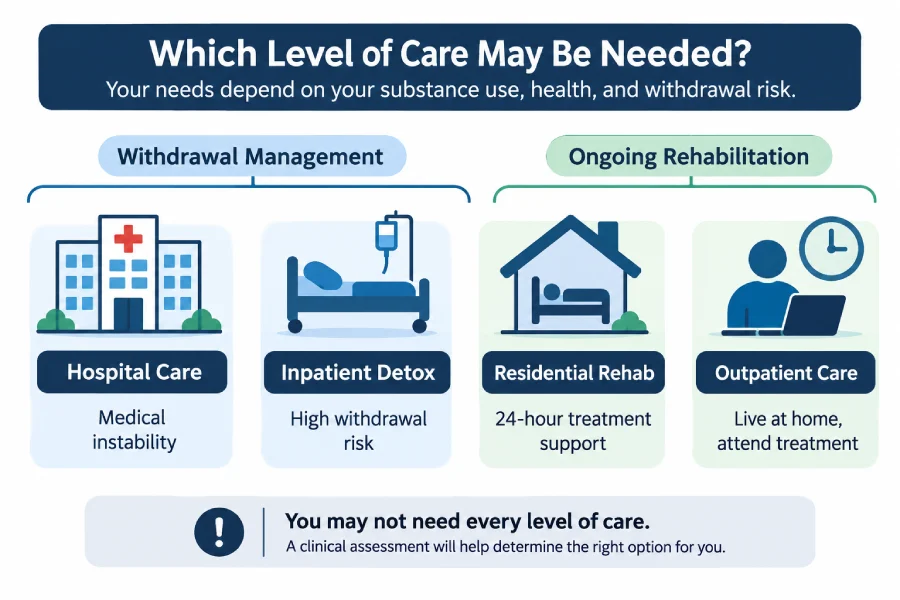
Medical Detox vs. Inpatient Detox vs. Going Straight to Rehab
One common misunderstanding is that medical detox, inpatient treatment, and residential rehabilitation all mean the same thing.
They do not.
These settings provide different services and levels of medical supervision. Understanding the differences can help individuals and families make more informed treatment decisions.
Outpatient or Ambulatory Withdrawal Management
Ambulatory withdrawal management allows individuals to receive medical support without staying overnight in a hospital or detox facility.
It may be appropriate for selected individuals with lower withdrawal risk, stable medical conditions, and a safe, supportive environment.
Depending on the program, care may include scheduled medical appointments, withdrawal monitoring, prescribed medications, and instructions for recognizing complications.
However, outpatient detox is not appropriate for everyone. People at risk of severe alcohol or benzodiazepine withdrawal, those with unstable medical conditions, or those without a safe monitoring environment may need a higher level of care.
Inpatient Medical Detox
Inpatient medical detox provides a more closely monitored setting for people who may experience significant withdrawal complications. Depending on the facility, services may include:
- Regular monitoring of vital signs.
- Medical and nursing assessments.
- Clinician-directed withdrawal medications.
- Management of dehydration and other complications.
- Psychiatric evaluation when necessary.
- Coordination with the next stage of addiction treatment.
The amount of medical supervision available varies by facility. Before admission, individuals should confirm that the program has the clinical staffing and capabilities needed for their specific withdrawal risks.
Hospital-Level Medical Care
Some people need treatment in a hospital rather than a standalone detox facility.
This may be necessary when someone has severe withdrawal symptoms, significant medical instability, seizures, serious cardiovascular complications, or other conditions requiring hospital-level intervention.
A hospital can provide emergency evaluation, advanced monitoring, and treatment for medical complications that may be beyond the capabilities of a residential detox setting.
Direct Admission to Residential Rehab
Some individuals can enter residential rehabilitation without completing a separate medical detox program.
This may be appropriate when acute withdrawal management is not necessary or when the receiving program has the appropriate medical capabilities to manage the person’s anticipated withdrawal needs.
Residential treatment generally provides a structured environment focused on addiction treatment. Services may include individual counseling, group therapy, behavioral interventions, family involvement, and mental health support.
However, residential rehabilitation is not automatically equivalent to hospital-level medical detox.
A facility that provides residential addiction treatment may not have the medical staff or resources required to manage complicated alcohol or benzodiazepine withdrawal.
The right placement is the least intensive setting that can safely meet the person’s clinical needs. This decision should be made through a professional assessment, not simply based on the type of program someone prefers.
What Happens During a Medical Detox Assessment?
Before recommending medical detox, a treatment professional needs to understand the person’s substance use history, physical health, mental health, and potential withdrawal risks.
The assessment helps determine whether someone can enter residential treatment directly or needs medical stabilization first.
Substance Use and Withdrawal History
The clinician may ask questions about:
- Which substances the person currently uses.
- The amount and frequency of use.
- How long they have been using them.
- When they last consumed alcohol or took a drug.
- Previous attempts to stop.
- Any history of withdrawal symptoms or complications.
- Previous detox or rehabilitation experiences.
- Prescription medications and other substances.
These questions help establish whether physical dependence is likely and identify potential risks associated with stopping.
Providing accurate information is important, even if the person is concerned about discussing prescription misuse, illicit substances, or the amount they consume.
Medical and Psychiatric Evaluation
The assessment may include a review of existing medical conditions, current medications, allergies, and previous hospitalizations.
A healthcare professional may also evaluate:
- Blood pressure and heart rate.
- Temperature and other vital signs.
- Hydration and nutritional status.
- Physical symptoms.
- Mental health concerns.
- Cognitive functioning.
- Suicide risk and other immediate safety concerns.
The goal is to identify conditions that may affect withdrawal management or require additional medical or psychiatric care.
Laboratory Tests and Withdrawal Assessment Tools
Depending on the person’s presentation, clinicians may recommend laboratory tests, toxicology screening, an electrocardiogram (ECG), or other investigations.
These tests can help identify medical issues that may complicate withdrawal, such as electrolyte abnormalities, liver problems, or cardiac concerns.
Determining the Appropriate Level of Care
After gathering the necessary information, clinicians consider the person’s overall medical and treatment needs. The assessment considers areas such as:
- Withdrawal and addiction medication needs: The likelihood of complicated withdrawal and the need for medical intervention.
- Biomedical conditions: Existing illnesses or physical health concerns.
- Psychiatric and cognitive conditions: Mental health symptoms, behavioral concerns, and cognitive functioning.
- Substance use-related risks: The likelihood of continued use or other substance-related harm.
- Recovery environment: The safety and support available in the person’s living environment.
- Individual considerations: Treatment preferences, practical barriers, and ability to participate in care.
These factors help clinicians recommend a level of care that is appropriate for the individual’s needs.
The recommendation may involve ambulatory withdrawal management, inpatient detox, hospital-level care, or direct admission to residential treatment.
The decision can also change as the person’s condition improves or new clinical information becomes available.
When Should Residential Treatment Follow Medical Detox?
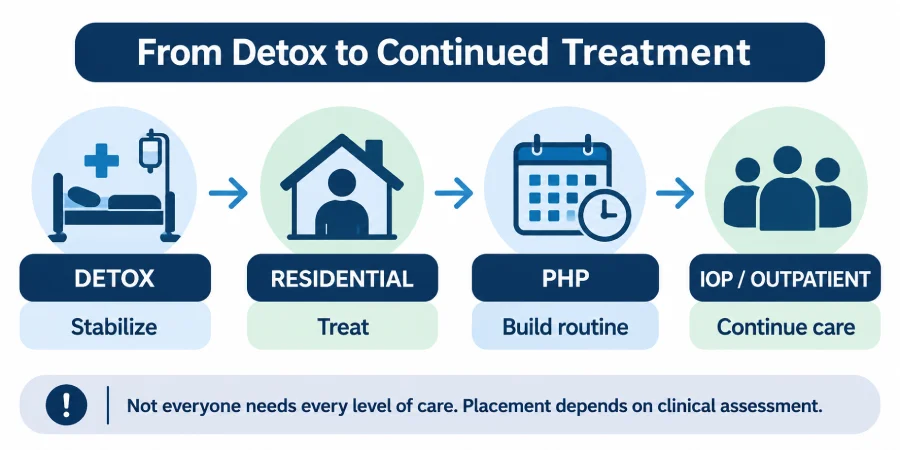
Detox helps manage withdrawal and stabilize the body. It does not independently address the psychological, behavioral, and social factors associated with addiction.
For many people, continuing treatment after detox is an important part of the care plan.
Residential treatment may be appropriate for people who need a structured environment, ongoing clinical support, and distance from everyday triggers. This may include individuals with longstanding substance use disorders, repeated returns to use, co-occurring mental health conditions, or difficulty maintaining stability in an unstructured environment.
However, residential treatment is not the only possible next step. Depending on clinical needs, someone may transition into:
Partial Hospitalization Program (PHP): Provides structured treatment during the day, often involving several hours of clinical services, while allowing individuals to return to a supportive living environment outside program hours.
Intensive Outpatient Program (IOP): Offers a less intensive schedule than PHP, with multiple therapy and treatment sessions each week.
Outpatient Treatment: Provides ongoing counseling, psychiatric support, medication management, and other services based on individual needs.
Medication-Based Treatment: Some individuals benefit from ongoing medications to manage substance use disorders, particularly opioid use disorder.
Questions to Ask Before Choosing a Medical Detox Program
Not every facility provides the same level of medical supervision. Before choosing a detox provider, individuals and families should understand what services are available and whether the program can safely manage the anticipated withdrawal risks.
Consider asking the following questions:
- Who conducts the initial medical assessment? Find out whether a qualified healthcare professional evaluates the person’s withdrawal history and medical needs.
- Is a medical professional involved in withdrawal management? Ask about physician oversight and the availability of nursing staff.
- What level of medical supervision is available? Understand how frequently patients are monitored and what clinical support is provided.
- Which types of withdrawal can the facility safely manage? Confirm whether the program has experience and appropriate capabilities for alcohol, benzodiazepine, opioid, or polysubstance withdrawal.
- What happens if someone develops serious withdrawal complications? Ask how the facility responds to seizures, severe confusion, or other emergencies.
- Does the facility have an emergency transfer protocol? Find out whether patients can be transferred to a hospital when additional medical care is needed.
- How are prescription medications managed? Ask how existing medications are reviewed and whether individualized tapering or medication management is available when clinically necessary.
- Can the facility support evidence-based treatment for opioid use disorder? Ask whether medications such as buprenorphine or methadone can be continued or coordinated with an appropriate provider.
- How does the program coordinate the transition into rehabilitation? Find out whether treatment planning continues beyond withdrawal management.
- Can the admissions team help verify insurance benefits? Understanding coverage, network participation, and potential out-of-pocket expenses can help with treatment planning.
How to Take the Next Step Toward Detox or Rehab in Los Angeles
If you are considering addiction treatment but are unsure whether you need medical detox first, the next step is to discuss your substance use and withdrawal history with a qualified treatment professional.
Our medical team uses those answers to decide whether you begin in our luxury detox program or go directly into residential care at our Los Angeles center.
If you begin with detox, your treatment team plans the move into residential treatment before detox ends, so there is no gap between the two. From residential care, you can step down to partial hospitalization or intensive outpatient treatment when you are ready.
Verifying your insurance before you arrive shows what your plan may cover for detox and residential treatment. It is not a guarantee of coverage.
You do not need to know whether you need detox before you call. The assessment is how we find out.