



-
 Written By:
Amber Asher, MSW, LSW
Written By:
Amber Asher, MSW, LSW -
 Edited By:
Phyllis Rodriguez, PMHNP-BC
Edited By:
Phyllis Rodriguez, PMHNP-BC
-
 Clinically Reviewed By:
Dr. Ash Bhatt, MD, MRO
Clinically Reviewed By:
Dr. Ash Bhatt, MD, MRO
Key Takeaways from Dr. Ash Bhatt:
- The size of the quantity someone is buying tells more than the drug itself. When a patient starts asking for an 8-ball instead of a gram, that’s usually the first sign the pattern has already changed.
- Functioning and addiction are not opposites, they coexist longer than most people realize. Some patients still show up to work every day and still are in the middle of a dangerous binge cycle at night.
- The 8-ball itself isn’t the danger. What is concerning is that it enables: less friction, more access, and a much easier slide into repeated use within a single session.
If you’ve come across the term “8-ball” and are trying to understand what it actually means, this article will walk you through that definition first, and then go further into the territory that matters more: what buying and using this quantity of cocaine can lead to.
We’ll cover the health risks tied to heavier use, how a cocaine binge unfolds, what a crash actually feels like, the dangers of mixing cocaine with other substances, the behavioral signs that use is turning into addiction, and when it’s time to get help.
What Does “8-Ball” Actually Mean?
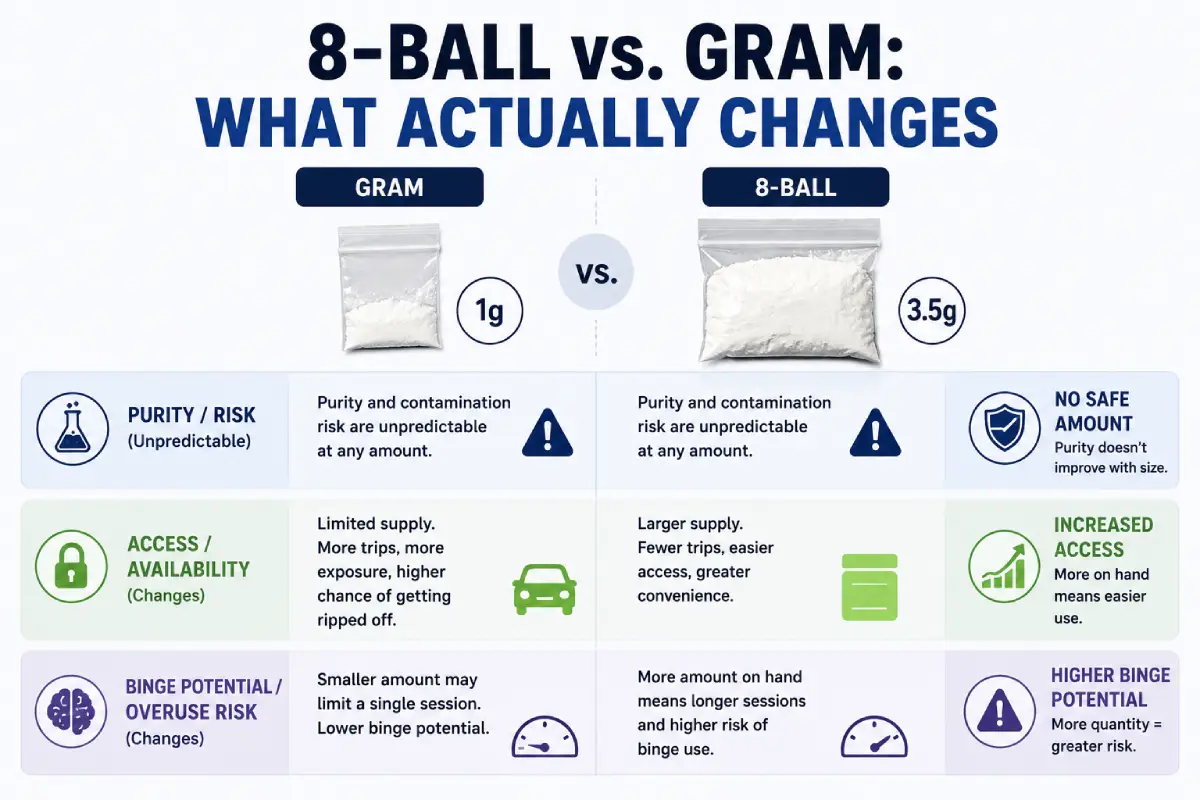
An 8-ball is a slang term for one-eighth of an ounce of cocaine, which comes out to roughly 3.5 grams. The name is a nod to the black 8-ball in pool, a piece of drug culture shorthand that’s been around for decades and has nothing to do with the drug’s effects or strength.
That distinction matters. Weight is not potency. An 8-ball can be cut with anything from inactive fillers to active substances that change how the drug behaves in the body entirely. Two people buying “an 8-ball” from two different sources could be consuming two very different products, even though the term sounds standardized.
What actually separates an 8-ball from a smaller amount, like a gram or a “teener,” isn’t the chemistry, it’s the access it creates. A larger quantity removes the natural pause that comes with running out. That pause is often the only thing standing between one use and several in a row.
Why This Quantity Carries More Risk Than the Term Suggests
The bigger concern with an 8-ball isn’t really about the number 3.5. It’s about what that number tends to set in motion.
Purity is never guaranteed. Street cocaine is rarely just cocaine. It’s frequently mixed with cutting agents, other stimulants, or substances with their own toxicity profile and the person using it has no reliable way to know the actual composition.
Fentanyl contamination has become a defining risk. Cocaine supplies in many parts of the country, including California, have shown up laced with fentanyl, often without the user’s knowledge. The Centers for Disease Control and Prevention has tracked a sharp rise in overdose deaths where a stimulant like cocaine was involved alongside a synthetic opioid, contributing to tens of thousands of overdose deaths nationally.
Cardiovascular strain increases with the amount and frequency of use. Cocaine constricts blood vessels and raises heart rate and blood pressure with every dose. A larger supply that enables repeated use over hours multiplies that strain instead of giving the cardiovascular system time to recover.
Seizures and neurological complications become more likely the longer and more frequently cocaine is used in a single stretch, particularly as the nervous system stays in a heightened state without rest.
Tolerance creates a false sense of safety. Needing more cocaine to feel the same effect doesn’t mean the body has adapted to the risk. It means a person is now using amounts that put more physical strain on the heart and brain than before, even though it feels familiar.
Clinical Insight from Dr. Ash Bhatt:“Patients often tell me tolerance made them feel like they’d figured out how to use safely. Clinically, that’s backwards. Tolerance to the high doesn’t mean tolerance to the cardiac or neurological risk — those keep climbing even after the euphoria plateaus.”
The scale of this risk is reflected in national data. Overdose deaths involving cocaine rose from 3,822 deaths in 1999 to 29,449 in 2023, with the mortality rate climbing from roughly 1.4 to 8.8 deaths per 100,000 people over that period, according to a peer-reviewed analysis published via the National Institutes of Health.
How an 8-Ball Feeds a Cocaine Binge
A binge rarely starts with the intention to binge. It starts with a normal dose and then the mechanics of the drug take over.
Cocaine’s effects fade quickly, often within 15 to 30 minutes. As that high drops off, the brain registers a sharp contrast between the peak and the comedown, which triggers craving almost immediately. That craving is where the size of the supply starts to matter.
With a smaller amount, running out creates a natural stopping point. With an 8-ball, that stopping point disappears. The drug is simply there, and the craving has nothing standing in its way.
This is what tends to follow:
- Cocaine use produces a short, intense high
- The high fades and craving sets in almost immediately
- More cocaine is used to chase the original effect
- The cycle repeats over hours, sometimes without sleep or food
- Exhaustion eventually forces the binge to end
That last point is worth sitting with. Binges typically end because the body simply cannot sustain the pace any longer, not because the craving resolved on its own.
What a Cocaine Crash Actually Feels Like
The crash is the physiological bill that comes due after a binge, and it’s often more disruptive than people expect going in.
Common symptoms include:
- Extreme fatigue that can last for days
- A flat, depressed mood
- Irritability or agitation
- Sleeping far more than usual
- Changes in appetite, often a sharp increase
- Difficulty feeling pleasure from anything, including things that normally would
- Strong, sometimes overwhelming cravings to use again
That last symptom is what turns a single binge into a repeating pattern. The crash creates such a low emotional baseline that using again can start to feel like the only way to feel normal, which sets up the next binge, and the next crash after it.
Clinical Insight from Dr. Ash Bhatt: “The crash is where I see the most misunderstood suffering. The patients perceive it as depression, and the behavioral aspects are exactly the same as depression, like low mood, lack of drive, and absence of delight. But, it has been brought about by drugs, and the same time is when the urge for using drugs is biggest. This dual element is the biggest reason the initial stage of recovery is so challenging unless one has the support.”
Mixing Cocaine With Alcohol or Other Drugs Multiplies the Danger
Cocaine is rarely used in isolation, and combining it with other substances doesn’t cancel out risk, it compounds it.
Cocaine and alcohol are one of the most common and most dangerous combinations. When used together, the liver produces a compound called cocaethylene, a byproduct that exists only when both substances are present in the body at once. Research published through the National Institutes of Health has found that cocaethylene is more toxic to the cardiovascular and hepatic systems than cocaine alone and remains active in the body longer. A separate peer-reviewed study found this combination carries an 18- to 25-fold increase in the risk of sudden death compared with cocaine use alone.
Cocaine and opioids are combined by some users specifically because the stimulant and depressant effects seem to offset each other cocaine’s energy against an opioid’s sedation. According to research from the National Institute on Drug Abuse, people combine these drugs because the stimulating effects of cocaine are offset by the sedating effects of opioids, but this masking effect doesn’t reduce the physical toll on the heart, breathing, or brain — it just makes the danger harder to feel coming.
Fentanyl contamination adds a layer of risk that has grown significantly in recent years. A person may believe they’re using cocaine and alcohol, or cocaine on its own, without knowing fentanyl is present at all, turning a stimulant binge into a life-threatening opioid exposure.
The core problem with all of these combinations is the same: stimulants and depressants don’t neutralize each other’s physical effects. They mask the warning signs your body would otherwise be sending, which is often what allows use to continue past the point it should have stopped.
Signs Cocaine Use Is Turning Into Addiction
Addiction rarely announces itself. It shows up gradually, in patterns rather than single moments.
Watch for:
- Buying larger quantities than before, or buying more often
- Using more cocaine than originally planned, almost every time
- Difficulty stopping once use has started, even for a short session
- Binges that are becoming more frequent
- Cravings that feel intrusive or hard to ignore
- Hiding use from family, a partner, or coworkers
- Unexplained financial strain or secretive spending
- Disrupted sleep patterns that don’t return to normal
- Tension at work or in relationships tied to use
- Continuing to use despite clear consequences
- Attempts to cut back that haven’t worked
One pattern is worth naming directly, particularly for readers in Los Angeles: a person can be high-functioning, holding down a demanding job, maintaining relationships, appearing entirely in control while cocaine use is quietly escalating behind that image. Functioning and addiction are not mutually exclusive, and waiting for visible failure before taking the signs seriously often means waiting too long.
When Cocaine Use Becomes a Medical Emergency
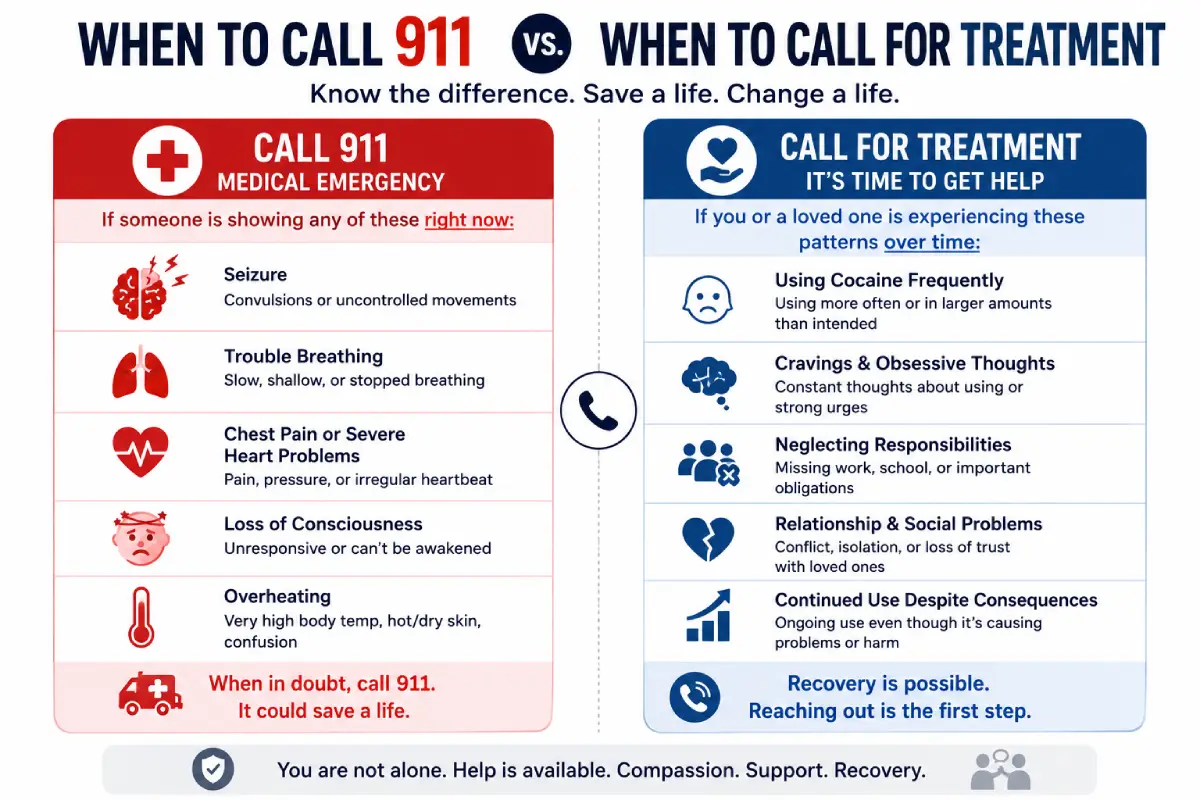
Some warning signs require immediate emergency care, not a conversation about treatment later. Call 911 or go to the nearest emergency room if you or someone else experiences:
- Chest pain or pressure
- Seizures
- Severe agitation or confusion
- Difficulty breathing
- Loss of consciousness
- A dangerously high body temperature
- Signs of stroke or heart attack, such as one-sided weakness, slurred speech, or crushing chest pain
These symptoms reflect the acute cardiovascular and neurological strain cocaine places on the body, and they can escalate quickly. This is not the moment to wait and see — it’s the moment to get emergency medical help first.
When Is It Time to Consider Treatment?
You don’t need to hit a dramatic breaking point before treatment makes sense. In practice, the right time is usually earlier than people expect. Consider reaching out if:
- Binges are happening more often than they used to
- Previous attempts to stop or cut back haven’t held
- Cravings are starting to influence decisions you make in a day
- Anxiety, depression, or mood instability is getting worse
- Alcohol or other substances are routinely part of the pattern
- Work, finances, or relationships are visibly affected
- Use continues even after health warning signs appear
None of these require “rock bottom” to count as a legitimate reason to seek support. Waiting for the situation to get undeniably bad isn’t a treatment strategy, it’s a delay that tends to make the eventual recovery process harder.
How Cocaine Addiction Treatment Supports Recovery
Effective cocaine addiction treatment starts with an individualized assessment, because a binge pattern that developed over months looks clinically different from years of chronic use, and treatment needs to reflect that difference.
From there, care typically focuses on breaking the binge-crash cycle itself, addressing both the physical craving response and the emotional low that follows a crash, since one reliably feeds the other. Behavioral therapy plays a central role, helping patients recognize triggers before a binge starts rather than managing the aftermath.
Because cocaine use so often overlaps with depression, anxiety, or unresolved trauma, treating those conditions alongside the substance use rather than treating cocaine use in isolation tends to produce more durable outcomes. When clinically appropriate, residential treatment offers the structure and separation from triggers that early recovery often requires, followed by relapse prevention planning and continuing care to support the transition back into daily life.
At our Legacy Healing LA center, this approach connects dual diagnosis care with structured drug addiction treatment, built around the reality that cocaine addiction is rarely just about the drug, it’s about everything that’s been feeding the cycle around it.