




-
 Written By:
Alex Herrera
Written By:
Alex Herrera -
Edited By:
Phyllis Rodriguez, PMHNP-BC
-
Clinically Reviewed By:
Ash Bhatt, M.D., M.R.O., FASAM
 Written By:
 Edited By:
 Clinically Reviewed By:
There’s a particular kind of exhaustion that doesn’t show. It doesn’t announce itself in meetings or surface in conversation. It lives in the quiet hours, in the space between who the world sees and who you know yourself to be. For many women, that gap is where addiction takes hold. Gradually, and almost always in private. This is more common than most people realize.
Across Los Angeles, and across every profession, background, and chapter of life, women are navigating addiction in silence. Not because they lack strength or self-awareness, but because the systems designed to help them were rarely built with them in mind. The clinical evidence is clear: women experience addiction differently than men. They arrive at it differently, move through it differently, and heal differently. And that difference deserves to be taken seriously.
At Legacy Healing LA, our women’s program was built on this understanding. What follows is a clinically grounded, honest exploration of why addiction recovery is uniquely complex for women, and what genuinely effective, compassionate treatment looks like when it’s designed around that truth.
Key Takeaways1. Women’s bodies and brains are wired differently, and addiction treatment must reflect that. Women develop dependency faster than men, are more likely to struggle with co-occurring anxiety, depression, and trauma, and process substances differently due to hormonal biology. Generic, one-size-fits-all treatment was never designed with this in mind. For women, specialized care is a clinical necessity. 2. Silence is the biggest barrier women face, and the right environment breaks it. Stigma, fear of judgment, and the weight of caregiving responsibilities keep countless women from asking for help. A private, luxury treatment environment removes those barriers, offering the safety, discretion, and dignity that makes it possible for a woman to finally put herself first without fear. 3. Lasting recovery requires treating the whole woman, not just the addiction. Trauma, mental health, relationships, and identity are all part of what drives substance use in women, and all part of what heals. True, lasting recovery means going deeper, and having the clinical expertise, the time, and the space to do it right. |
Why Addiction Recovery Is Different for Women
For decades, addiction research was conducted almost exclusively on male subjects. Clinical protocols, detox guidelines, and therapeutic frameworks were built on data that simply didn’t account for women’s physiology, psychology, or lived experience. That gap has had real consequences.
Today, the science is unambiguous: women develop substance use disorders through distinct pathways, experience them differently, and require different clinical approaches to achieve lasting recovery. Understanding those differences is not a matter of political correctness, it’s a matter of medical accuracy.
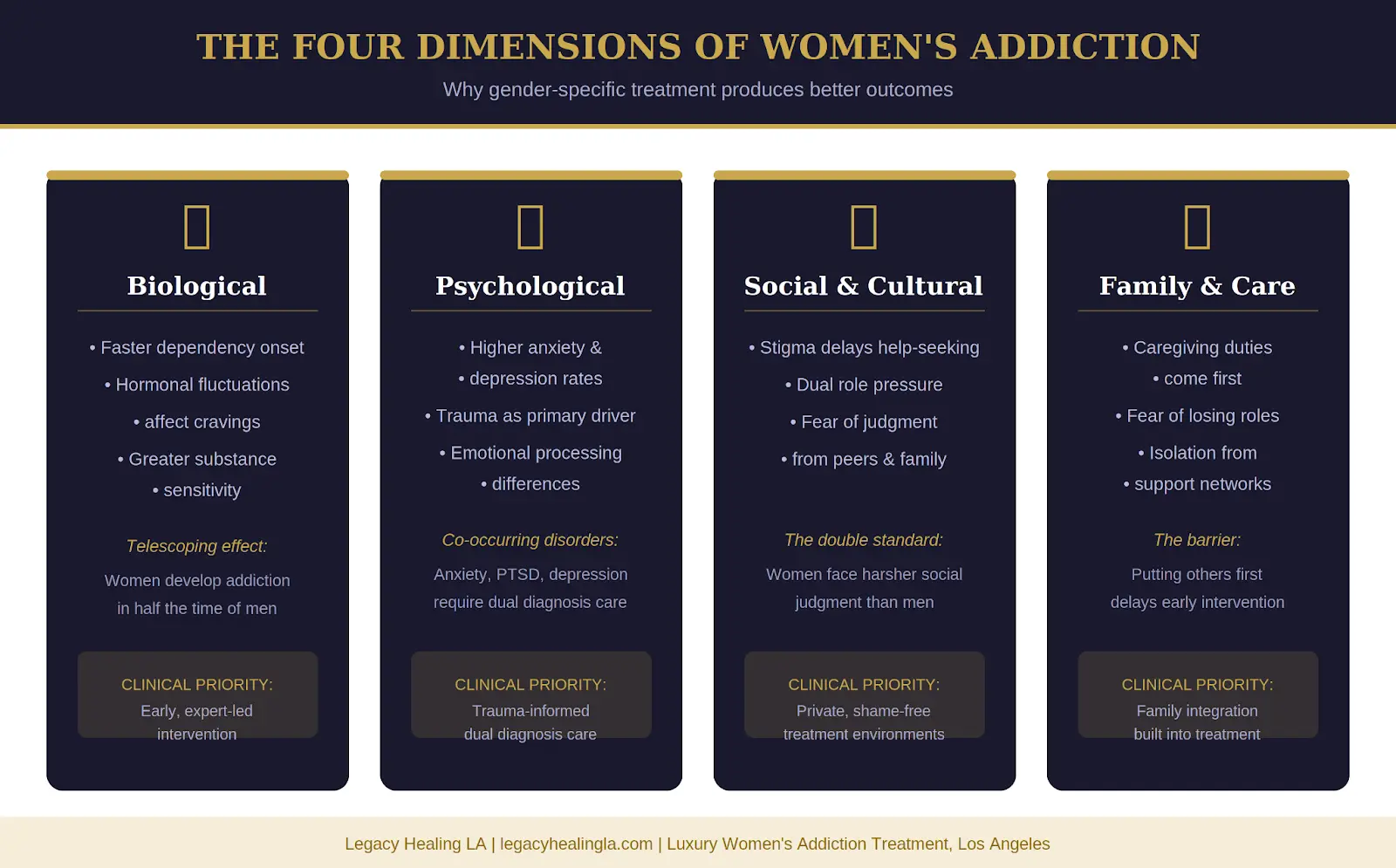
What Makes Addiction Recovery More Challenging for Women?
Understanding the specific factors that shape women’s relationship with addiction is essential to delivering effective care. These aren’t generalizations, they’re clinically documented realities that inform every aspect of how Legacy Healing LA approaches women’s treatment.
Biological Differences: A Body That Responds Differently
Women’s bodies metabolize substances differently than men’s. Hormonal variation across the menstrual cycle, pregnancy, and menopause can dramatically affect how alcohol, opioids, and other substances are absorbed and processed. Women have lower levels of certain enzymes responsible for metabolizing alcohol, meaning the same drink hits harder and lingers longer.
Perhaps most clinically significant: women tend to develop dependency faster than men, a phenomenon researchers call “telescoping.” A woman may move from first use to problematic use in a fraction of the time it takes a man, yet she may present for treatment at a more advanced stage of addiction. This biological acceleration underscores the urgency of early, expert-led intervention.
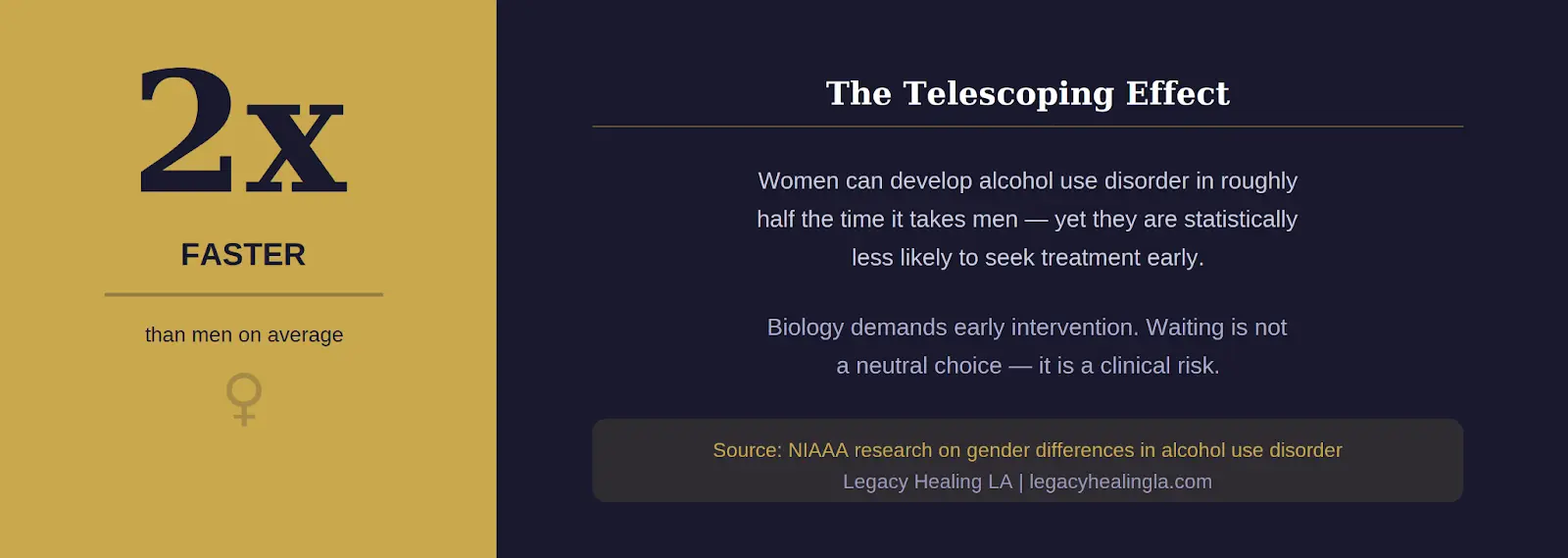
Emotional and Mental Health: The Invisible Co-Occurring Crisis
Women with substance use disorders are significantly more likely than men to present with co-occurring mental health conditions, anxiety, depression, PTSD, and eating disorders are particularly common. In many cases, substance use didn’t begin recreationally; it began as a coping mechanism for emotional pain that had nowhere else to go.
This is not weakness. It is a predictable response to carrying emotional weight without adequate support. The problem is that when substance use becomes the coping tool, it creates a second crisis that must be treated alongside the first. Treating addiction without addressing the underlying mental health reality is, clinically speaking, incomplete care.
“At Legacy Healing LA, we treat the whole woman, not just the substance use. Because the two are almost never separate.”
Trauma: The Root That Often Goes Unaddressed
Research consistently shows that trauma, particularly childhood trauma, intimate partner violence, and sexual abuse, is far more prevalent among women with substance use disorders than in the general population. Many women entering treatment have never had a safe space in which to process what happened to them. Substances filled that void.
Trauma-informed care isn’t a specialty add-on at Legacy Healing LA, it’s foundational to how we approach every woman’s treatment. Our clinicians are trained to work through the trauma underneath the addiction, because lasting recovery depends on it.
Social Stigma: The Weight That Keeps Women Silent
Society’s relationship with women and addiction is complicated by layered stigma. A man who struggles with alcohol is often described as someone going through a hard time. A woman who struggles with the same thing may be described in far harsher terms, as a bad mother, a failure, a disgrace. That double standard is not imagined. It is documented, pervasive, and devastating in its effects.
It keeps women from asking for help. It keeps them in the darkness longer. And it means that when a woman does finally reach out, she often carries an additional burden of shame that must be addressed directly in treatment.
Family and Caregiving: When Everyone Comes Before You
Many women delay or avoid treatment because they cannot imagine stepping away from the people who depend on them, their children, their partners, their aging parents. The idea of being “absent” from the family, even briefly and for the purpose of healing, can feel like a profound failure.
This is a barrier our team understands deeply. Legacy Healing LA works with families to create care plans that address this reality, because the most powerful thing a mother, a daughter, or a partner can do for the people she loves is heal herself.
Why Specialized Addiction Treatment Matters for Women
Generic addiction treatment was not built for women. It was built for an average patient who, historically, was male. When women enter treatment programs designed around that template, they often find their specific needs, hormonal, psychological, relational, are not fully addressed. The result is a lower quality of care and, too often, a shorter duration of recovery.
Specialized women’s treatment changes this equation. When therapy is designed with women’s neurobiology in mind, when trauma is treated as primary rather than secondary, when the clinical environment feels safe and non-judgmental, outcomes improve dramatically.
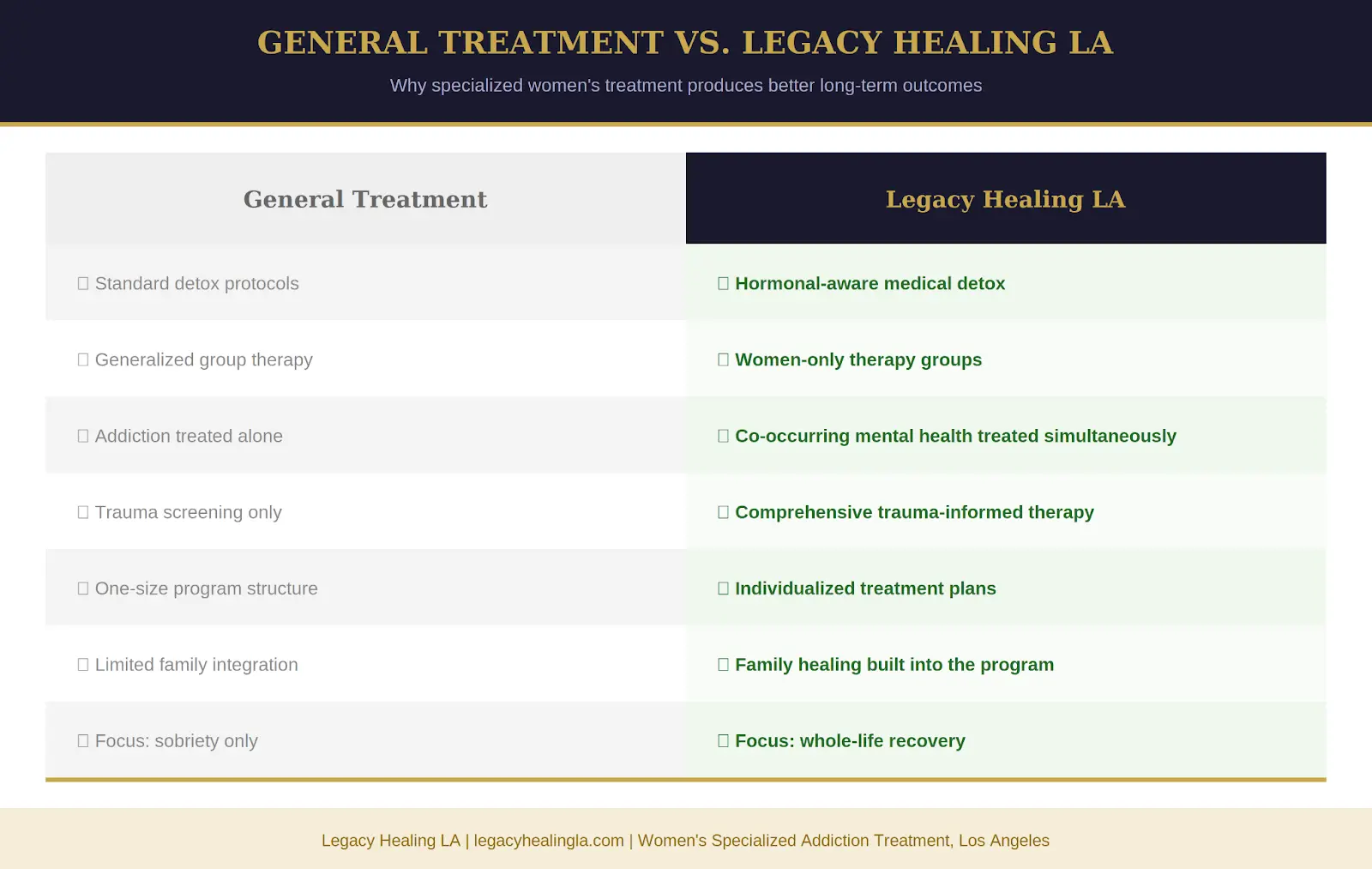
The Treatment Journey: What Recovery Looks Like at Legacy Healing LA
Recovery is not a single event, it’s a carefully structured continuum of care. At Legacy Healing LA, we walk alongside every woman through each phase, ensuring clinical excellence and compassionate support at every step.
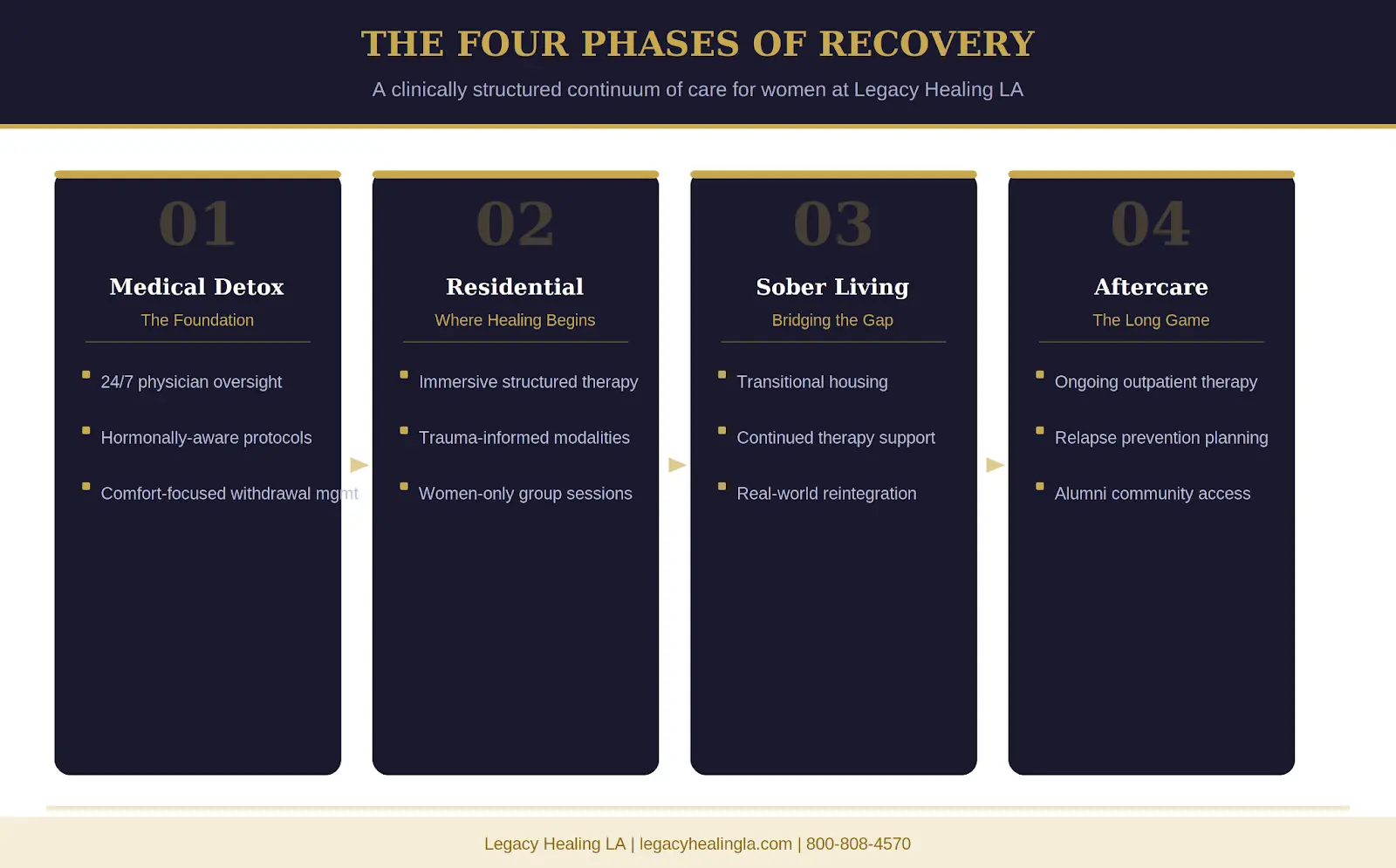
Phase 1: Medical Detox – The Foundation of Safe Recovery
Detoxification is the first, essential step, and one that must be medically supervised. Withdrawal from alcohol, opioids, benzodiazepines, and other substances carries real physiological risks. At Legacy Healing LA, our board-certified physicians manage every woman’s detox with precision, monitoring vitals, adjusting medications as needed, and factoring in hormonal variables that affect how withdrawal presents and progresses.
This is not a clinical afterthought. It is the foundation on which everything else is built.
Phase 2: Residential Treatment – Where Real Healing Begins
Our residential program is the core of Legacy Healing LA’s women’s experience. In a private, secure, and genuinely beautiful environment, women engage in daily individual therapy, group sessions, and evidence-based modalities including Cognitive Behavioral Therapy (CBT), Dialectical Behavior Therapy (DBT), and EMDR for trauma processing.
But what distinguishes Legacy’s residential program is not just what happens in the therapy room. It’s the environment itself, the luxury of unhurried time, the beauty of the setting, the absence of judgment, and the presence of clinical staff who understand that healing is not linear and not uniform.
Phase 3: Sober Living – Bridging Clinical Care and Real Life
Leaving residential treatment does not mean leaving support behind. Our sober living environments offer women a structured, accountable, and genuinely supportive transition, a place where the tools developed in treatment can be practiced in the context of real life, with peers who understand the journey and clinical staff who remain close.
Phase 4: Aftercare – The Long Game of Lasting Recovery
Recovery without aftercare is incomplete recovery. Legacy Healing LA’s aftercare programming includes ongoing individual and group therapy, alumni community engagement, relapse prevention coaching, and access to clinical staff long after the residential chapter has closed. Because lasting recovery doesn’t end at discharge, it deepens with time.
Holistic and Mental Health Therapies That Support Women in Recovery
Evidence-based clinical care is the backbone of everything we do. But the women who thrive in our programs benefit from more than the standard therapeutic menu. They benefit from an integrative approach that treats the body, the mind, and the spirit as inseparable.
- Trauma-Informed Therapy: EMDR (Eye Movement Desensitization and Reprocessing), somatic therapies, and trauma-focused CBT allow women to process and metabolize experiences that have driven their substance use, often for years.
- Mindfulness and Meditation: Structured mindfulness practice reduces anxiety, improves emotional regulation, and builds the capacity to sit with discomfort without reaching for a substance.
- Nutritional Support and Wellness: Substance use takes a profound toll on the body. Our nutrition and wellness programming supports physical healing while building habits that sustain recovery.
- Movement Therapies: Yoga, guided movement, and physical wellness programming reconnect women to their bodies in a positive, healing context, particularly important for those whose relationship with their bodies has been complicated by trauma or eating disorders.
- Family Therapy: Addiction is a family condition. Our family therapy component supports healing relationships, improves communication, and helps loved ones understand how to be genuinely supportive without enabling.
Why the Treatment Environment Matters – Especially for Women
We are not a clinical facility that happens to have nice furniture. We are a treatment environment where clinical excellence and genuine luxury are integrated together, because we believe that beauty, privacy, and comfort are therapeutic.
For high-achieving women who are accustomed to a certain quality of life, and who carry real concerns about privacy and discretion, the environment in which they receive treatment is not a secondary consideration. It is often the deciding factor in whether they seek help at all.
| “The decision to seek treatment is profound. The environment in which that treatment takes place should honor that decision.” |
Legacy Healing LA’s facilities are located in Los Angeles’ most serene residential settings. Private rooms, resort-level amenities, chef-prepared nutrition, and concierge-level support are the backdrop against which serious, evidence-based clinical work takes place. Women here do not feel like patients in a system. They feel like individuals being cared for with intention.
For women with concerns about privacy, executives, public figures, professionals in fields where stigma is especially acute, our discretion protocols are absolute. Confidentiality is not a policy. It is a commitment.
How Legacy Healing LA Supports Women Through Recovery
Every woman who walks through our doors arrives with her own story, her own history, her own relationships, her own ambitions, her own fears. What she receives in return is a treatment experience that is built around her specifically, not around a template.
- Individualized assessments that account for biological, psychological, social, and family factors
- Women-only therapeutic spaces where honesty and vulnerability are safe
- Dual diagnosis treatment for co-occurring mental health conditions
- Trauma-informed clinical protocols embedded throughout the program
- Hormonal and physiological considerations built into medical care
- Family integration programs that support healing at home
- Luxury residential environments that support, not distract from, clinical work
- Comprehensive aftercare that extends support well beyond discharge
- Complete confidentiality for women who require absolute discretion
Supporting Women on the Path to Lasting Recovery
Addiction does not discriminate. It touches women at every level of society, women of remarkable accomplishment, women carrying the weight of their families, women who have spent years believing they could manage it on their own.
The courage required to seek help is not small. And the women who find their way to Legacy Healing LA deserve a response to that courage that is worthy of it, clinically excellent, deeply compassionate, and built around who they are.
“Recovery is not the end of who you are. It is the beginning of who you were always meant to become.”
If you or someone you love is navigating addiction and wondering whether the right kind of help exists, we want you to know: it does. And we are here.
Call us at 8008084570