



-
 Written By:
Alex Herrera
Written By:
Alex Herrera
-
 Edited By:
Phyllis Rodriguez, PMHNP-BC
Edited By:
Phyllis Rodriguez, PMHNP-BC
-
 Clinically Reviewed By:
Dr. Ash Bhatt, MD, MRO
Clinically Reviewed By:
Dr. Ash Bhatt, MD, MRO
The living room falls silent. You reach for painkillers after a difficult day, then glance at the glass of wine waiting on the table. A small drink won’t hurt, you think. But what you don’t realize is that mixing painkillers and alcohol sets off a cascade of reactions in your body that can have devastating consequences, both immediate and long-lasting. This isn’t just about feeling dizzy or nauseous.
The combination of pain medication and alcohol fundamentally changes how your body processes both substances, amplifying their dangerous effects.
This guide will help you understand exactly what happens when these substances interact, the warning signs you should never ignore, and how to get help if you or a loved one is struggling.
Why Combining Pain Medication and Alcohol Is Risky
When you take painkillers, your body focuses on metabolizing the medication. When you introduce alcohol, that process becomes complicated. Both substances suppress your central nervous system, and when combined, they amplify each other’s effects in ways that are difficult to predict.
The drug interactions between pain medication and alcohol dramatically increase your risk of overdose and serious health complications. Your liver, which processes both substances, becomes overwhelmed. This leads to higher toxicity levels in your bloodstream, putting extreme stress on your cardiovascular system. The result? Increased blood pressure, dangerous drops in heart rate, and potentially life-threatening complications.
Beyond the immediate overdose risk, chronic mixing of painkillers and alcohol creates a dangerous cycle. Your body builds tolerance to both substances, pushing you to use more of each to achieve the same effect. This escalation is how substance misuse begins, what started as occasional pain management becomes a serious health crisis.
How Mixing Painkillers and Alcohol Affects Your Body and Brain
Your brain and body don’t experience mixing painkillers and alcohol as two separate effects that simply add together. Instead, the interaction creates something far more dangerous: a multiplied impact that overwhelms your central nervous system.
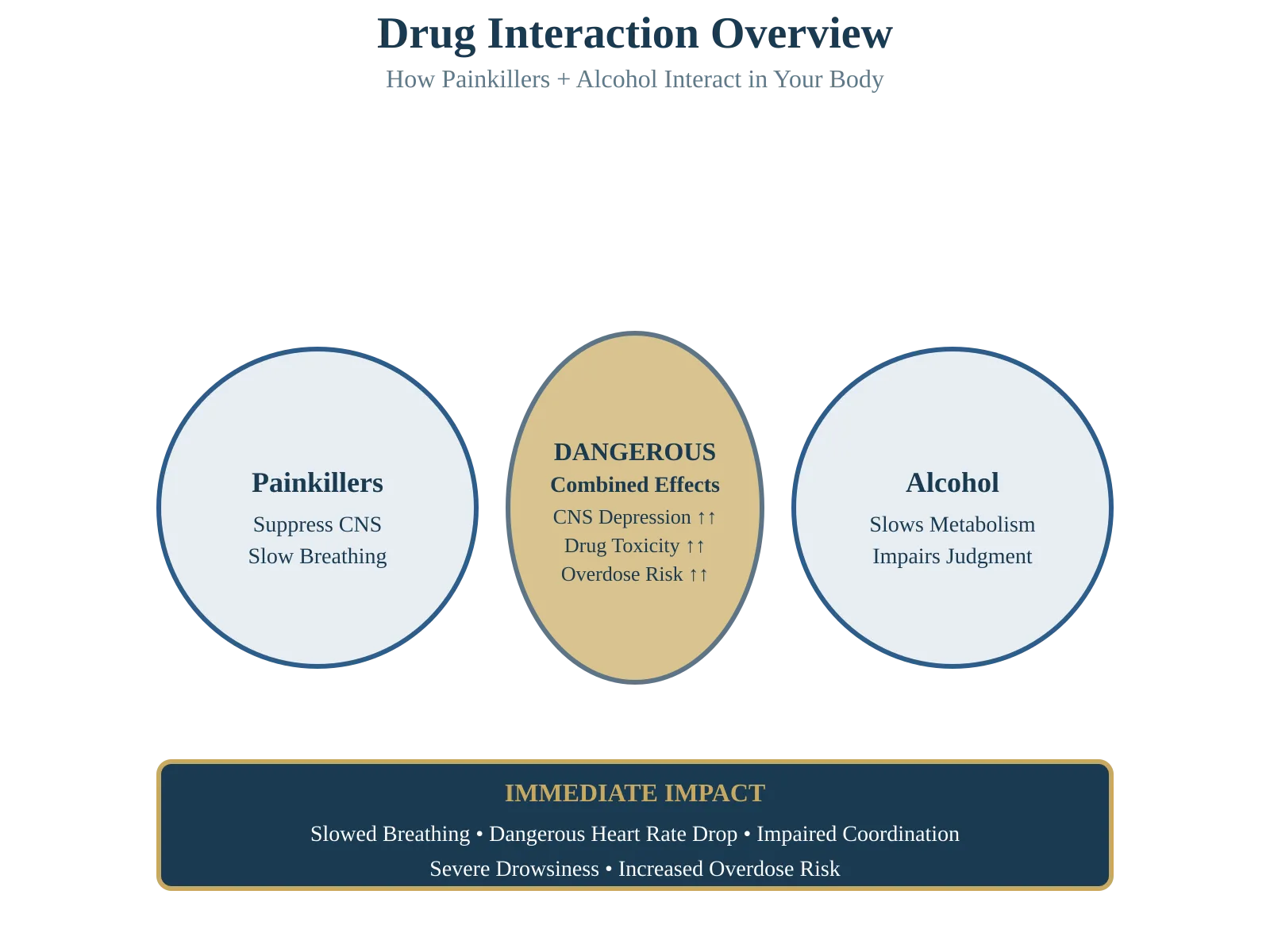
Central Nervous System Depression
- Both painkillers and alcohol slow down your nervous system’s activity. Together, this central nervous system depression can dramatically reduce your respiratory rate, making it harder to breathe.
- Your heart rate can become dangerously slow (bradycardia), and your blood pressure may drop to unsafe levels.
- In severe cases, slowed breathing can lead to hypoxia, a condition where your brain doesn’t receive enough oxygen, potentially causing brain damage or death.
Alcohol Metabolism and Drug Toxicity
Alcohol metabolism directly interferes with how your liver processes pain medications. When your liver is busy breaking down alcohol, it can’t efficiently metabolize your painkillers, causing them to accumulate in your bloodstream. This buildup dramatically increases toxicity and the risk of overdose.
Opioid painkillers are particularly dangerous in this scenario. Mixing painkillers like oxycodone or hydrocodone with alcohol can suppress your respiratory system so severely that you stop breathing altogether.
Immediate Side Effects You Should Know
The effects of mixing painkillers and alcohol begin almost immediately. Within minutes to hours, you may experience:
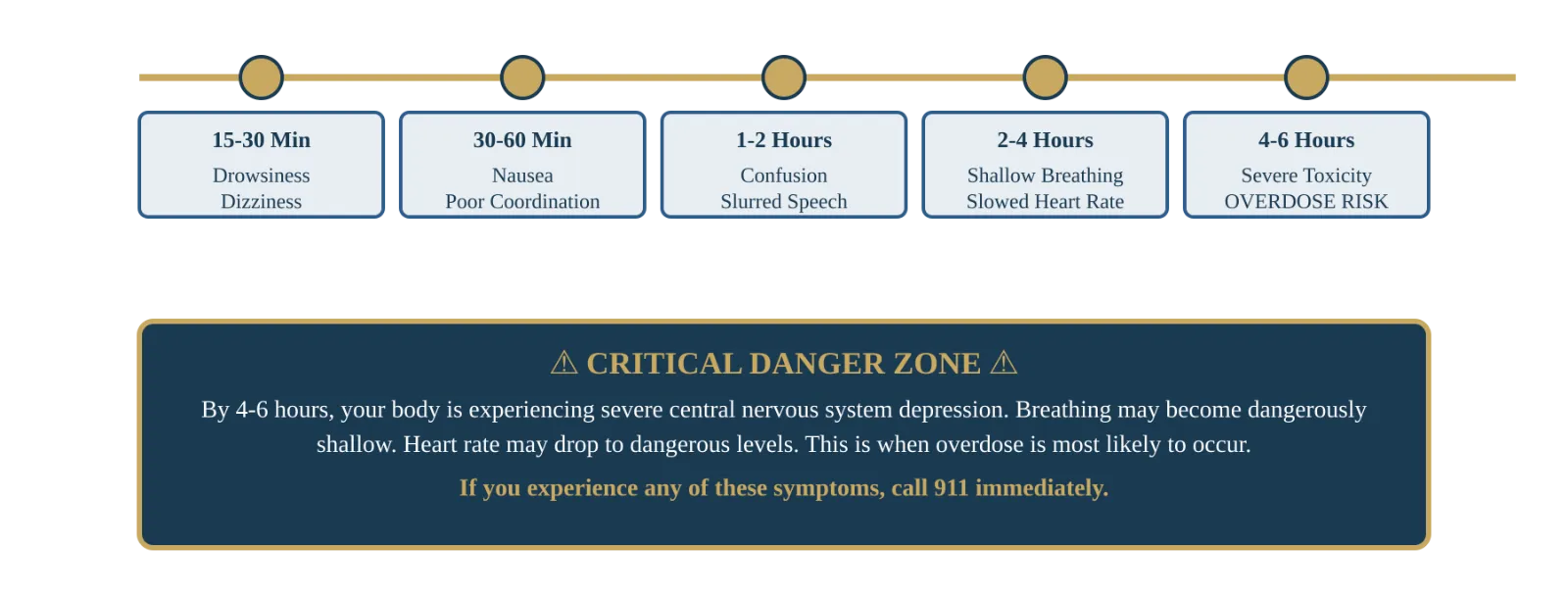
These aren’t just uncomfortable side effects, they create accident risk. Impaired coordination combined with poor judgment is how people end up in emergency rooms, or worse.
Long-Term Health Consequences
When mixing painkillers and alcohol becomes a pattern, the damage accumulates. Long-term consequences are severe and often irreversible:
| Health Consequence | Why It Happens |
| Chronic Liver Disease | Repeated exposure damages liver cells, leading to scarring (cirrhosis) |
| Gastrointestinal Bleeding | Alcohol erodes stomach lining; painkillers increase bleeding risk |
| Physical Dependency | Your body adapts to the combination, creating tolerance and addiction |
Substance misuse from mixing painkillers and alcohol often progresses gradually. You might not notice the damage until serious health crises force intervention. Chronic liver disease, in particular, develops silently, you may not realize the severity until your liver is severely scarred and failing.
How Substance Use Affects Relationships and Daily Life
The impact of mixing painkillers and alcohol extends far beyond your body. The psychological and relational consequences are equally devastating.
- Mood swings and emotional instability damage trust with loved ones
- Impaired judgment leads to relationship problems and hurtful decisions
- Communication issues deepen when you’re struggling with substance misuse
- Work performance suffers as hangovers, dependency symptoms, and side effects interfere with your ability to focus
Warning Signs You May Need Help for Substance Misuse
Recognizing addiction warning signs early is critical. If you see yourself in any of these dependency symptoms, it’s time to seek professional help:
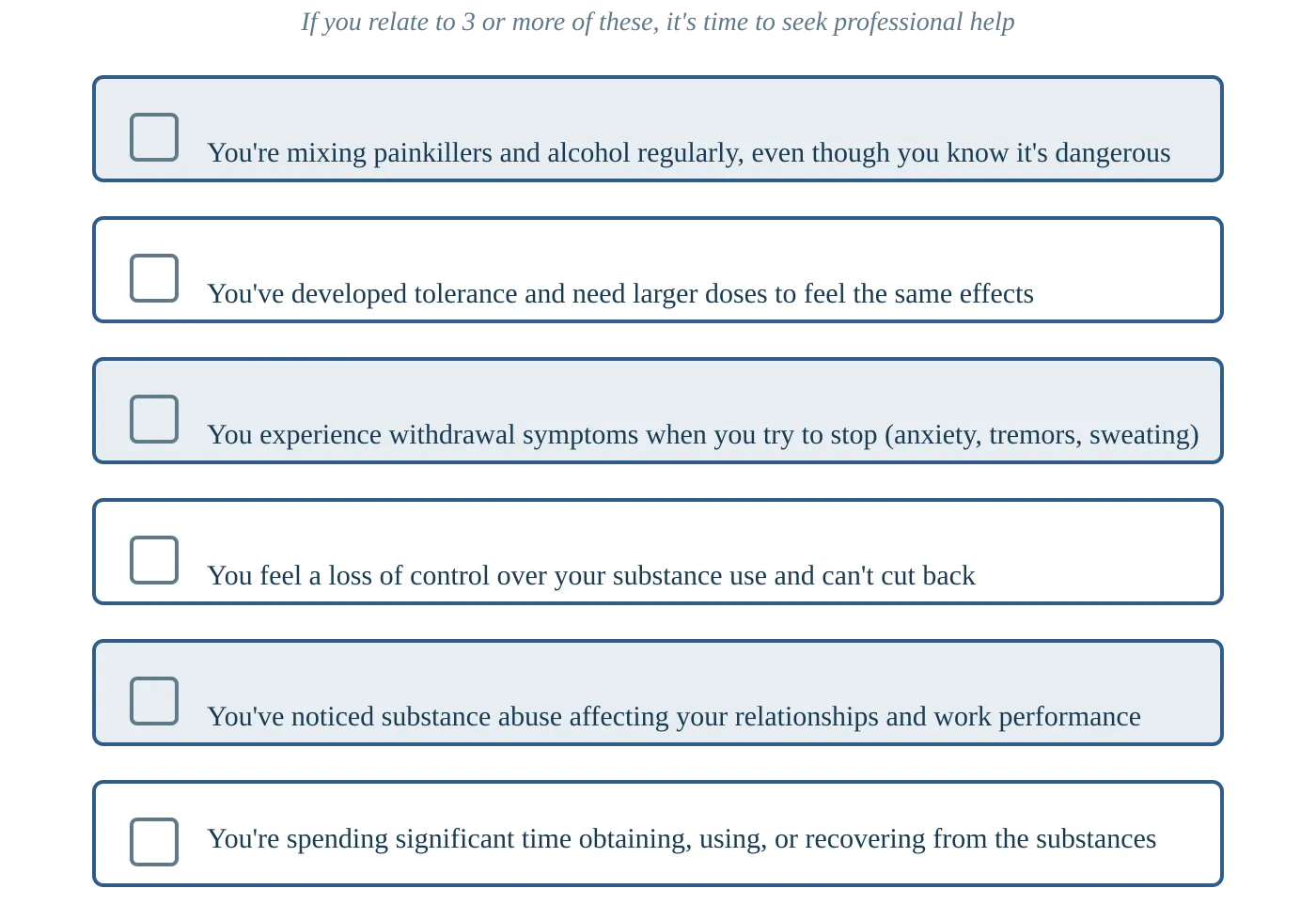
Treatment Programs for Painkiller and Alcohol Addiction
At Legacy Healing Los Angeles, we offer comprehensive addiction treatment programs for men, women, families, couples, and even for artists and executives, each program tailored to your unique situation.
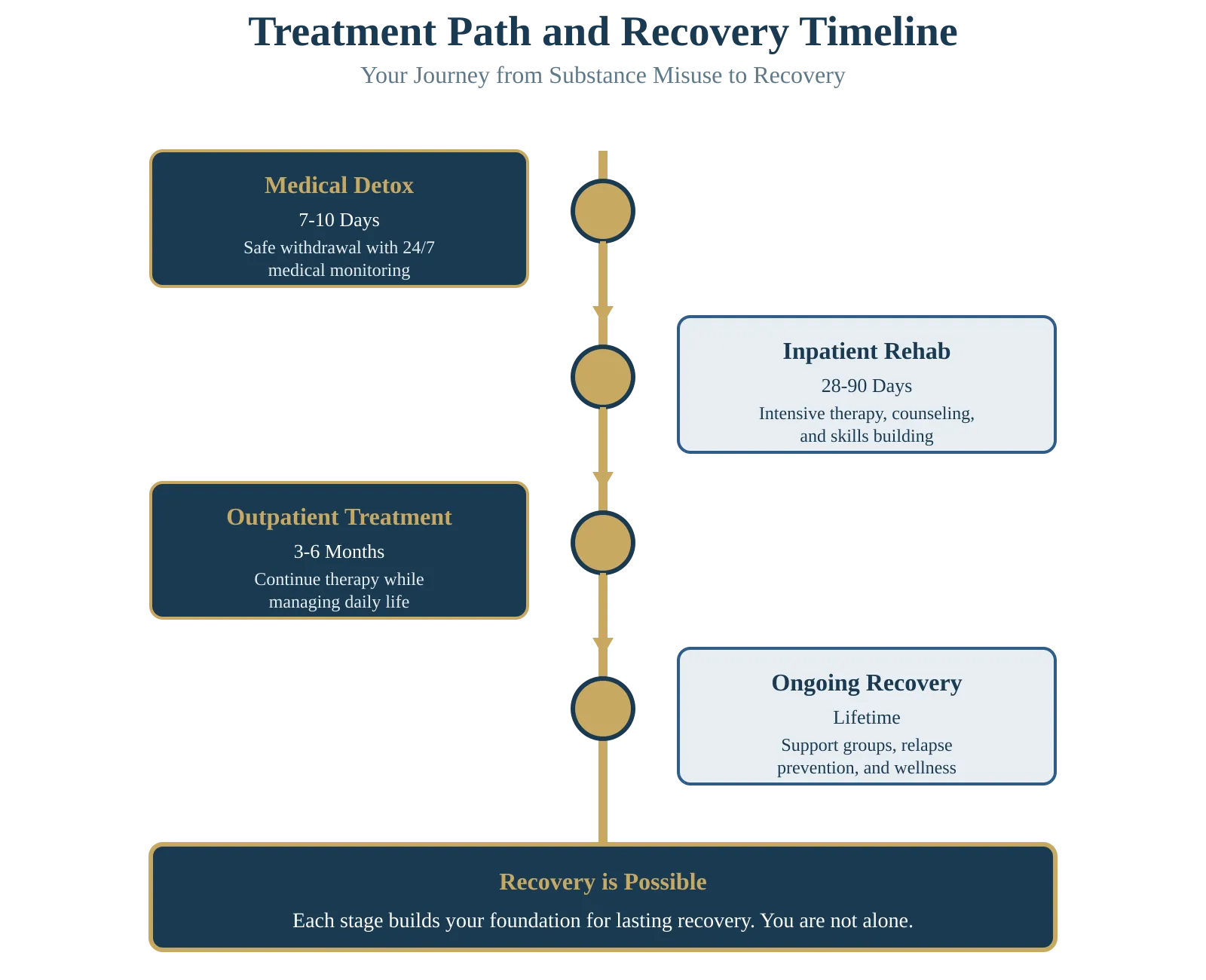
Our medical detox program ensures your safety during withdrawal. Stopping suddenly after long-term mixing of painkillers and alcohol can be dangerous. Our team monitors your vital signs, manages withdrawal symptoms, and provides medications to ease discomfort while your body heals.
Our inpatient rehab provides 24/7 structure and support. You’ll participate in individual therapy, group counseling, educational sessions, and holistic activities. This intensive approach is ideal if you have severe substance misuse, co-occurring mental health conditions, or a history of relapse.
- Outpatient Treatment
For those with work or family commitments, outpatient treatment allows you to live at home while attending scheduled rehab programs. You’ll receive therapy, medical support, and continue building recovery skills while maintaining your daily responsibilities.
When to Seek Emergency Help for Overdose or Severe Symptoms
Overdose symptoms from mixing painkillers and alcohol are medical emergencies. Call 911 immediately if you or someone else experiences:
- Severe difficulty breathing or shallow breathing
- Loss of consciousness or inability to be awakened
- Blue-tinted lips, fingernails, or skin (cyanosis)
- Severe chest pain or irregular heartbeat
- Seizures or convulsions
- Vomiting or severe nausea that persists
Crisis intervention by medical professionals can be lifesaving. Don’t wait or hope the symptoms pass.
Is It Ever Safe to Mix Pain Medication and Alcohol?
The direct answer is no. There is no safe combination of painkillers and alcohol. Even small amounts of alcohol can amplify painkiller effects and trigger dangerous drug interactions. Your healthcare provider will advise you to avoid alcohol entirely while taking pain medications.
If you need pain management and also use alcohol, talk to your doctor about alternative pain relief options that won’t interact dangerously. There are safer alternatives, you don’t have to choose between managing pain and staying safe.
Get Help for Painkiller and Alcohol Addiction Today
If you’re struggling with mixing painkillers and alcohol, professional help is available. Recovery support, addiction treatment, and rehab programs at Legacy Healing Los Angeles are designed to address substance misuse with compassion and clinical expertise.
Don’t let another day pass under the burden of substance abuse. Contact our team today to learn about treatment options that fit your needs. You deserve recovery, and we’re here to help you get there.