




-
 Written By:
Alex Herrera
Written By:
Alex Herrera
-
Edited By:
Phyllis Rodriguez, PMHNP-BC
-
Clinically Reviewed By:
Dr. Ash Bhatt, MD, MRO
 Written By:
 Edited By:
 Clinically Reviewed By:
Most people do not expect a product sold next to energy drinks and vitamins to create dependency.
But over the past several years, a growing category of legal mood and energy products, often called gas station drugs, has quietly expanded across the U.S. These products are sold in gas stations, smoke shops, supplement stores, and online marketplaces. They are marketed as wellness aids, focus enhancers, anxiety relief supplements, and productivity boosters.
For many high-performing professionals, the appeal is understandable, because they take it as a “focus shot” before a demanding workday, something to stay energized during travel, or to keep them calm after weeks of exhaustion and pressure to keep performing.
At first, it may feel helpful, controlled, even productive.
But over time, however, many people begin relying on these substances to function, sleep, focus, or emotionally regulate. What started as occasional use can quietly turn into functional addiction and substance dependence, especially among high-achieving individuals already operating under chronic stress and burnout.
Key Takeaways1. Many high-performing professionals don’t recognize dependence early because they’re still functioning externally: In my experience, many people continue meeting deadlines, managing businesses, and maintaining responsibilities long after these substances have started affecting sleep, anxiety levels, emotional stability, and overall mental recovery. 2. The newer generation of concentrated products is significantly increasing addiction risk: I’m seeing more individuals struggle with dependence related to kratom extracts, 7-OH products, and high-potency wellness shots because the effects are much stronger and tolerance develops much faster than many users realize. 3. Recovery is often about restoring clarity and stability: Many professionals fear treatment will disrupt their career or identity. In reality, appropriate support often helps people regain mental clarity, emotional resilience, and sustainable performance without sacrificing the life they’ve built. |
Why “Gas Station Drugs” Are Suddenly Everywhere
These gas station products didn’t exist a decade ago, but now they’re everywhere. The reason is simple: aggressive marketing, loopholes in the supplement industry, and social media exposure have created the perfect conditions for rapid growth.
The global dietary supplement industry is now valued at well over $150 billion, with stress relief, mood support, sleep aids, and energy enhancement products becoming some of the fastest-growing categories marketed online, through social media, and in convenience retail spaces.
In fact, many of these marketing strategies promote wellness supplements as focus enhancers, stress relievers, energy boosters, mood stabilizers, and anxiety support products.
The messaging appeals directly to exhausted professionals trying to stay productive.
Unlike prescription medications, many of these products exist in a regulatory gray area. They are sold openly and packaged professionally, which lowers people’s guard.
The result is that many individuals never view them as drugs at all.
What Substances Are Commonly Called “Gas Station Drugs”?
When people refer to “gas station drugs,” they’re talking about several different substances, like tianeptine and kratom extracts. Each one affects the brain and body differently, but they share common characteristics, i.e., they’re legal, easily accessible, minimally regulated, and create dependence.
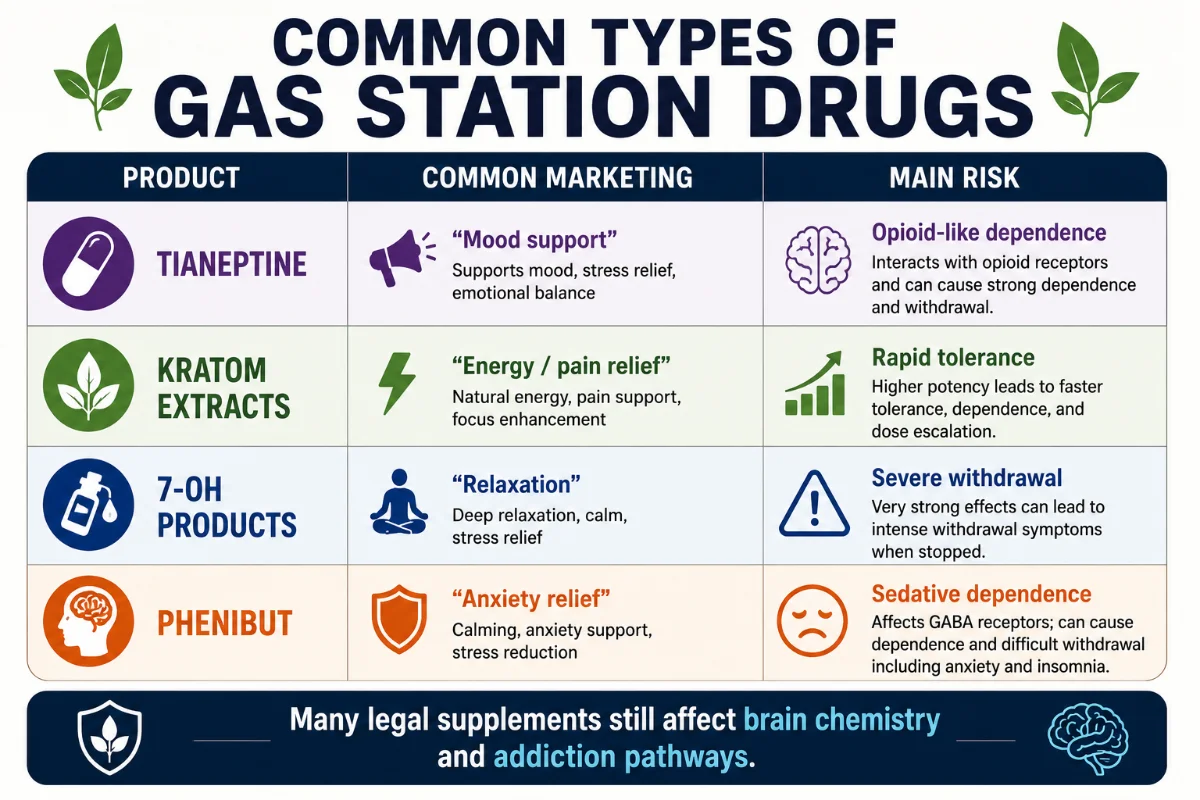
All of these substances affect mood, energy, anxiety, and the nervous system in powerful ways. The problem is that they’re sold with minimal information about addiction risk, withdrawal, or long-term effects. High-performers managing stress and exhaustion, they feel like a solution. In reality, they’re creating a secondary problem on top of the original problem.
The Dangerous Myth That “Legal” Means Safe
One of the biggest misconceptions surrounding legal drugs and unregulated supplements is the assumption that legal availability equals safety.
Wrong. Legal and safe are not synonyms.
One important reality many consumers do not realize is that dietary supplements do not undergo the same pre-market safety testing and approval process required for prescription medications.
According to the FDA, supplement manufacturers are largely responsible for evaluating the safety and labeling of their own products before they reach consumers. As a result, ingredient potency, purity, stimulant strength, and contamination risks can vary significantly between brands and formulations.
Because these products are sold openly, many people assume they cannot be dangerous.
That assumption is often what delays recognition of dependency.
Why High Performers Are Especially Vulnerable to Functional Substance Use
Creative professionals and artists and athletes may also experience unique vulnerability to functional substance use where burnout is normalized, sleep deprivation is worn as a badge of honor, exhaustion is expected, and performance pressure rarely stops.
For many people, these substances are not used to “escape responsibility”; they are used to maintain control.
In this context, a product that promises to manage stress, enhance focus, or reduce anxiety feels like the only logical solution. For someone who’s built their identity on achievement and control, using a product to maintain that performance feels like the responsible choice.
Chronic stress and emotional exhaustion can also overlap with substance reliance patterns often seen in professionals experiencing long-term burnout and addiction cycles.
This is how high-functioning addiction often develops quietly.
How Functional Addiction Develops Quietly
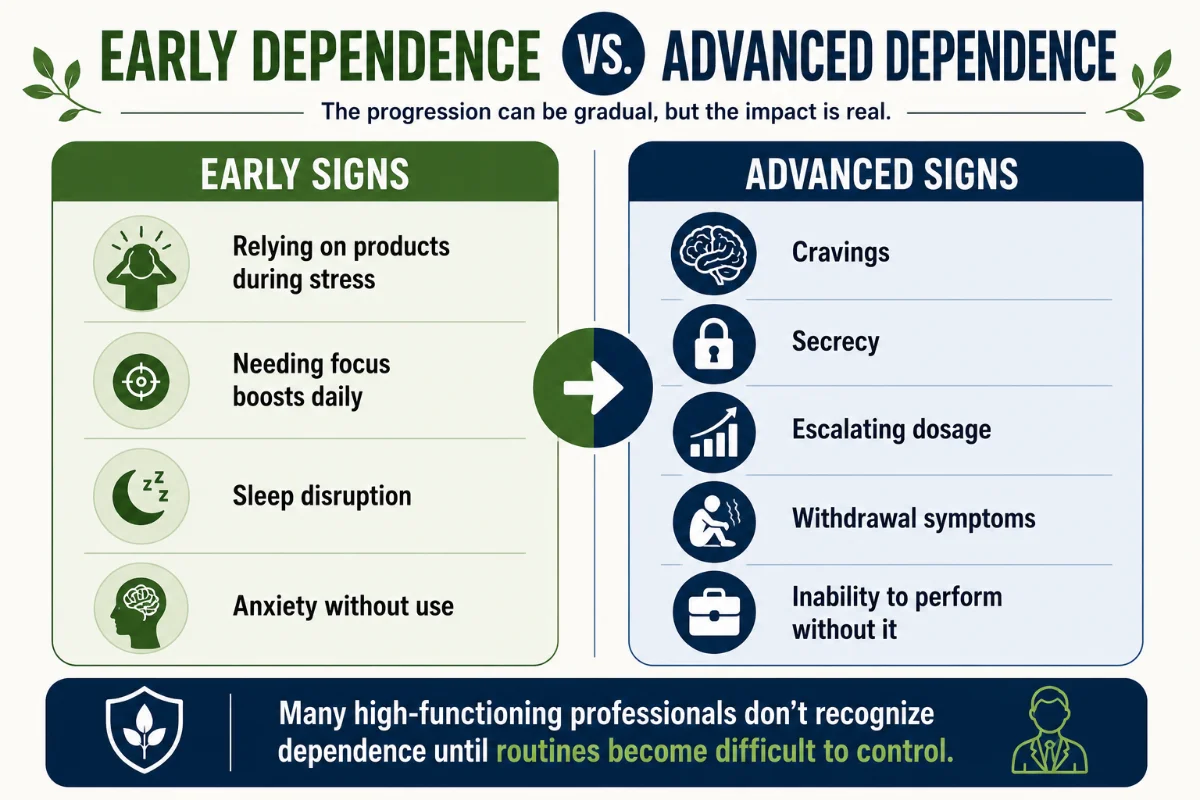
Functional addiction often develops gradually enough that the person does not recognize the shift happening in real time.
It may begin with occasional use during periods of stress, travel, burnout, or sleep deprivation.
Then the pattern subtly changes:
- The product becomes part of the morning routine
- Doses become more frequent
- Stressful situations begin feeling harder to manage without it
- Anxiety increases between uses
- Performance starts feeling chemically dependent
Many professionals do not initially feel “out of control” and remain outwardly functional while privately struggling with significant substance dependence.
Why Achievement Culture Can Make Addiction Harder to Recognize
Success can sometimes hide addiction, and professionals who tie identity to productivity often struggle to recognize when substances are quietly becoming necessary.
Burnout culture reinforces:
- Emotional suppression
- Chronic overwork
- Fear of slowing down
- Pressure to remain “high-performing”
The person may still appear successful externally while internally relying heavily on substances to maintain stability.
This is one reason hidden addiction connected to burnout and performance pressure often goes unnoticed for long periods.
Clinical Perspective From Dr. Ash Bhatt, M.D., M.R.O., FASAM“Many professionals avoid early dependency because they’re still functioning at a high level externally. What I often see first is increased anxiety without the substance, disrupted sleep, reduced emotional resilience, and a growing sense of mental exhaustion, even while the person continues performing well professionally.” |
Warning Signs That Gas Station Drug Use Is Becoming a Problem
One of the clearest signs that use is becoming problematic is when the product stops feeling optional. Many people notice they are no longer taking it for enhancement; they are taking it to avoid feeling worse without it. Below we have outlisted few warning signs, if any of these apply to you, it’s time to honestly assess whether you’ve developed dependence:
Physical Signs:
- Needing larger doses or more frequent use
- Physical withdrawal symptoms (restlessness, body aches)
- Sleep disruption or changes in sleep patterns
- Stomach issues, nausea, or digestive problems
- Rapid heart rate or heart palpitations
- Sweating or chills
Emotional and Psychological Signs:
- Anxiety or panic when your supply runs low
- Cravings that consume your thoughts during the day
- Depression or emotional flatness without the substance
- Mood swings between relief and despair
- Using it to manage anxiety, stress, or emotional pain
Behavioral Red Flags:
- Taking the substance before important meetings or stressful situations
- Ordering supplies online to hide purchases from family
- Taking doses in private or being secretive about use
- Failed attempts to cut back or quit
- Spending significant money monthly on these products
- Isolating from people who express concern
Why New Extracts and Enhanced Products Are Increasing the Risk
Today’s enhanced products are far stronger than traditional herbal supplements. The high-potency substances, such as:
- 7-OH kratom
- concentrated extracts
- stronger tianeptine products
- supplement “shots”
can create rapid tolerance and more severe withdrawal symptoms. In fact, some concentrated kratom products contain alkaloid levels many times stronger than traditional powder. As potency increases, addiction risk increases as well.
| According to the FDA, concentrated kratom extracts and synthetic supplement products have raised growing safety concerns because potency can vary significantly between formulations, increasing the risk of dependence, withdrawal symptoms, contamination exposure, and other adverse health effects. |
Why Successful People Often Don’t Seek Help
Public-facing professionals, entertainers, and individuals with visibility concerns often delay treatment because of fear surrounding reputation, media exposure, and confidentiality.
Many professionals also delay treatment because they compare themselves to stereotypical images of addiction. They may think:
“I’m still working.”
“I’m still successful.”
“I’m still functioning.”
But functional addiction rarely begins with collapse. More often, it develops through increasing emotional reliance, tolerance, exhaustion, and the quiet belief that performance now depends on the substance.
A Quiet Self-Check Many Professionals AvoidMany people do not initially ask: “Am I addicted?” Instead, the more important questions are often:
Functional addiction often becomes visible internally long before it becomes visible externally. |
Confidential Treatment for Gas Station Drug Addiction
Many professionals prefer treatment environments designed specifically for individuals balancing career demands, privacy concerns, and ongoing professional obligations. Programs focused on executive addiction treatment at our treatment center provide discreet and flexible support while allowing individuals to maintain important responsibilities during recovery.
The addiction treatment for gas station drugs includes:
Medical detoxification: To manage withdrawal symptoms safely.
Outpatient flexibility: So you can maintain work and professional commitments while receiving treatment through outpatient programs, intensive outpatient (IOP), or partial hospitalization (PHP).
Dual diagnosis care: That addresses both the substance dependence and the underlying anxiety, burnout, or trauma.
Relapse prevention: To help you manage the same pressures that triggered substance use without relying on products.
Clinical Perspective From Dr. Ash Bhatt, M.D., M.R.O., FASAM“Many high-performing individuals come to me later in their treatment journey when they should have come earlier, and hence, delay in seeking support. I understand that it is because they fear treatment will disrupt their career, identity, or responsibilities. However, treatment helps people regain clarity, emotional stability, healthier sleep, and the ability to perform without constantly relying on substances just to feel functional.” |
Recovery Restores What Substance Use Takes Away
Many high-performing professionals assume recovery will feel disruptive or limiting.
In reality, many people first notice something much simpler, and that is, they stop feeling mentally exhausted all the time.
One of the earliest improvements many individuals report after stopping high-potency supplements and gas station drugs is improved mental clarity. Sleep often becomes deeper and more restorative. Anxiety levels may gradually stabilize. Emotional reactions become easier to regulate without constantly needing a substance to “level out.”
People also commonly notice:
- Less dependency on stimulants to get through the day
- Improved focus without relying on supplement shots
- Reduced panic when supplies run low
- More stable energy levels
- Fewer mood crashes
- Improved motivation and emotional resilience
National Support ResourcesIndividuals struggling with substance dependence can also access confidential support through:
|
Get Help Now: Confidential Assessment at Legacy Healing LA
If you’re a high-performer in Los Angeles struggling with dependence on gas station drugs, confidential help is available. You don’t have to manage this alone. You don’t have to sacrifice your career or reputation to get well.
At Legacy Healing LA, we specialize in confidential treatment for high-functioning professionals who’ve developed dependence on legal substances. We understand the pressure you’re under. We understand why you turned to these products. And we know how to help you recover while maintaining your privacy and your professional life.
📞 Call 888-534-2295 | Schedule Call confidentially