




-
 Written By:
Alex Herrera
Written By:
Alex Herrera
-
 Edited By:
Phyllis Rodriguez, PMHNP-BC
Edited By:
Phyllis Rodriguez, PMHNP-BC
-
 Clinically Reviewed By:
Dr. Ash Bhatt, MD, MRO
Clinically Reviewed By:
Dr. Ash Bhatt, MD, MRO
Los Angeles is facing a growing stimulant crisis, and one of the most visible consequences is the connection between chronic methamphetamine use and housing instability. Walking through any neighborhood in LA, you see the evidence of this connection: people living on streets whose meth addiction has progressively stripped away their ability to maintain housing, employment, and relationships. But what’s often invisible is the path that leads there, the gradual, almost imperceptible decline that happens before someone ends up homeless.
Key Takeaways
|
For families struggling with a loved one’s meth addiction, the housing instability feels sudden. But the reality is that chronic meth use creates a cascade of consequences that systematically destroys the foundation that housing stability requires: employment, relationships, financial management, and emotional resilience.
“More recent data from Los Angeles County also revealed that the percentage of methamphetamine-related deaths involving people experiencing homelessness increased from 13% in 2012 to 35% in 2021.”
“At the same time, Los Angeles continues to face a severe housing crisis. Human Rights Watch reported that more than 46,000 people in the city were unhoused in 2023, with nearly 73% living unsheltered.”
At Legacy Healing LA, we work with individuals and families navigating this reality. We’ve seen how meth addiction in Los Angeles has evolved to include new dangers, such as fentanyl contamination in stimulants, for example, that escalate the risks. We’ve also seen that when people get help early, before housing is lost, recovery is possible. Before we talk about solutions, it’s important to understand exactly how chronic meth use creates the conditions for housing instability.
How Chronic Meth Use Gradually Affects Stability
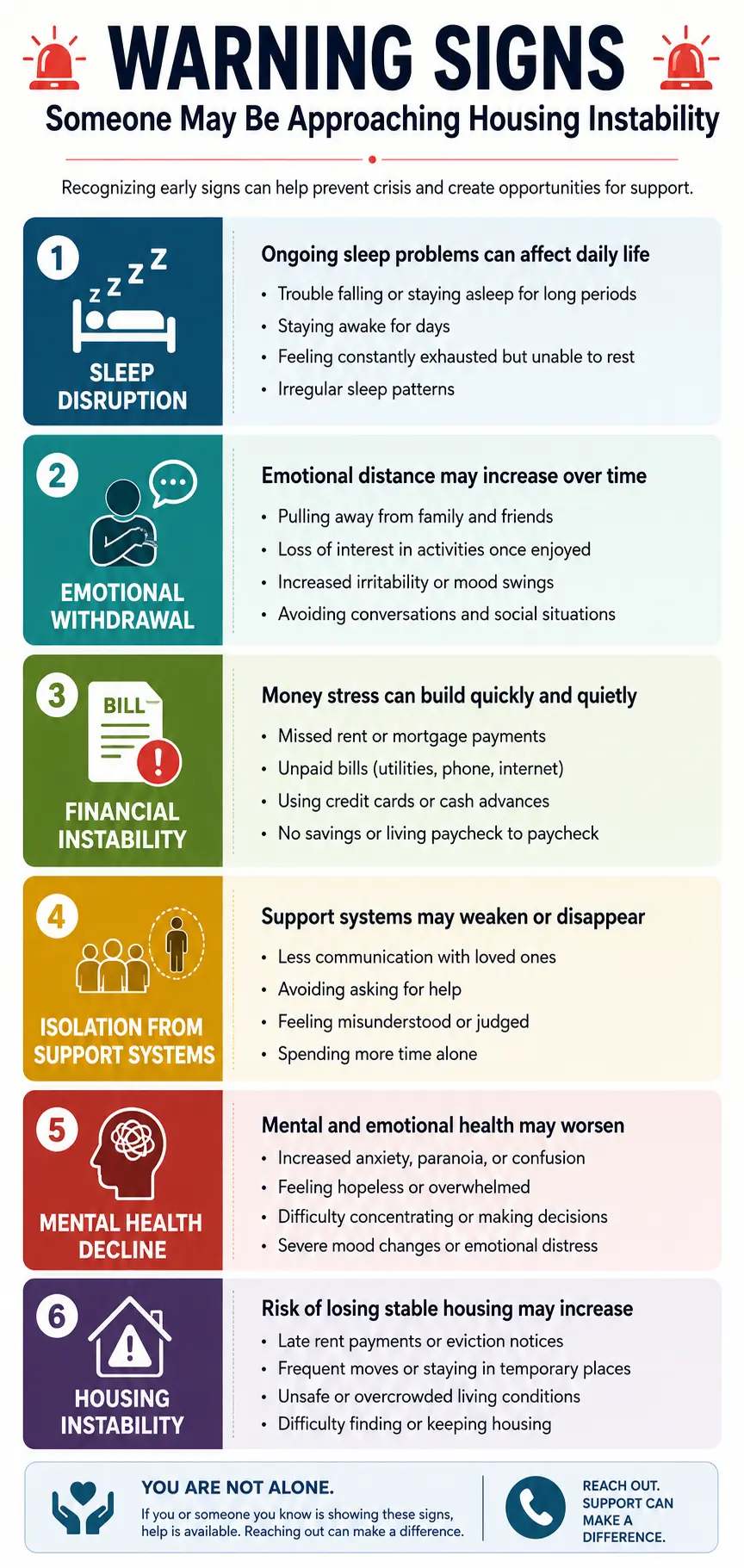
The progression from regular meth use to housing instability follows a pattern. Understanding this pattern is important because it reveals where intervention is possible.
- Sleep Disruption and Cognitive Decline: Methamphetamine is a powerful stimulant. It hijacks the brain’s reward system and keeps the nervous system in a state of hyperarousal. People use meth, stay awake for 24, 48, sometimes 72 hours, crash for a few hours, and repeat. Over months and years, this destroys normal sleep architecture and destroys the ability to think clearly, compromising their cognitive function.
- Emotional Withdrawal and Isolation: Chronic meth use creates a peculiar emotional state. Users report feeling increasingly disconnected from people they love, and they begin withdrawing from family and friends because maintaining connection requires emotional capacity they no longer have, leading to isolation.
Now, this isolation compounds the problem, since housing stability depends on social connections and support, and when someone withdraws from their support network, they lose the people who could help stabilize their situation.
- Declining Work Performance and Job Loss: The cognitive and emotional effects of chronic meth use also make employment unsustainable due to loss of concentration at work, eventually resulting in losing the job. Now, because rent depends on income, without a job, people can’t pay rent. Eventually, they’re evicted.
- Financial Instability and Spiraling Debt: Meth addiction is expensive, and when tolerance keeps building up, the amount spent on the drug also keeps escalating. People begin borrowing money, falling behind on bills, and accumulating debt. It’s a vicious cycle. Within months, what was once financial stability becomes complete financial chaos.
- Relationship Strain and Loss of Family Support: Chronic meth use fundamentally changes how someone relates to people; it makes them unpredictable, it makes them do promises they can’t keep.
Family members and friends, exhausted from trying to help someone who is no longer receptive to help, often stop trying, and the person loses the very relationships that could provide housing support when they need it most.
- Routine Collapse and Living Situation Deterioration: People in active meth addiction lose the ability to maintain routines, and their living space becomes chaotic. And as someone loses more housing situations, their living options become increasingly precarious: from apartment to shared room to couch surfing to sleeping in a car to sleeping on the street.
|
Meth Psychosis, Isolation, and Emotional Vulnerability
As chronic meth use continues, the risk of meth-induced psychosis also increases. Psychosis is a mental health crisis where someone loses touch with reality. They begin to experience hallucinations, start seeing or hearing things that aren’t present, making them disorganized and delusional.
Now, for someone who is experiencing psychosis, their ability to maintain housing completely collapses, as they become aggressive or frightened and refuse help. They also might abandon their housing altogether because the paranoia makes them believe the location is unsafe, and hence prevents housing stability.
Those living on Los Angeles streets and experiencing meth-induced psychosis are already vulnerable, at high risk for victimization, sexual assault, and further substance use. The streets are dangerous for anyone, but for someone experiencing psychosis, they’re especially dangerous.
Importantly, meth-induced psychosis is treatable with appropriate psychiatric care, antipsychotic medications, and cessation of meth use; it can be resolved.
Resources Available:
|
Why Meth and Fentanyl Together Are Raising Concern in California
The evolution of the meth supply in Los Angeles has introduced a new layer of danger that every user and every family needs to understand: fentanyl contamination.
The Reality: The DEA reports that fentanyl is appearing in methamphetamine supplies with alarming frequency. In Los Angeles specifically, law enforcement has seized fentanyl-laced meth in increasing quantities. People buying what they think is methamphetamine are unknowingly purchasing a mixture that includes fentanyl, and often they don’t know it.
Why This Is Catastrophic: Fentanyl is 50-100 times more potent than morphine and about 50 times more potent than heroin. A dose the size of a grain of salt can cause overdose. People aren’t expecting fentanyl in stimulants, so they don’t take overdose precautions. They don’t have naloxone available. They use alone. And they die.
The PMC reports that synthetic opioid deaths continue to increase, and a significant portion of this is driven by fentanyl in stimulant supplies. In Los Angeles emergency departments, visits related to stimulant use involving fentanyl have increased.
What You Need to Know: If someone you love is using meth in Los Angeles, assume it may contain fentanyl. Period. This means:
- They need naloxone (Narcan) immediately – We provide free naloxone kits and training
- They should never use alone
- They need treatment, not later, now
- If they overdose, naloxone can reverse it, but only if it’s available
|
Recovery and Stability Are Still Possible
The critical window for preventing housing instability is before it happens. When someone with chronic meth addiction still has housing, still has some employment, still has some family connection, that’s when intervention can prevent the cascade of consequences that leads to homelessness.
- Early intervention means recognizing the signs of chronic meth use and getting professional help immediately before someone loses their job. It means treating meth addiction with the urgency it deserves, because the consequences escalate rapidly.
- Dual diagnosis treatment is essential because it needs the treatment that addresses both the addiction and the underlying mental health issues driving it. It is because meth addiction often exists with depression, anxiety, trauma, and other mental health conditions.
- Inpatient treatment provides the structure and safety that allows someone to stabilize in a residential setting, where they can regulate their emotions. In this treatment (after weeks or months of intensive inpatient care) people emerge with clarity they haven’t had in years.
- Behavioral therapy teaches new coping skills and addresses the behavioral patterns that supported addiction. People learn how to handle stress without meth. They learn how to rebuild relationships. They learn how to manage emotions and sleep without stimulants.
- Mental health stabilization is ongoing. Many people need psychiatric medication, antidepressants, sleep aids, and sometimes anti-anxiety medication, to maintain stability without substances. Regular therapy continues as they rebuild their lives.
- Rebuilding relationships and routines happens gradually as someone gains sobriety. Family reconnection, employment, and housing becomes possible. These are not quick changes, but they’re achievable with consistent effort and professional support.
What You Can Do Right Now: This is when our comprehensive meth addiction treatment program becomes essential. We offer:
Resources Available:
|
Get Help Now: Recovery Begins With a Single Decision
If you or someone you love is struggling with chronic methamphetamine addiction in Los Angeles, the most important thing to know is that recovery is possible. The sooner you seek help, the better, and getting treatment while someone still has housing, stability, and support dramatically improves the treatment outcomes and saves the person from homelessness.
Call Legacy Healing LA Today!
📞 [8008084570]
Available 24/7 for confidential consultation. If you or someone you love is struggling with meth addiction, we can help.