




-
 Written By:
Alex Herrera
Written By:
Alex Herrera
-
 Edited By:
Phyllis Rodriguez, PMHNP-BC
Edited By:
Phyllis Rodriguez, PMHNP-BC
-
 Clinically Reviewed By:
Dr. Ash Bhatt, MD, MRO
Clinically Reviewed By:
Dr. Ash Bhatt, MD, MRO
Alcohol use disorder (AUD) symptoms affect people across every demographic, including high-achieving professionals, parents, and community leaders who, from the outside, appear to have everything under control.
Recognizing the early and progressive signs of alcohol addiction is one of the most important steps toward getting help. This guide is designed to help you understand signs of alcohol addiction, including the subtle, easy-to-rationalize signs that often go unaddressed for years.
Key Takeaways1. Alcohol addiction doesn’t always look obvious. High-functioning individuals can maintain careers, relationships, and daily responsibilities while quietly developing a dependency, making early signs easy to overlook or justify. 2. Subtle symptoms often appear long before serious consequences. Changes in behavior, emotional reliance on alcohol, and early physical or psychological effects are critical warning signs that should not be dismissed as “normal” stress or lifestyle habits. 3. Early recognition leads to better outcomes. Identifying alcohol use disorder in its early or moderate stages allows for more effective, less intensive treatment, without waiting for a crisis or medical emergency to occur. |
Why Alcohol Addiction Often Goes Unnoticed
Alcohol is one of the few addictive substances that is not only legal but socially encouraged in business gatherings or on weekends. This cultural normalization makes it especially difficult to distinguish between social drinking and the early signs of alcohol addiction.
The functional alcoholism signs are particularly hard to spot. A person may maintain a demanding career and present a polished exterior, all while privately relying on alcohol to manage stress, sleep, or emotional discomfort. Because there are no visible consequences (yet), neither the individual recognizes that drinking has become a problem.
Alcohol dependency symptoms are often dismissed as stress relief or simply a lifestyle choice. But when drinking becomes a problem, it begins influencing decisions and relationships, which is a signal worth taking seriously.
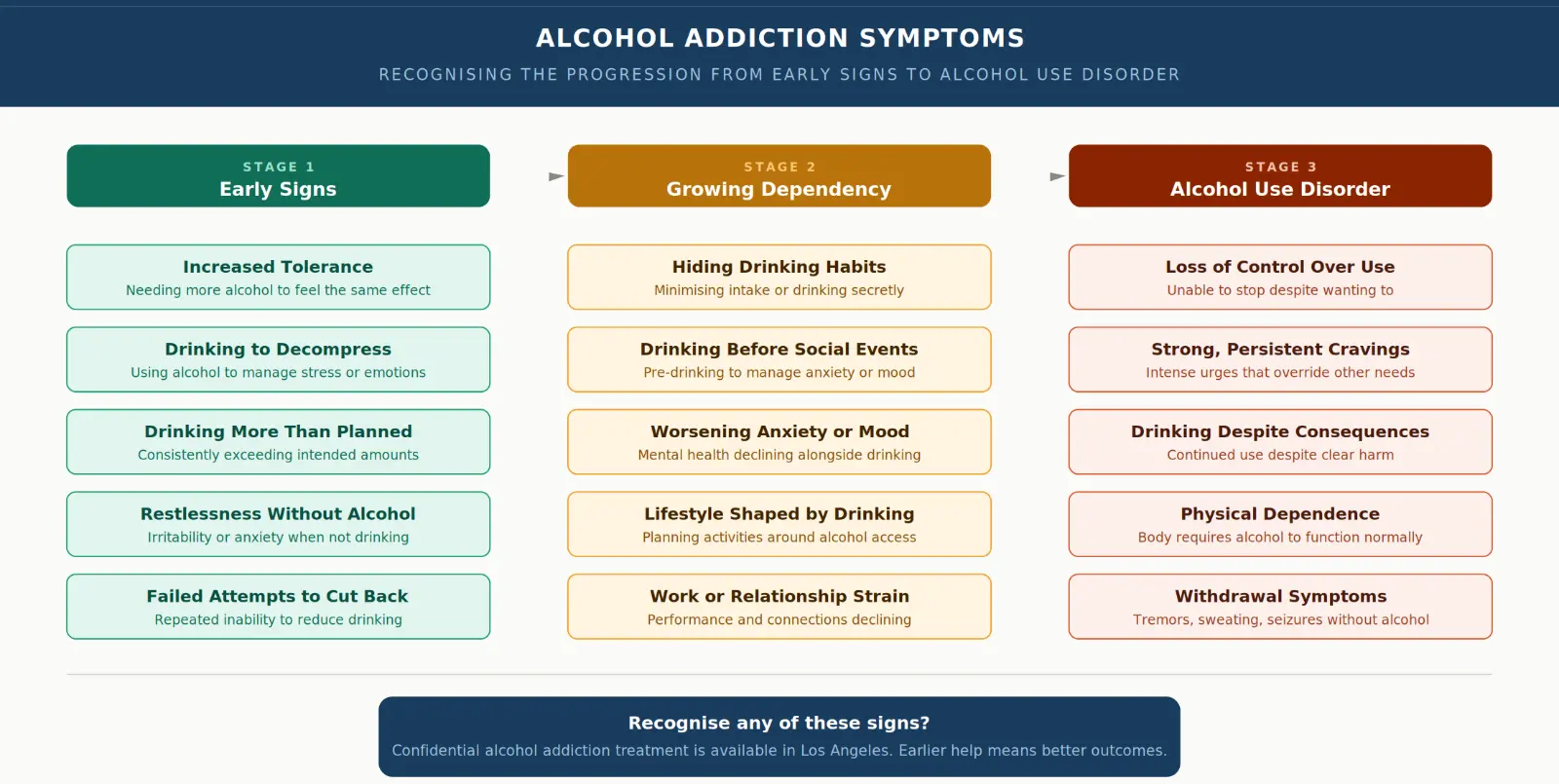
Early Signs of Alcohol Addiction
The earlier alcohol addiction is identified, the more effective treatment tends to be.
Progressive Symptoms of Alcohol Use Disorder
If early signs are left unaddressed, alcohol use disorder symptoms typically intensify over time. The Diagnostic and Statistical Manual of Mental Disorders (DSM-5) outlines specific AUD diagnosis signs that clinicians use to evaluate severity. These include:
- Spending a significant amount of time drinking or recovering from its effects
- Continuing to drink despite awareness that it is causing physical, psychological, or social harm
- Giving up previously important activities, hobbies, relationships, professional commitments, in favor of drinking
- Experiencing strong cravings for alcohol
- Failing repeatedly to cut down or control use, even with genuine effort
- Developing alcohol dependence signs: the body requires alcohol to function normally and experiences withdrawal without it
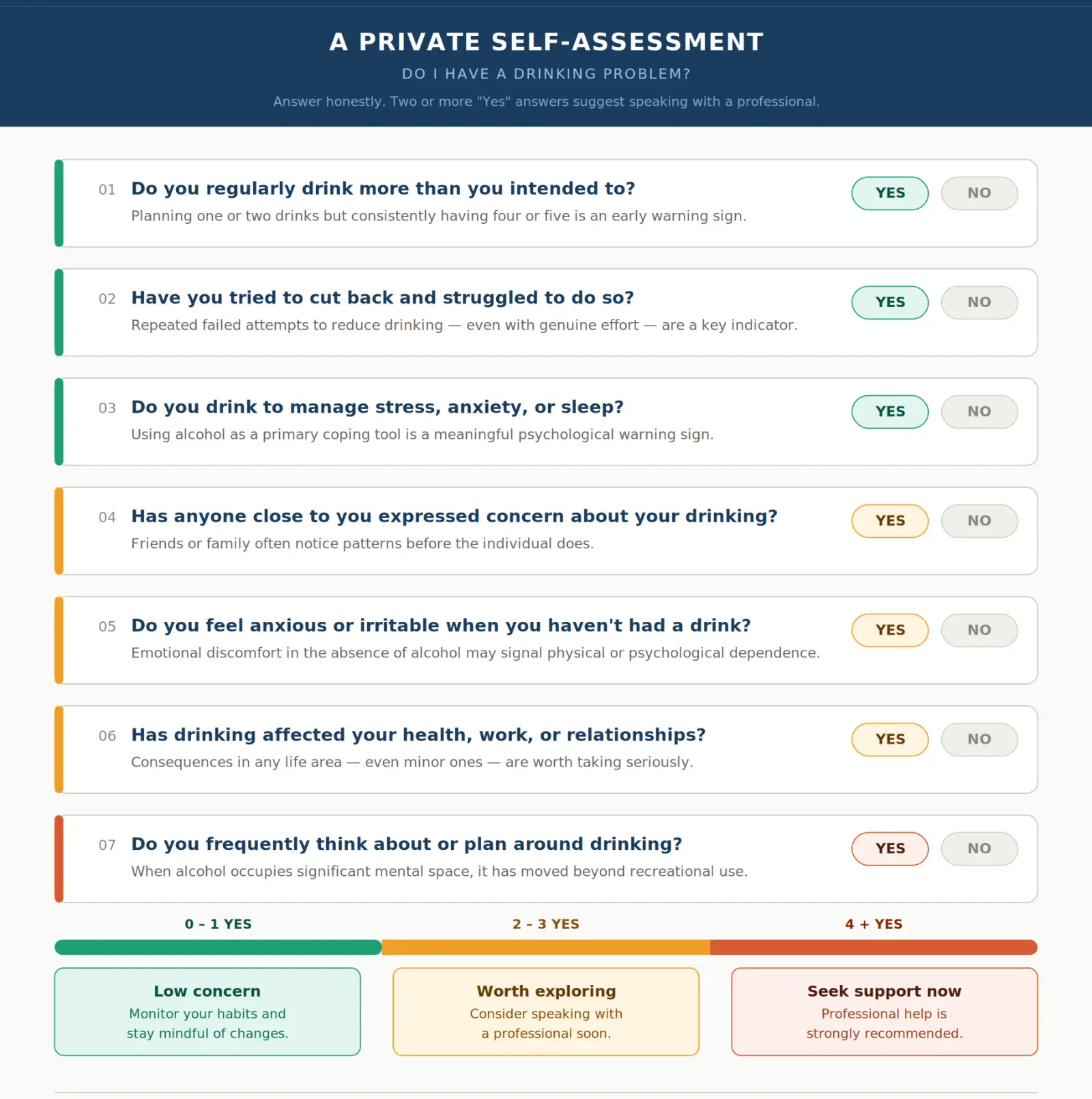
The presence of two or three of these criteria indicates a mild AUD; six or more suggests severe alcohol use disorder. If you recognize multiple signs, it may be time to seek alcohol rehab or speak with an addiction specialist.
Psychological Effects of Alcohol Addiction
Alcohol is a central nervous system depressant, and over time, its impact on mood and cognition becomes significant. The psychological effects of alcohol addiction are often among the most destabilizing and the most misunderstood.
Alcohol and Anxiety
One of the most common patterns in alcohol mental health symptoms is the relationship between alcohol and anxiety. Many individuals begin drinking to ease anxiety, but chronic alcohol use actually rewires the brain’s stress response system, resulting in worsening the anxiety in the absence of alcohol.
Stress Drinking
Using alcohol as a coping mechanism for professional or personal pressure, is a significant psychological warning sign. When alcohol becomes the default tool for managing difficult emotions, it has become a dependency.
Other Psychological Symptoms
Additional psychological symptoms associated with alcohol use disorder include persistent low mood or depression, difficulty concentrating, memory lapses or blackouts, irritability, and mood swings. These symptoms are neurological and psychological consequences of sustained alcohol use.
Physical Symptoms of Alcohol Abuse
Physical symptoms of alcohol addiction can range from mild and easy to dismiss to serious indicators of organ damage. Common physical signs include:
- Frequent hangovers or morning nausea
- Disrupted sleep patterns, or experiencing non-restorative sleep
- Unexplained weight changes, digestive discomfort, or bloating
- Flushed skin or puffiness in the face
- Tremors or shakiness
Liver Damage Alcohol Symptoms
The liver bears the greatest physiological burden of alcohol metabolism, and the symptoms may include persistent fatigue, upper-right abdominal discomfort, and jaundice (yellowing of the skin or eyes).
Alcohol Effects on the Body
Long-term alcohol effects on body include elevated blood pressure, increased risk of certain cancers, peripheral neuropathy, and cognitive decline. Many of these conditions are reversible or manageable when alcohol use stops and proper medical care is initiated.
Alcohol Withdrawal Signs
For individuals who have become physically dependent, sudden cessation can trigger alcohol withdrawal signs that can be life-threatening. Mild symptoms include sweating, tremors, headache, and elevated heart rate. Severe alcohol withdrawal, known as delirium tremens (DTs), can involve seizures, hallucinations, and cardiovascular complications.
Behavioral and Lifestyle Changes
Over time, alcohol addiction begins to reshape daily life in ways that reflect the growing priority alcohol holds in a person’s internal world. In fact, you can spot the behavioural signs of alcoholism in those individuals when they begin to show irritability, become preoccupied, or get anxious when they can’t drink.
One common trait among high-functioning individuals addicted to alcohol is hidden drinking, and the signs include drinking before social events “to take the edge off,” keeping a private stash, or choosing activities based on whether alcohol will be available.
Broader alcohol lifestyle changes and alcohol dependency behaviour become more evident when the following signs start showing up, such as:
- Withdrawing from friends or family who don’t drink heavily
- A gradual narrowing of interests and social activities
- Declining performance at work
- Neglecting physical health or personal care
- Increasing alcohol expenditure
When Symptoms Become a Medical Concern
There is a point at which alcohol addiction moves from a behavioral health concern to an acute medical emergency. Knowing when to seek alcohol treatment, or when to act immediately, can be lifesaving.
Pay close attention to alcohol poisoning signs, which include confusion, vomiting, seizures, slow or irregular breathing, pale or blue-tinged skin, and unconsciousness.
Alcohol withdrawal danger is real; severe withdrawal can be fatal without appropriate care. Hence, physically dependent individuals should not attempt to stop drinking abruptly without medical supervision.
Beyond emergencies, a general guideline: if alcohol is affecting your health, your relationships, or your ability to function, that is a meaningful threshold. You don’t need to reach a crisis point to deserve support. Seeking alcohol addiction help in Los Angeles early leads to better outcomes and more treatment options.
Confidential Alcohol Addiction Treatment in Los Angeles
Legacy Healing LA provides discreet, evidence-based alcohol rehab in Los Angeles for individuals who expect both clinical rigor and exceptional care. Our Luxury alcohol rehab programs combine medically supervised detox, individualized therapy, and holistic wellness care within a private, resort-style setting.
Confidential addiction treatment is available from the first inquiry through aftercare.